How to Make a DIY Macrame Wall Hanging for Your Living Room

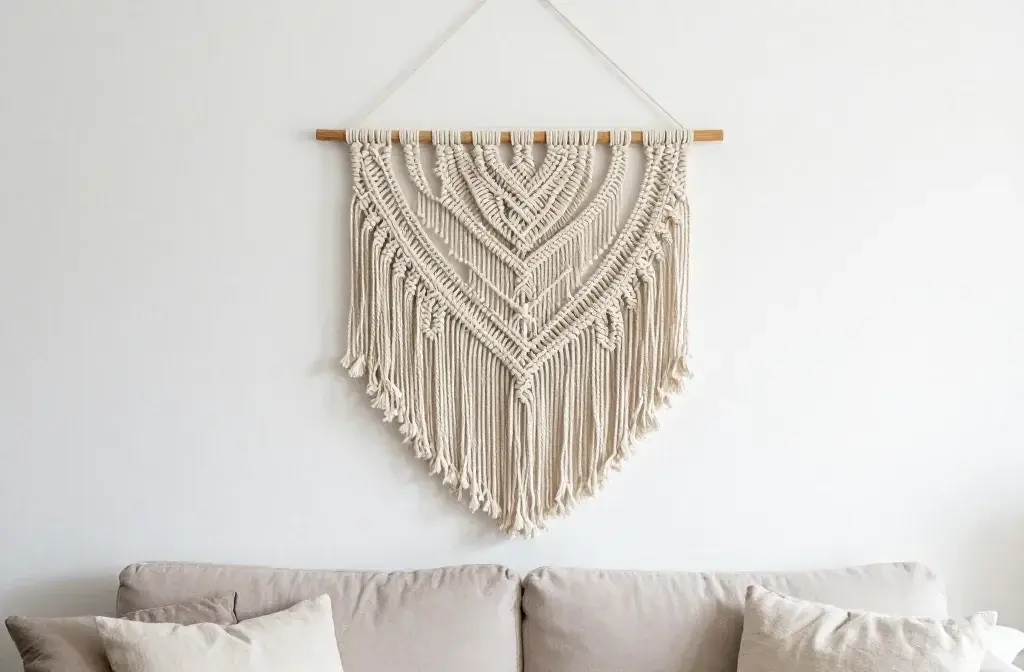
You know that bare wall in your living room that’s been taunting you for months? The one that screams “I need something boho-chic but my budget is giving college dorm room”? A macrame wall hanging is about to become your new best friend. It’s cheaper than buying art, way more impressive than another succulent, and honestly easier to make than you think.
What You’ll Actually Need (No Fancy Craft Store Required)
Let’s talk supplies. The beauty of macrame is that it doesn’t require you to take out a second mortgage or master the art of origami first.
Here’s your shopping list:
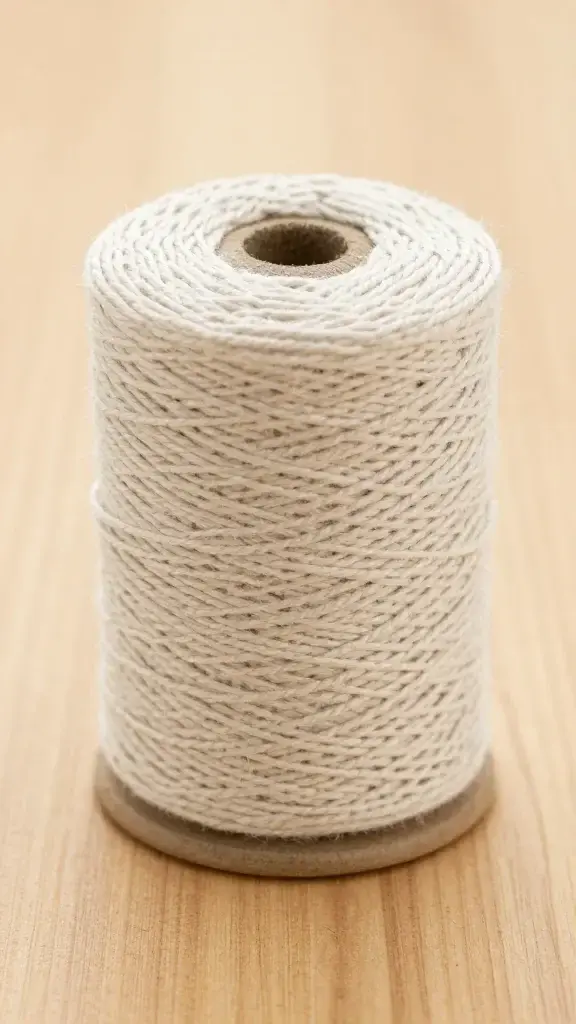
- Macrame cord – 3mm or 4mm thickness works great (you’ll need about 200-300 feet for a medium-sized piece)
- A wooden dowel – anywhere from 18-30 inches, depending on how bold you’re feeling
- Scissors – the sharper the better, because fraying is only cute in vintage jeans
- Tape measure – unless you’re cool with the “eyeball it and pray” method
- Masking tape – for keeping things in place while you work
You can grab macrame cord online or at craft stores. Cotton cord is my go-to because it’s soft, natural-looking, and doesn’t make your hands feel weird after working with it for hours. Plus, it photographs beautifully for those Instagram shots you know you’re going to take.
Understanding Basic Knots (I Promise This Won’t Feel Like Math Class)
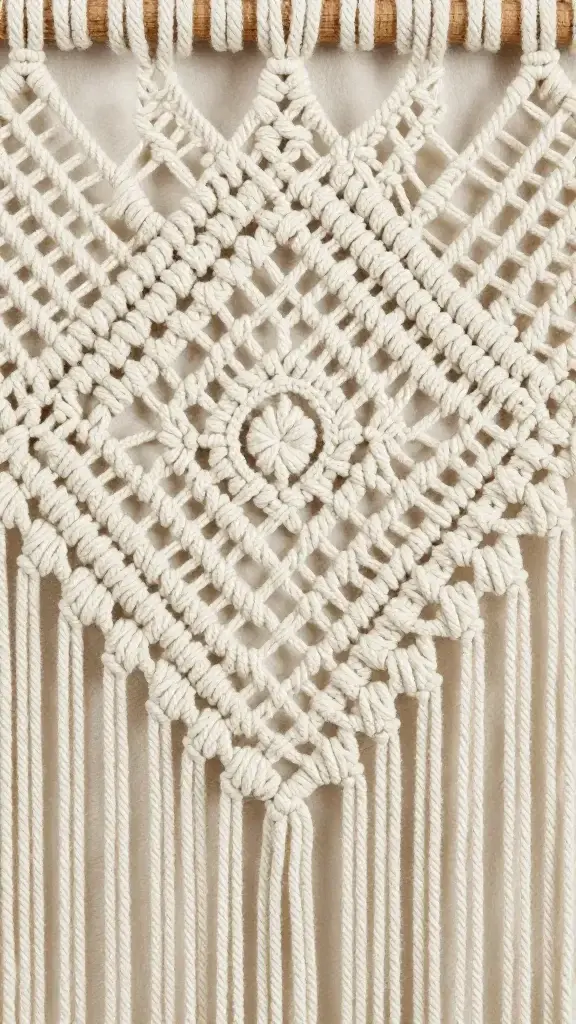
Before you dive in, you need to know a couple of foundational knots. Don’t panic – we’re talking about maybe three knots total, and you learned to tie your shoes, right? This is basically the same level of complexity.
The Lark’s Head Knot
This is how you attach your cords to the dowel. Fold your cord in half, place the loop over the dowel, then pull the ends through the loop. Boom. You just did macrame. Feel fancy yet?
The Square Knot
This is your bread and butter. It’s the knot you’ll use for about 80% of your design. Take four cords, use the outer ones to tie around the middle two. Right over left, then left over right. It creates that classic woven look everyone associates with macrame.
The Half Hitch Knot
Perfect for creating diagonal lines and patterns. You basically wrap one cord around another and pull it tight. Do a bunch of these in a row, and suddenly you look like you know what you’re doing.
Planning Your Design (Or Just Winging It – Both Are Valid)
Here’s where you get to be creative. You can follow a pattern if you want structure, or you can channel your inner abstract artist and see what happens. IMO, some of the coolest pieces come from happy accidents.
For beginners, I’d suggest keeping it simple with three main sections: a row of square knots at the top, a middle section with some diagonal patterns, and loose fringe at the bottom. This gives you variety without making your brain hurt.
Sketch it out if that helps you visualize. Or don’t. I’ve made some of my favorite pieces by literally just starting and figuring it out as I went along.
The Step-by-Step Process (Here’s Where the Magic Happens)
Alright, let’s actually make this thing.
Step 1: Cut Your Cords
Cut 16-20 pieces of cord, each about 8-10 feet long. Yes, that seems ridiculously long. Yes, you actually need them that long. Trust me on this – running out of cord halfway through is way more annoying than having leftovers.
Step 2: Attach Everything to Your Dowel
Use those lark’s head knots to attach all your cords to the dowel. Space them evenly – this is where that tape measure comes in handy. Tape the dowel to a wall or the back of a chair so it stays put while you work.
Step 3: Start Knotting
Begin with a row of square knots across the top. Take groups of four cords and tie square knots, working your way across. This creates a nice clean line and gives your piece structure.
Step 4: Add Some Pattern Work
Now’s when you can get creative. Try alternating your square knots – skip the first two cords, tie a knot with the next four, then continue. This creates a cool diamond pattern. You can also add some diagonal rows using half hitches.
Work in sections, stepping back every so often to see how it looks. FYI, macrame always looks kind of messy while you’re making it – don’t judge it until you’re done.
Step 5: Finish With Fringe
Leave the bottom portion unknotted for that classic boho fringe look. You can trim it straight across or cut it at an angle for something different. Some people go wild with layered lengths – do whatever makes you happy.
Troubleshooting Common Mistakes (We’ve All Been There)
Your knots look uneven? That’s normal at first. They’ll tighten up and even out as you keep working. If something looks really wonky, just untie it and try again. That’s the beauty of rope – it’s forgiving.
Running out of cord before you finish? Join a new piece by tying it to the old one with a tight knot. Hide that knot in the back or work it into your pattern. Nobody will ever know.
Cords getting tangled? Welcome to macrame! Keep them loosely bundled with rubber bands or just embrace the chaos. I’ve learned to accept that tangled cords are part of the process.
Making It Actually Look Good on Your Wall
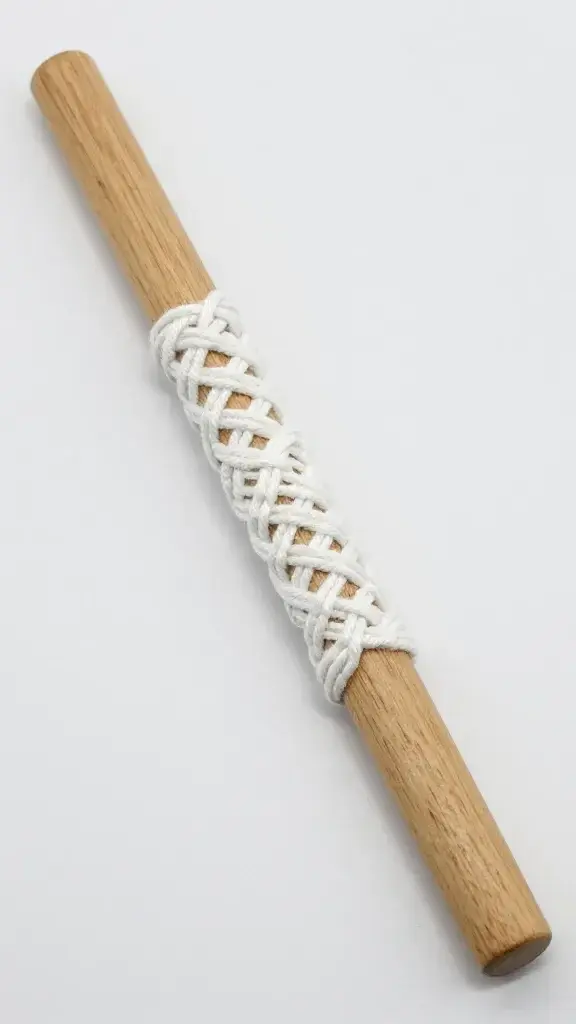
You finished your piece! Now let’s talk about hanging it so it doesn’t look like you just threw it up there in the dark.
Consider the scale of your wall. A tiny macrame piece on a huge wall looks sad and lonely. Go bigger than you think you need – these pieces can handle drama.
Height matters too. Hang it at eye level, or slightly above if it’s going over furniture. And please, use a proper picture hanger or nail – we’re not risking our handmade art on a thumbtack.
Style it with some complementary pieces. Macrame loves hanging out with plants, wooden shelves, and neutral-toned artwork. It’s the ultimate team player in home decor.
Frequently Asked Questions
How long does it actually take to make a macrame wall hanging?
For a medium-sized piece (maybe 2 feet long), plan for 3-5 hours of actual knotting time. You can totally spread this over a few days while watching Netflix. Nobody’s timing you.
Can I use regular rope from the hardware store?
You can, but it might not give you the look you want. Hardware store rope tends to be rougher and less visually appealing than actual macrame cord. That said, I’ve seen people create cool industrial-looking pieces with it, so experiment if you want!
What if I mess up halfway through?
Good news – you can untie knots and start that section over. The cord doesn’t get damaged from being tied and untied (within reason). I’ve redone sections multiple times before getting them right. It’s all part of the learning process.
How do I keep it clean?
Shake it out occasionally to prevent dust buildup. If it gets dirty, you can gently hand wash it in cool water with mild soap, then reshape it and let it air dry. Just be prepared for it to take forever to dry because there’s a lot of material.
Do I need any artistic ability to make this work?
Absolutely not. If you can follow basic instructions and tie knots, you can make macrame. The beauty of it is that even “imperfect” pieces look intentionally bohemian and cool.
Can I make money selling these?
Once you get the hang of it, totally! People pay good money for handmade macrame. Just make sure you price it fairly – factor in your materials AND your time. Don’t undersell your work just because you made it yourself.
Wrapping It All Up
Making your own macrame wall hanging is one of those projects that sounds intimidating until you actually try it. Then you realize it’s basically meditation with knots – repetitive, relaxing, and surprisingly addictive. Your first piece might not be museum-worthy, but it’ll be yours, and that’s what makes it special.
Plus, the look on people’s faces when you casually mention “Oh, I made that” is absolutely worth the few hours of effort. So grab some cord, clear off that wall, and get knotting. Your living room is about to get a serious upgrade, and your wallet will thank you for choosing DIY over designer.