Floral Embroidery Ideas: 14+ Beautiful Botanical Patterns to Stitch

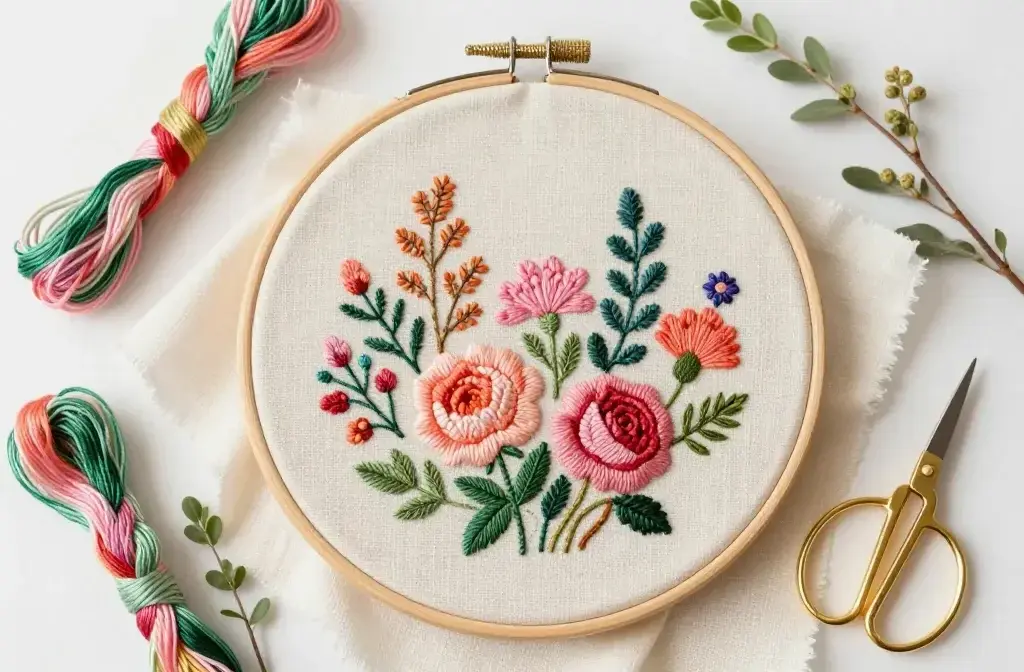
Ever looked at those stunning embroidered florals on Instagram and thought, “I could never do that”? Think again.
Floral embroidery transforms plain fabric into wearable art, and you don’t need a degree in textile design to make it happen. These botanical patterns work magic on everything from denim jackets to throw pillows.
Ready to turn thread and fabric into something gorgeous? Let’s explore the prettiest patterns you’ll want to stitch immediately.
1. Classic Rose Bouquets That Never Wilt
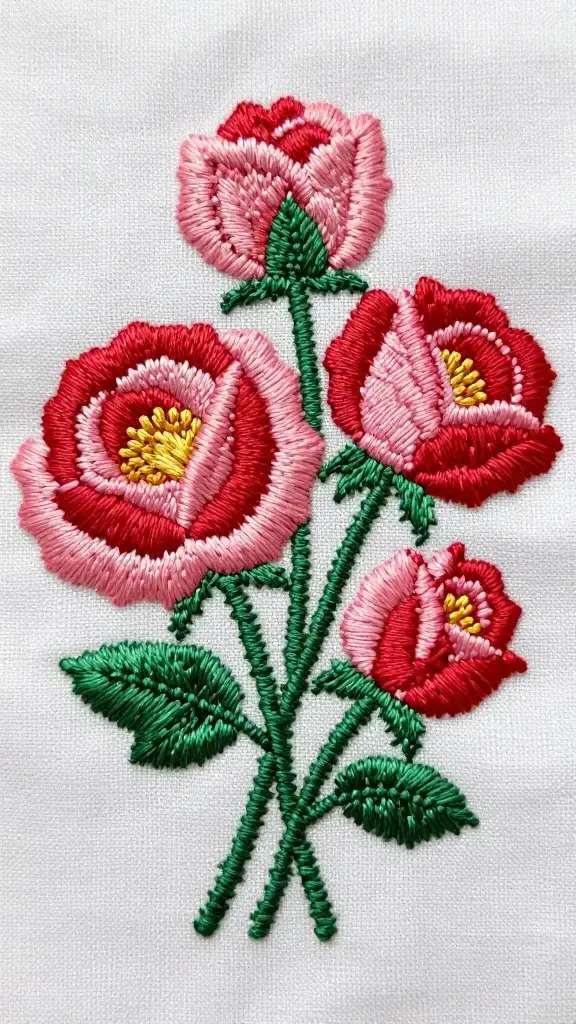
Roses are the gateway flower of embroidery, and for good reason. They look impressive but follow surprisingly simple patterns once you master a few basic stitches.
Start with satin stitch for petals and French knots for the center. Layer different shades of pink or red to create depth that makes your roses pop off the fabric. The beauty here is that slightly imperfect petals actually look more realistic than machine-perfect ones.
Best Uses:
- Denim jacket pockets or collars
- Corner details on cloth napkins
- Heart-shaped arrangements on tote bags
These work brilliantly on heavier fabrics like denim or canvas. Your first rose might take an hour, but you’ll speed up quickly as the muscle memory kicks in.
2. Delicate Wildflower Meadows
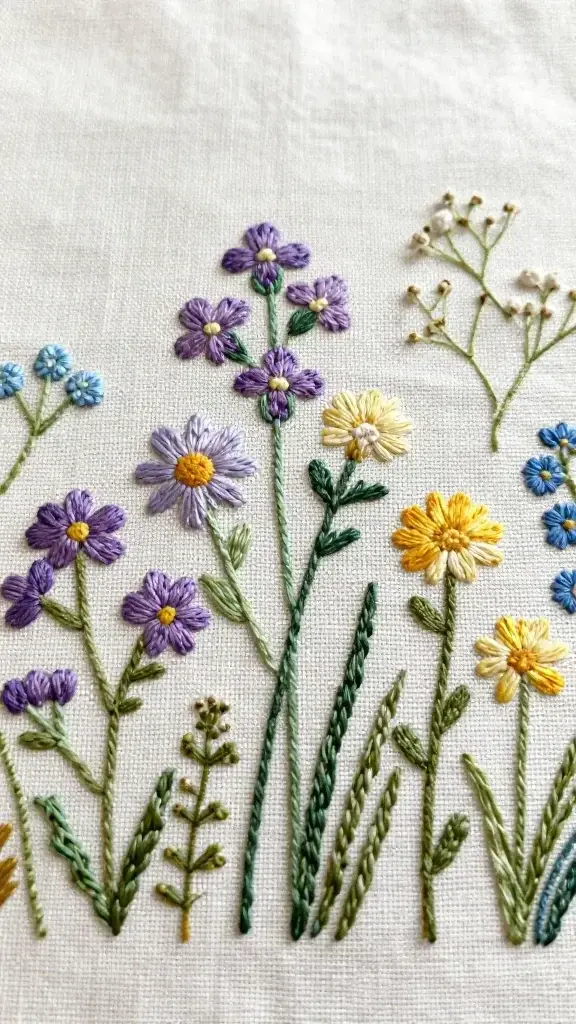
Want something more whimsical and forgiving? Wildflower clusters are your new best friend, seriously.
Mix lazy daisy stitches for small petals with stem stitch for graceful stalks. Throw in some scattered seed stitches to mimic baby’s breath or forget-me-nots. The random, organic placement means there’s literally no wrong way to arrange them.
Choose soft pastels like lavender, butter yellow, and sky blue for that dreamy cottage-core vibe everyone’s obsessed with right now. These patterns look stunning when you let them trail along hems or wrap around necklines like natural vines.
Perfect for lightweight fabrics like linen or cotton blouses. The airy, scattered look complements flowing materials beautifully.
3. Bold Tropical Leaves And Monstera Magic
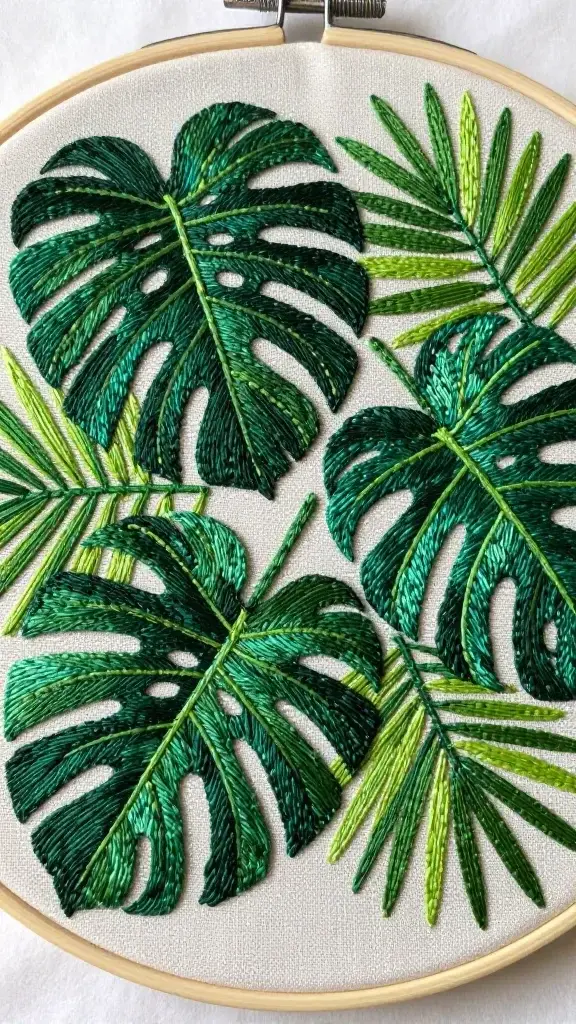
Tropical patterns bring that lush, jungle-inspired energy without requiring actual green thumbs. Monstera leaves, palm fronds, and bird of paradise flowers make serious statements.
Use long and short stitch to fill large leaf areas with different green shades. The natural variation in thread color creates realistic dimension that photographs amazingly well. Add backstitch outlines to define those iconic monstera holes and leaf veins.
Pro Tips:
- Go big – tropical motifs work best at larger scales
- Mix matte and shiny thread for texture contrast
- Add unexpected pops of coral or turquoise
These bold botanicals transform plain white pillowcases into designer-worthy bedroom accessories. They also look incredible on the back of bomber jackets, trust me.
4. Minimalist Single-Stem Botanicals
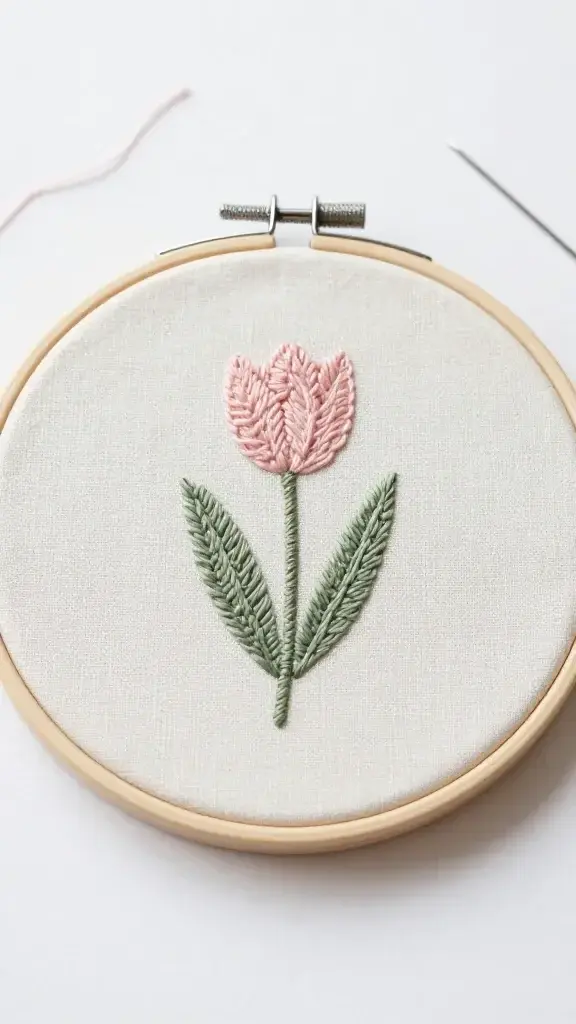
Sometimes less really is more, and single-stem designs prove it. One elegant tulip, a simple lavender sprig, or a lone poppy creates sophisticated impact without overwhelming your project.
Focus on precise stitch placement and clean lines here. Since you’re working with minimal elements, each stitch matters more. Choose monochromatic schemes or limit yourself to two colors for maximum elegance.
These refined patterns suit dress shirts, linen napkins, or minimalist wall art. The simplicity lets the craftsmanship shine through, making your handiwork look professional even if you’re still learning.
FYI, single stems work beautifully as repeating elements – think matching stems on each napkin corner or marching up a shirt placket.
5. Vintage Botanical Illustration Style
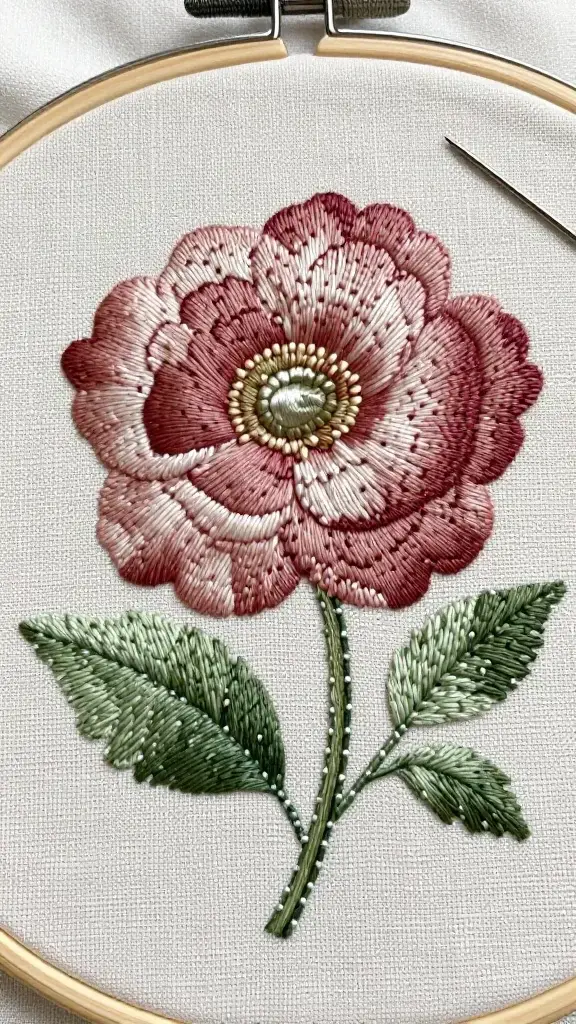
Channel your inner Victorian botanist with detailed, scientific-style plant portraits. These intricate designs feature precise petals, carefully rendered stamens, and anatomically correct leaves.
Combine multiple stitch types to achieve different textures. Use split stitch for fine details, chain stitch for heavier stems, and padded satin stitch for three-dimensional flower centers. Add Latin plant names in tiny backstitch lettering for authentic vintage appeal.
Essential Elements:
- Muted, natural color palettes (sage, rust, cream)
- Multiple perspective angles (side view, top view)
- Root systems or seed pods for completeness
These look absolutely stunning framed as hoop art or stitched onto linen tea towels. The old-world charm never goes out of style and makes thoughtful handmade gifts.
There you have it – five gorgeous starting points for your floral embroidery journey! Pick the style that speaks to you, grab some fabric and thread, and start stitching. Your first botanical masterpiece is just a few stitches away.