Must-Have Polymer Clay Tools for Beginners: Complete Starter Kit Guide

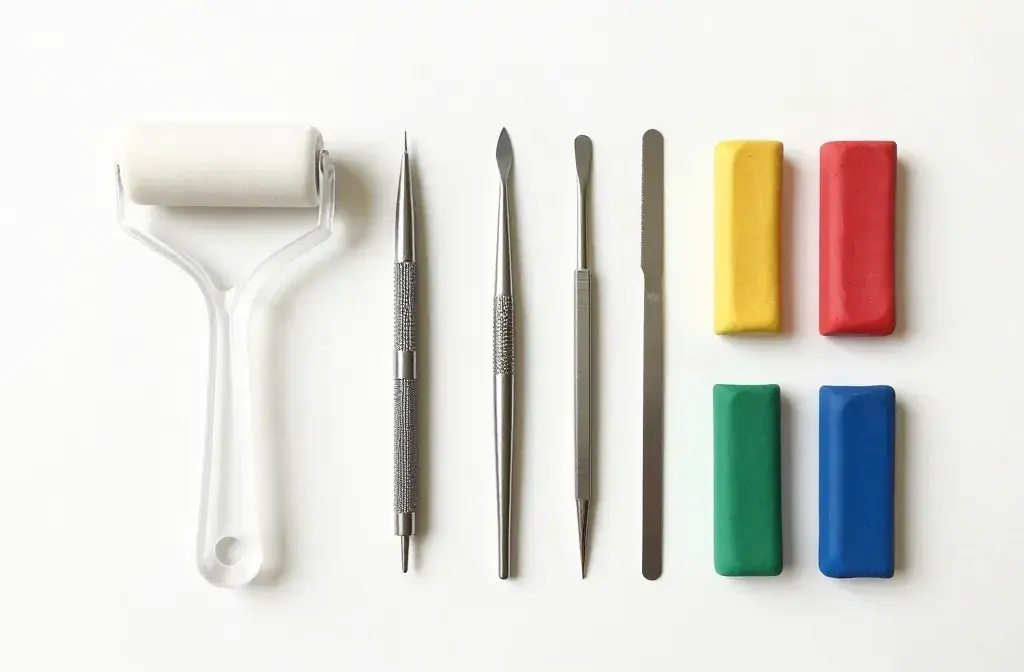
So you’ve fallen down the polymer clay rabbit hole and now you’re staring at a million different tools online, wondering what you actually need?
Here’s the truth: you don’t need every fancy gadget to create amazing pieces. Just a few solid essentials will get you sculpting like a pro.
Let’s cut through the confusion and build your perfect starter kit without wasting money on stuff that’ll collect dust.
1. The Acrylic Roller – Your New Best Friend
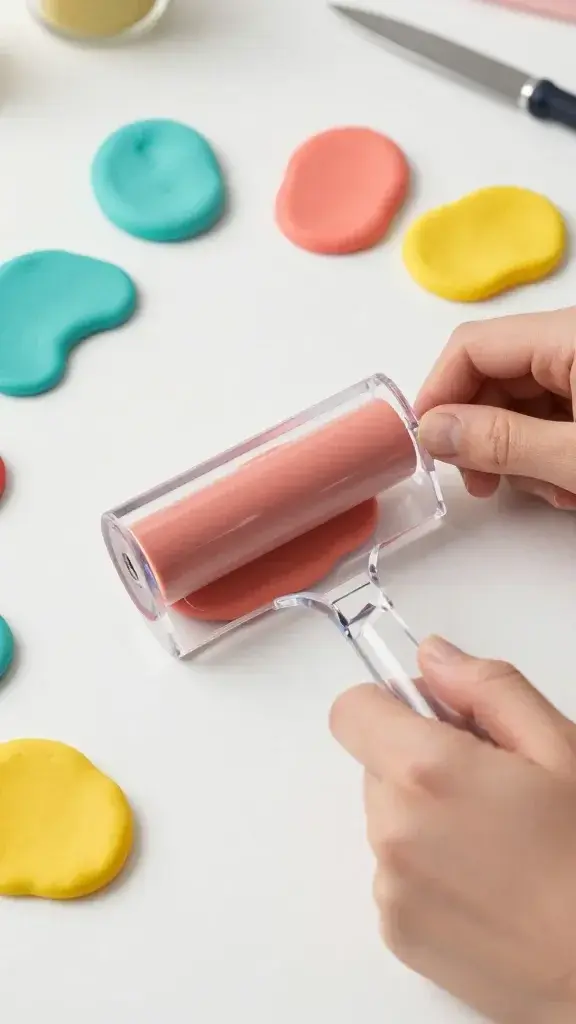
Forget those fancy pasta machines for now. A simple acrylic roller is where every clay journey should start. This clear cylinder does the heavy lifting when it comes to conditioning your clay and rolling out smooth, even sheets.
Why acrylic instead of wood? Clay doesn’t stick to it, and you can actually see what you’re doing underneath. Game changer, trust me.
What Makes It Essential:
- Conditions clay faster than hand-kneading (your thumbs will thank you)
- Creates uniform thickness for consistent baking
- Doubles as a texture tool when you get creative
You’ll reach for this literally every single time you work with clay. No exceptions.
2. Sharp Blades – Because Precision Matters
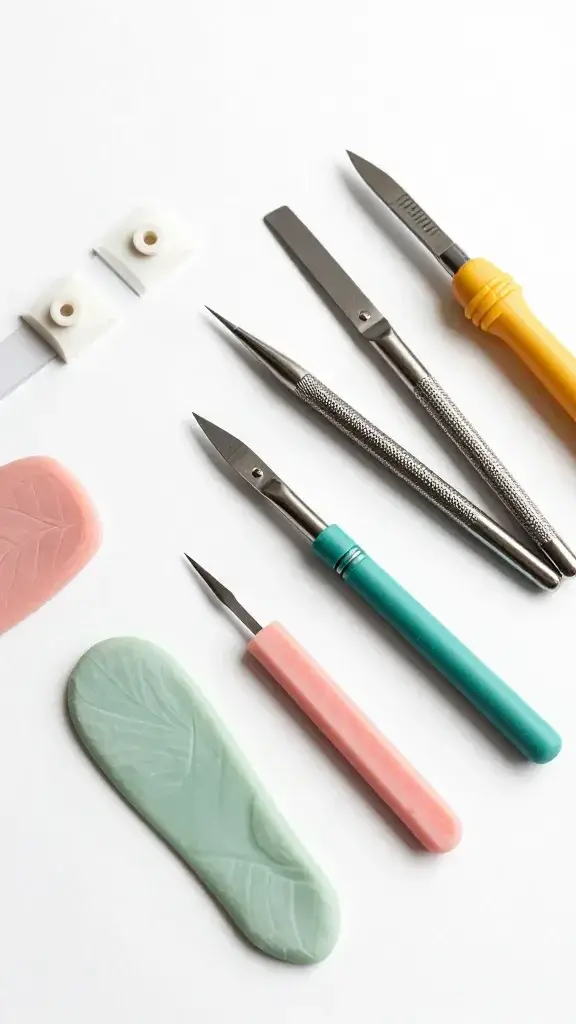
Those dull craft scissors aren’t going to cut it (pun intended). You need a set of sharp tissue blades or craft knives for clean cuts that won’t smoosh your carefully shaped pieces.
Here’s the thing about polymer clay: it shows every imperfection. A sharp blade gives you those crisp edges and smooth slices that make your work look professional instead of, well, blobby.
Blade Options:
- Tissue blades for straight, thin cuts
- Craft knife with replaceable blades for detail work
- Ripple blade for decorative effects (optional but fun)
Just remember to handle these with care and store them safely. Sharp tools demand respect, but they’ll give you results that make people ask “did you buy that?”
3. Smooth Work Surface – Your Creative Command Center
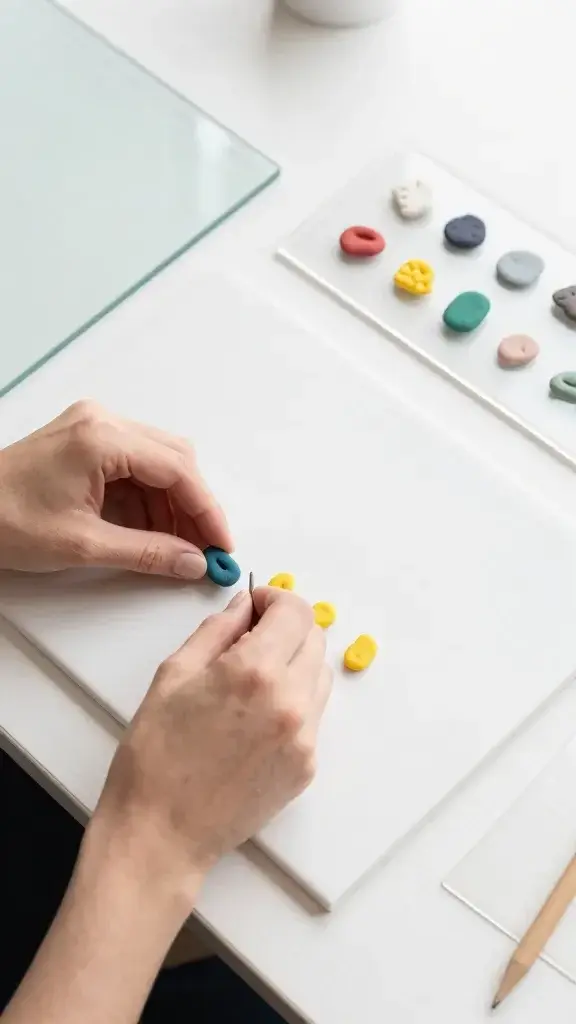
Working on your kitchen table without protection? Stop right there. You need a dedicated non-porous work surface like a ceramic tile, glass sheet, or acrylic board.
Polymer clay can leave oils on surfaces, and you definitely don’t want it sticking to your workspace mid-project. A smooth surface lets you lift pieces easily and keeps everything clean.
Ceramic tiles from the hardware store work perfectly and cost less than your morning coffee. Seriously, grab a pack of white tiles and you’re set. They’re also oven-safe, so you can bake small pieces right on them without transferring.
4. Sculpting Tools Set – For All The Details
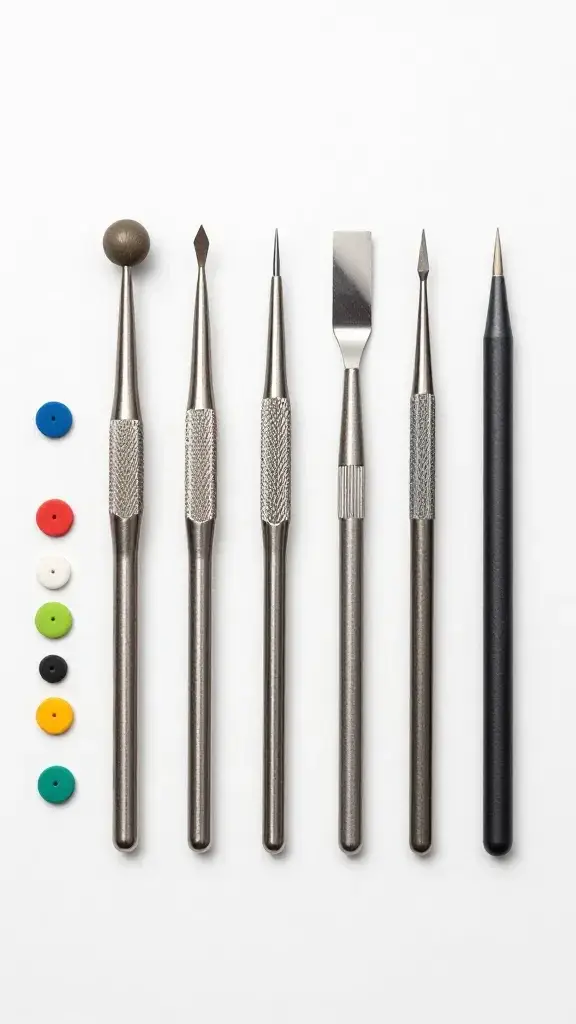
Your fingers are great, but sometimes you need precision that only proper sculpting tools can provide. A basic set with different tips opens up a whole world of textures and details.
Must-Have Tool Types:
- Ball stylus tools for smoothing and creating indents
- Needle tool for fine details and piercing holes
- Flat spatula tool for blending seams
- Pointed tips for intricate pattern work
You don’t need the fanciest set on the market. A basic beginner pack gives you everything to experiment with different techniques. As you figure out your style, you’ll naturally discover which tools become your favorites.
FYI, toothpicks and bamboo skewers also work in a pinch for some techniques.
5. Oven Thermometer – The Unsung Hero
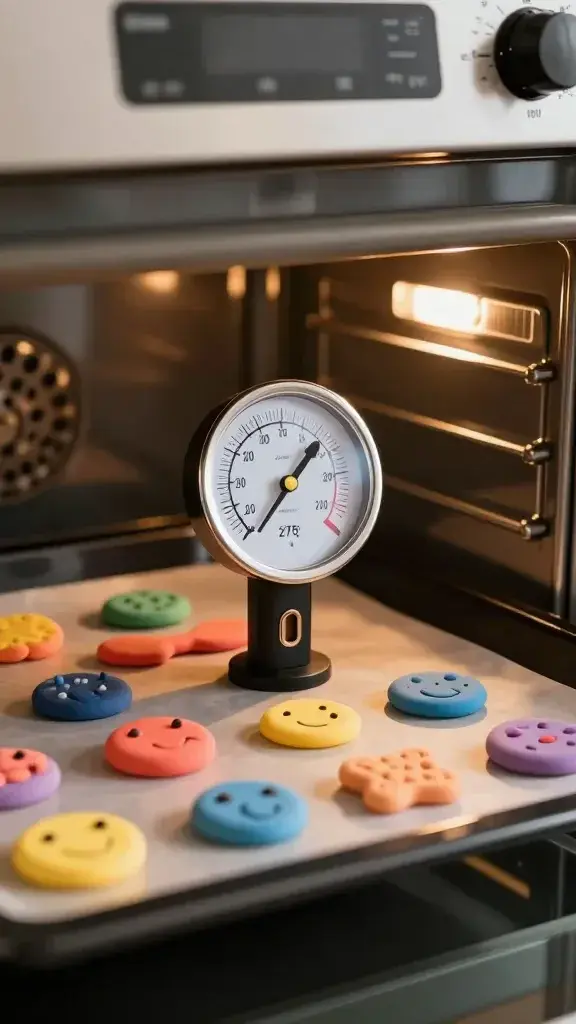
Plot twist: the most important tool isn’t even clay-specific. An oven thermometer is absolutely crucial because your oven is probably lying to you about its temperature.
Polymer clay bakes at specific temperatures (usually around 275°F), and even 25 degrees off can mean the difference between perfectly cured pieces and burnt disasters. Your oven’s built-in thermostat? Yeah, it’s often wildly inaccurate.
This five-dollar investment saves you from heartbreak when that piece you spent three hours on comes out scorched or underbaked and crumbly. Place the thermometer right next to your clay in the oven, and you’ll know exactly what temperature your pieces are experiencing.
There you have it – five tools that’ll actually earn their spot in your craft space. Start with these essentials, and you’ll be creating beautiful polymer clay pieces without the overwhelm or the buyer’s remorse. Now grab your tools and start sculpting!