How to Crochet for Absolute Beginners: Your First Stitches Step by Step

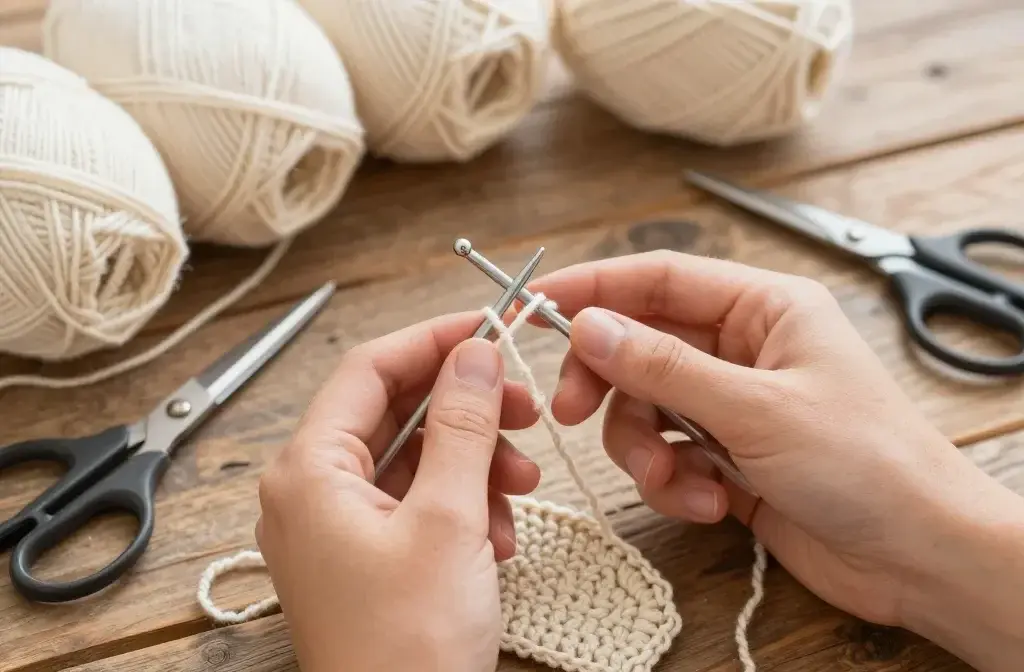
You’ve probably scrolled past those gorgeous crochet blankets and plant hangers on Pinterest and thought, “I could never do that.” Plot twist: you absolutely can. Crocheting is one of those rare hobbies that looks way more complicated than it actually is, and I’m about to prove it to you.
What You Actually Need to Get Started
Before we dive into the fun stuff, let’s talk supplies. The good news? You don’t need to drop a fortune at the craft store (though it’s dangerously easy to do so once you get hooked, pun intended).
Here’s your basic shopping list:
- A crochet hook – Size H/8 (5mm) is perfect for beginners
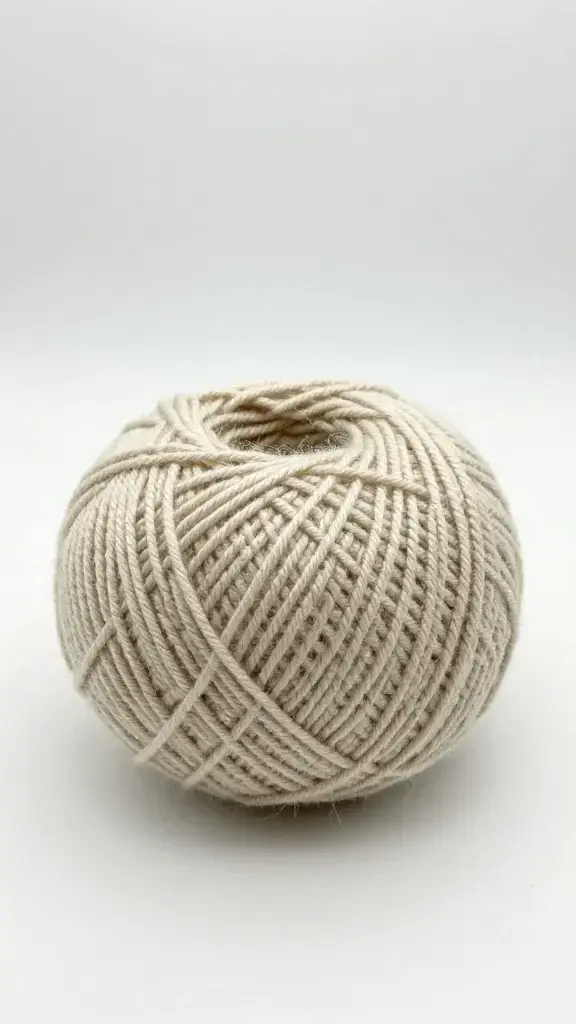
- Yarn – Medium weight (worsted) in a light color so you can see your stitches
- Scissors – You probably already own these
- Your hands – Also hopefully already in your possession
Skip the fancy yarn for now. I know that fluffy bouclé looks amazing, but you’ll want to save the specialty stuff for when you actually know what you’re doing. Trust me on this one—learning with regular yarn is like learning to drive in a parking lot instead of on the highway.
Holding Your Hook (It’s Weirder Than You Think)
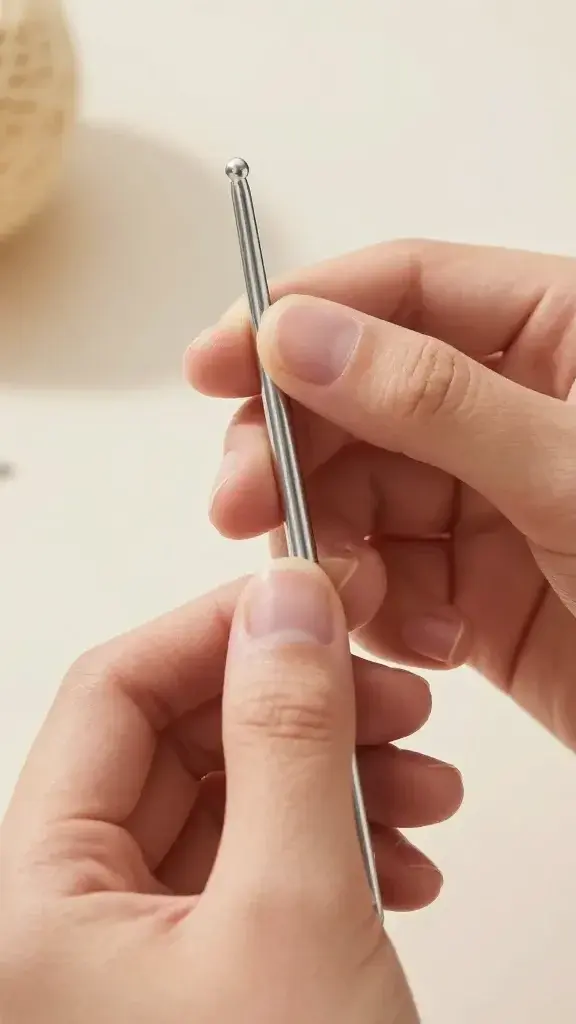
There are two main ways people hold their crochet hooks, and both feel super awkward at first. It’s kind of like when you first learned to hold chopsticks—eventually it clicks, but those first few attempts are rough.
The Pencil Grip
Hold the hook exactly like you’d hold a pencil. Simple, right? This method gives you pretty precise control, which is great for detail work later on.
The Knife Grip
Grip it like you’re about to spread butter on toast. Some people find this more comfortable for longer crochet sessions. Neither method is “wrong,” so experiment and see what feels natural.
Your First Stitch: The Slip Knot
Every crochet project starts with a slip knot. It’s basically just a fancy loop that stays put on your hook while letting you adjust the tension.
Here’s how to make one:
- Make a loop with your yarn (the tail should cross over the working yarn)
- Reach through the loop and grab the working yarn
- Pull it through to create a new loop
- Slide this loop onto your hook and gently tighten
Don’t strangle it though. Your slip knot should slide easily up and down the hook but not fall off. Think “firm handshake” not “death grip.”
The Chain Stitch: Your Foundation
The chain stitch is literally the foundation of crochet. Every project starts with a chain, and honestly, it’s the easiest stitch you’ll ever learn. You’ll probably practice this one while binge-watching Netflix.
Yarn over (wrap the yarn over your hook from back to front), then pull that wrapped yarn through the loop already on your hook. Boom. That’s one chain stitch. Keep going until you have a row of cute little V-shaped stitches.
Pro tip: Count your chains as you go. Nothing’s more frustrating than realizing you made 27 chains when you needed 25 and having to start over.
Tension Matters
Your chains should be loose enough to work into later but not so loose they look like they’re barely holding hands. This takes practice, so don’t stress if your first chain looks like a drunk caterpillar. We’ve all been there.
The Single Crochet: Where the Magic Happens
Once you’ve mastered the chain (give yourself like 20 minutes), you’re ready for the single crochet. This is where things start to actually look like crochet instead of just a weird yarn rope.
Here’s the breakdown:
- Insert your hook into the second chain from your hook
- Yarn over and pull through the chain (you’ll have 2 loops on your hook now)
- Yarn over again and pull through both loops
- Congratulations, you just made a single crochet!
Keep going across your chain, making one single crochet in each chain stitch. When you get to the end, chain one and turn your work around. Now you’re crocheting back in the opposite direction.
Reading Your Work (Or: What Am I Even Looking At?)
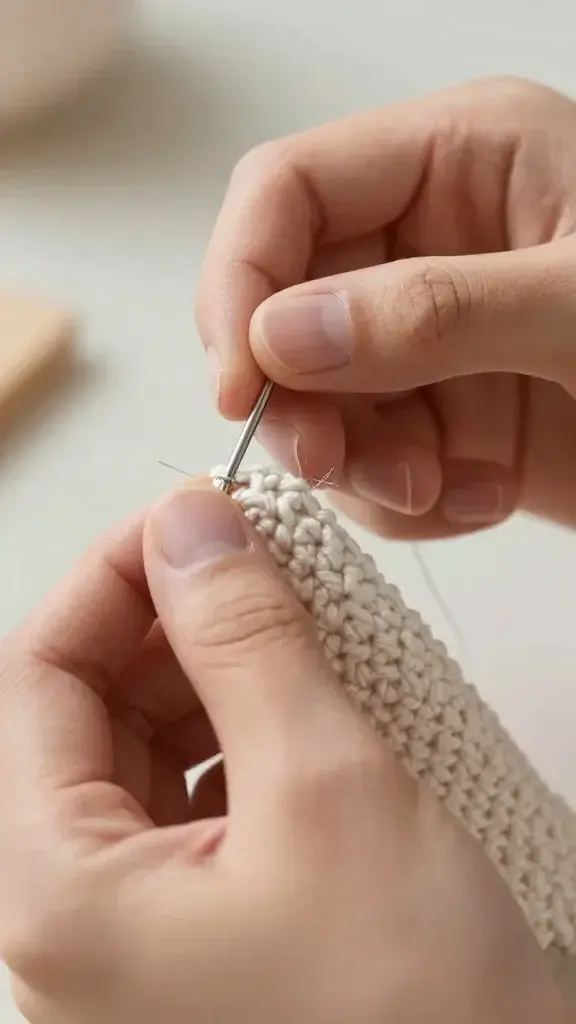
After a few rows, you might stare at your rectangle of stitches and wonder where exactly you’re supposed to insert your hook next. Fair question.
Each stitch has a little V on top—that’s where you’ll insert your hook for the next row. Look for those Vs and your life will get infinitely easier. Some people work under both loops of the V, some work under just one loop for a different effect. For now, go under both loops to keep things simple.
Your work might start looking a bit wonky. Maybe one edge is growing while the other shrinks. This usually means you’re either adding stitches accidentally or forgetting to crochet into the last stitch of each row. Count your stitches obsessively for the first few projects—it helps.
Common Beginner Mistakes (AKA Things I Definitely Did)
Let’s talk about the stuff that trips everyone up at first, because misery loves company.
Your tension is all over the place. Some stitches are tight, some are loose, and your project looks like it has lumps. This is completely normal and will even out with practice. Your hands need to build muscle memory.
You’re crocheting into the wrong stitch. That first and last stitch of each row are sneaky. They hide from you. Always count your stitches to make sure you’re not accidentally increasing or decreasing.
Everything hurts. Your hands might cramp up at first. Take breaks. Stretch your fingers. Rome wasn’t built in a day, and your hands need time to adjust to the repetitive motion.
Practice Projects for Absolute Beginners
You don’t need to jump straight into an elaborate blanket (though I won’t judge if you do—ambition is admirable). Start with something that’ll actually teach you without making you want to throw your hook across the room.
Dishcloths
These are the perfect first project. They’re small, functional, and if they turn out ugly, you’re literally just going to use them to clean stuff anyway. Make a foundation chain of 25 stitches and single crochet until you have a square. Done.
A Simple Scarf
FYI, scarves are just really long rectangles. Chain as wide as you want your scarf, then single crochet until it’s as long as you want. This project builds stamina and helps even out your tension.
Coasters
Small, quick, and you can make a whole set. Plus, they make decent gifts if you want to pretend you’re crafty to your friends.
Frequently Asked Questions
How long does it take to learn basic crochet?
Most people can grasp the fundamental stitches in an afternoon. Becoming comfortable and developing consistent tension takes a few weeks of regular practice. But here’s the thing—you can start making actual useful items within days of learning. You don’t need to be an expert to create something cool.
My stitches keep getting tighter and tighter. What gives?
You’re probably tensing up as you concentrate. Super common beginner mistake. Try to relax your shoulders, take some deep breaths, and loosen your grip on both the hook and the yarn. Think of it like meditation with string.
Should I learn crochet or knitting first?
IMO, crochet is easier to start with. You only manage one hook instead of two needles, mistakes are easier to fix (just pull the loop out and redo it), and you can learn the basics faster. Plus, crochet stitches tend to be more forgiving of tension issues.
Why does my work keep curling?
This usually happens when you’re pulling your stitches too tight or when you’re working only in single crochet for large projects. The solution? Relax your tension or try alternating stitch types. Some curling is also just normal for certain stitch patterns.
How do I know what size hook to use with what yarn?
The yarn label is your best friend here. It’ll tell you the recommended hook size right on the wrapper. As a beginner, stick with these recommendations. Once you get more experience, you can start breaking the rules intentionally.
I’m left-handed. Can I still crochet?
Absolutely! Everything works the same way, just mirrored. When following tutorials, either watch them in a mirror or search for left-handed specific tutorials (YouTube has tons). Some lefties even learn right-handed crochet because there are more resources available, but do whatever feels comfortable.
Keep Going, You’re Doing Great
Learning to crochet is one of those skills that seems impossible until suddenly it isn’t. Your first few projects might look a little rough around the edges, and that’s completely fine. Every experienced crocheter has a box of wonky first attempts hidden somewhere (mine’s in my closet, we don’t talk about it).
The beautiful thing about crochet is that you can literally see yourself improving with each project. That scarf you start today will be noticeably better at the end than at the beginning. Give yourself permission to be bad at first, keep your expectations reasonable, and remember that every stitch is practice. Before you know it, you’ll be the one making those Pinterest-worthy projects that make other people say “I could never do that.”
Spoiler alert: they totally can. And so can you.