How to Make a Chunky Arm Knit Blanket in 2 Hours: No Needles Needed

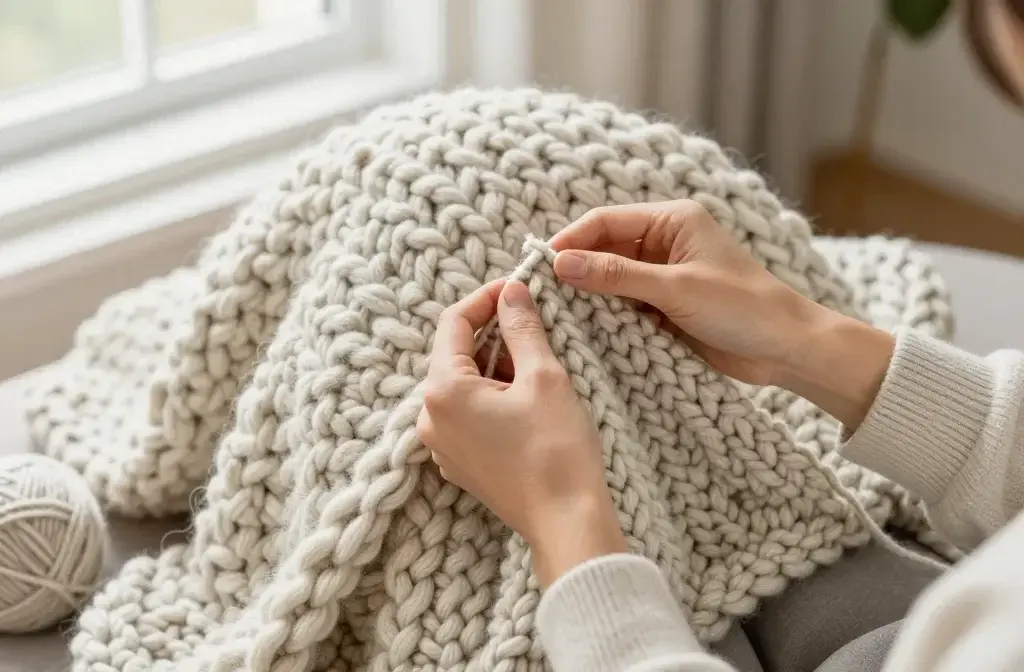
You know that ridiculously cozy chunky blanket you’ve been eyeing on Instagram for $300? Yeah, you can make that yourself in about two hours with just your arms and some giant yarn. No knitting needles, no complicated stitches, and honestly, it’s so easy your dog could probably do it (but please don’t let them, yarn is expensive).
Why Arm Knitting Is Actually Genius
Look, I’m not going to lie to you—when I first heard about arm knitting, I thought it sounded ridiculous. Using your actual arms as knitting needles? But here’s the thing: it’s basically the perfect gateway craft for people who get bored easily or have approximately zero patience for traditional knitting.
The beauty of arm knitting is that it’s physically impossible to mess up for very long. Your stitches are so huge that you can spot mistakes immediately, and fixing them takes seconds instead of the soul-crushing hour you’d spend unpicking tiny stitches. Plus, the instant gratification is real—you’ll have a finished blanket before your favorite streaming show wraps up its latest season.
And can we talk about how satisfying it feels? There’s something deeply therapeutic about working with such chunky yarn. It’s like stress-ball meets meditation meets actual productivity.
What You’ll Actually Need
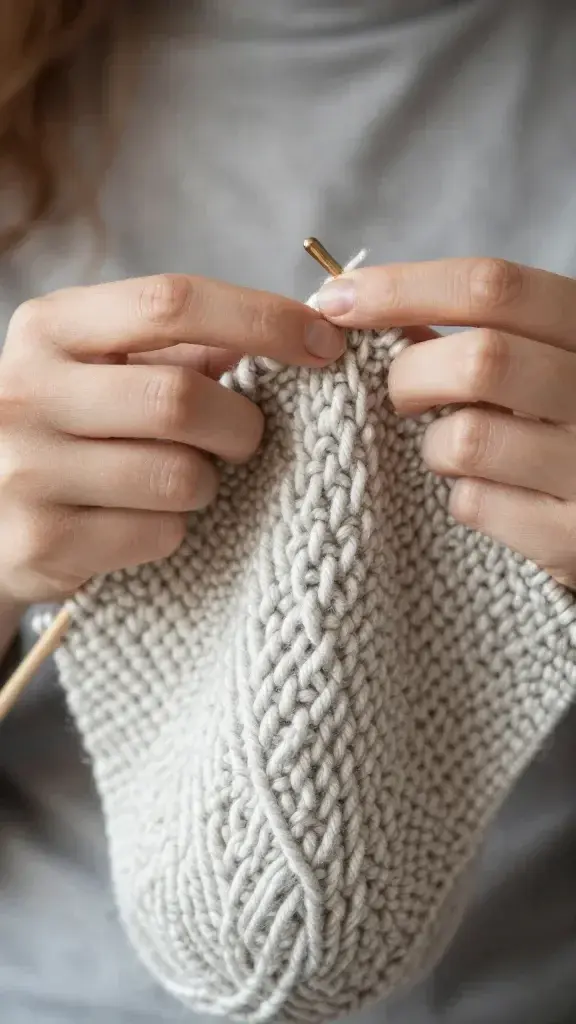
Here’s your shopping list, and I promise it’s shorter than your average grocery run:
- Chunky yarn: You’ll need about 3-5 pounds for a throw blanket (roughly 40×60 inches). Look for super bulky or jumbo yarn—we’re talking the really thicc stuff, usually labeled as weight 6 or 7.
- Your arms: Preferably two of them, though I’m sure someone inventive has figured out a one-arm method.
- Scissors: For cutting the yarn at the end. Revolutionary, I know.
- A clear workspace: You’ll be spreading out, so maybe don’t try this on your crowded coffee table.
Choosing Your Yarn
This is where people get overwhelmed, so let me break it down. You’ve got a few options:
Merino wool roving looks absolutely stunning and gives you that Instagram-worthy aesthetic. But real talk? It pills like crazy, sheds everywhere, and costs as much as a car payment. It’s also not actually spun yarn, so it falls apart more easily.
Acrylic chunky yarn is your budget-friendly bestie. It holds up way better in the wash, doesn’t shed as much, and costs a fraction of the price. Sure, it’s not quite as soft, but your wallet will thank you.
Chenille yarn is the Goldilocks option—soft, durable, and mid-range in price. This is what I’d recommend for your first blanket.
The Actual Arm Knitting Process (It’s Easier Than You Think)
Alright, time to get down to business. Clear off your couch, grab your yarn, and let’s do this.
Step 1: Make Your Slipknot and Cast On
Start by making a slipknot about 6 feet from the end of your yarn (this tail will matter later, trust me). Slide that slipknot onto your non-dominant arm—congrats, you’ve cast on your first stitch!
Now you’re going to cast on more stitches by making loops with the working yarn (the part attached to the ball) and sliding them onto your arm. For a throw blanket, cast on about 18-20 stitches. Your arm will look like it’s wearing a very strange bracelet. This is normal.
Step 2: Start Knitting Like Your Life Depends On It
Here’s where the magic happens. Reach through the first loop on your arm, grab the working yarn, and pull it through to create a new loop. Transfer this new loop to your other arm. Repeat this for every stitch on your arm until you’ve moved everything from one arm to the other.
Boom—you just knitted your first row. Was that so hard? I think not.
Keep doing this, switching arms back and forth, until your blanket reaches your desired length. For a throw blanket, you’re looking at about 40-50 rows, which sounds like a lot but honestly takes no time at all.
Step 3: Casting Off (aka Freedom)
When your blanket is long enough, you’ll cast off to finish it. Knit two stitches like normal, then pull the first stitch over the second stitch and off your arm. Knit another stitch, pull the previous one over it, and keep going until you have just one loop left.
Cut your yarn leaving about a 6-foot tail, pull it through that last loop, and pull it tight. You’re done! Well, almost.
Weaving In Your Ends (The Least Fun Part)
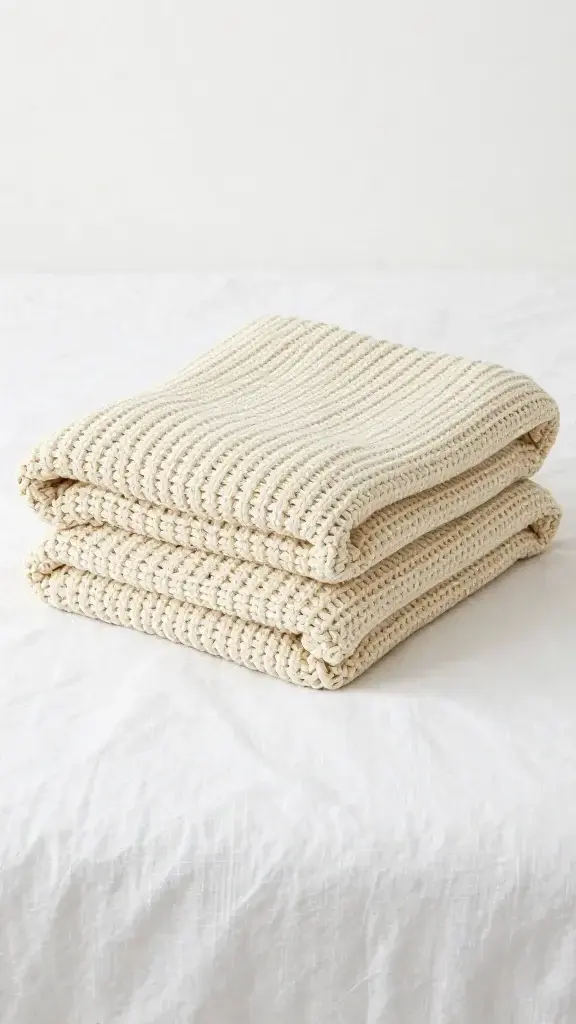
Remember those long tails I told you to leave? Now you’ll weave them into your blanket so they don’t just flop around looking sad and unfinished. Thread the tail through the edge stitches, going in and out at least 4-5 times. This keeps everything secure.
FYI, this is the only tedious part of the whole process, but it takes maybe five minutes. You can handle it.
Pro Tips That’ll Make You Look Like a Genius
After making a few of these blankets (because you will get addicted, I’m warning you now), here are some things I wish someone had told me:
- Keep your tension consistent. If you’re knitting some stitches super tight and others super loose, your blanket will look drunk. Aim for a uniform “comfortably snug” feeling.
- Work on a smooth surface. Carpet creates friction and makes it harder to slide stitches around. A hardwood floor or large table works great.
- Don’t leave your project overnight while it’s still on your arms. I mean, obviously, but also don’t leave it half-finished for days because the yarn can stretch weird.
- Count your stitches after the first few rows to make sure you haven’t accidentally added or dropped any. It happens more easily than you’d think.
Caring For Your New Favorite Blanket
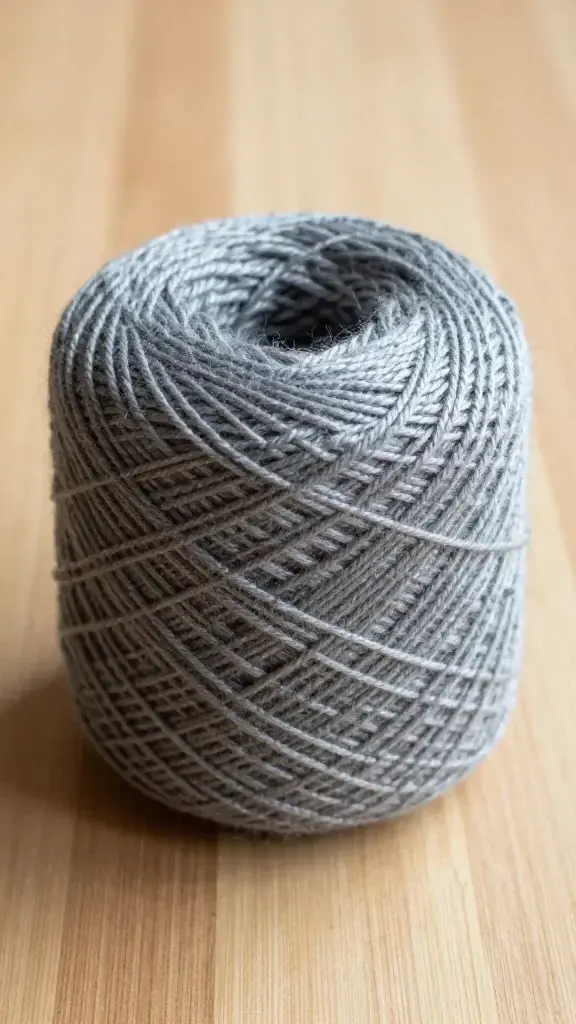
So you’ve got this gorgeous blanket now, and you’re probably wondering how to keep it looking fresh. The care instructions depend entirely on what yarn you used, but here are some general rules:
Acrylic yarn is pretty forgiving—you can usually machine wash it on gentle and lay it flat to dry. Don’t put it in the dryer unless you want a chunky blanket for your cat instead of yourself.
Merino wool roving is high-maintenance (shocking, I know). Hand wash only in cold water, and even then, prepare for some shedding and pilling. Some people just spot-clean these blankets and call it a day.
Chenille yarn usually does fine with hand washing or a gentle machine cycle. Always check the label on your specific yarn, though.
IMO, the best way to keep any arm-knit blanket looking good is to actually use it carefully. These aren’t the blankets you let your kids build forts with or that your dog sleeps on. They’re more like decorative throws that you snuggle under while reading or watching TV.
Frequently Asked Questions
How much does it actually cost to make one of these blankets?
Honestly? It varies wildly. If you go with basic acrylic chunky yarn, you’re looking at around $50-80 for a throw-sized blanket. Merino wool roving can easily run you $200-300. Chenille falls somewhere in the middle at $100-150. Still cheaper than buying a finished one, though!
Can I make this bigger than a throw blanket?
Absolutely! Just cast on more stitches for width and knit more rows for length. Keep in mind that bigger blankets require significantly more yarn and might take closer to 3-4 hours instead of 2. Also, they get heavy while you’re working on them, so prepare your arms for a workout.
What if I drop a stitch or make a mistake?
Don’t panic! The nice thing about arm knitting is that you can easily slide all your stitches off your arm, unravel back to where the mistake happened, and start again from that point. It’s way less dramatic than it sounds. Just keep the working yarn attached and you’re golden.
Do I need to know how to knit already?
Nope! Arm knitting is actually easier than traditional knitting in many ways because you can see exactly what you’re doing. If you can make a loop and pull yarn through it, you can arm knit. I’ve taught people who’ve never touched a craft in their lives, and they picked it up in about 10 minutes.
Will my arms get tired?
A little bit, maybe? It’s not like you’re lifting weights, but you are holding your arms up and moving them around for a couple hours. Take breaks if you need to—just slide your stitches onto a smooth dowel rod or a piece of PVC pipe while you rest. Or, you know, recruit a friend to hold your work for you while you grab snacks.
Can I use regular yarn with this technique?
You technically could, but why would you want to torture yourself? The whole point of arm knitting is the speed and chunkiness. Using regular yarn would take forever, defeat the purpose, and probably look weird. Just use the chunky stuff—your sanity will thank you.
Wrapping It Up (Pun Intended)
Look, arm knitting a chunky blanket isn’t going to change your life or solve all your problems, but it’s a genuinely fun way to spend an afternoon and end up with something cozy and impressive-looking. Plus, people will think you’re some kind of crafting wizard when you tell them you made it yourself.
The best part? Once you make one, you’ll probably want to make five more. They make excellent gifts (everyone loves a chunky blanket), and you can experiment with different colors and yarn types until you find your favorite combination. Just maybe don’t tell people how ridiculously easy it was—let them think you slaved away for weeks. Your secret’s safe with me.