How to Knit for Beginners: Cast On Knit Purl in One Easy Lesson

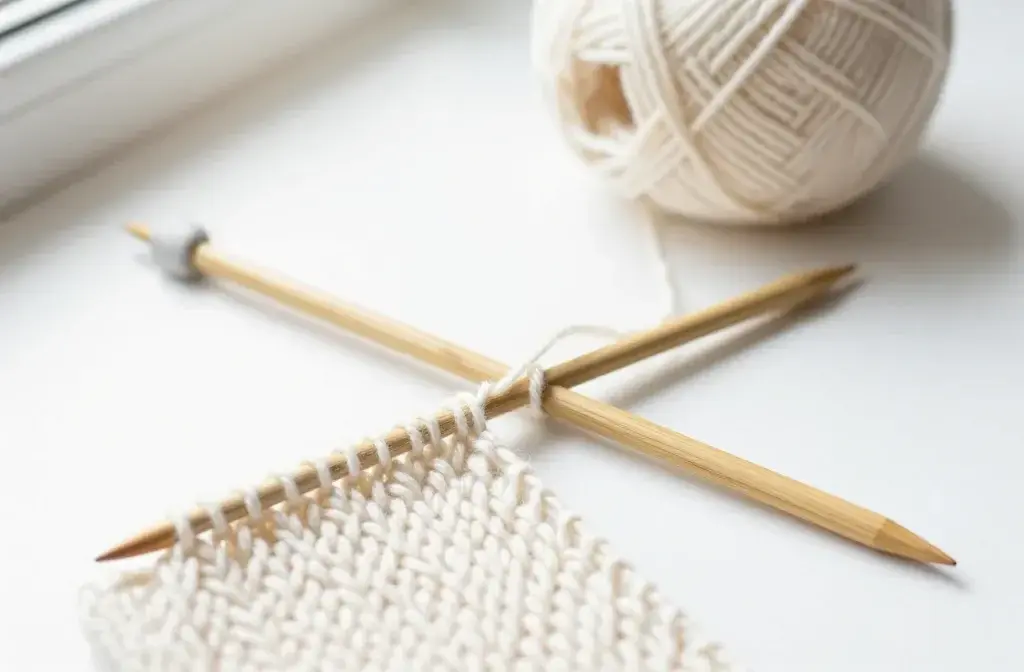
You know those gorgeous chunky scarves and cozy blankets everyone seems to be whipping up on Instagram? They’re knitting, and honestly, it’s way easier than you think. Forget spending months in a class or decoding impossibly complicated pattern books. I’m going to teach you the absolute essentials – cast on, knit, and purl – and you’ll be making actual stuff by the end of this article.
What You Actually Need to Get Started
Let’s talk supplies, but keep it simple. You don’t need to raid the entire craft store on day one.
Grab yourself a pair of US size 8 needles (that’s 5mm for my metric friends). Why size 8? Because they’re thick enough that you can actually see what you’re doing, but not so massive that you’ll accidentally knit a tent instead of a scarf. Go for straight needles about 10 inches long – circular and double-pointed needles can wait until you’re not a total newbie.
For yarn, pick up some worsted weight yarn in a light color. I know that black yarn looks sophisticated, but trust me, you cannot see your stitches in dark colors when you’re learning. Choose something smooth and basic – save the fancy fuzzy stuff for later. You’ll need maybe 200 yards to practice and make something small.
That’s it. Seriously. Two needles and some yarn. You can spend a fortune on knitting gadgets later, but right now? Keep it dead simple.
Casting On: Getting Those First Stitches on the Needle
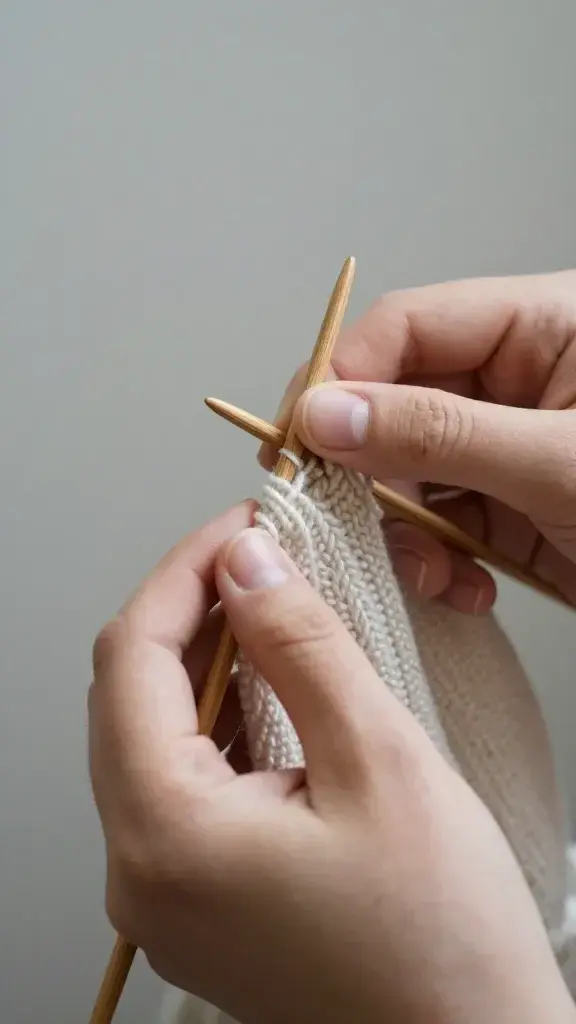
The cast on is how you create your foundation row. Think of it as the ground floor of your knitting building. I’m teaching you the long-tail cast on because it’s versatile and doesn’t look terrible.
The Long-Tail Method Step by Step
First, pull out a length of yarn from your ball – about one inch per stitch you want to cast on. Planning to cast on 20 stitches? Pull out roughly 20 inches, plus a few extra for good measure.
Make a slipknot at that point and slide it onto your needle. This counts as your first stitch. Hold the needle in your right hand, and use your left hand to create a little slingshot shape with the yarn: the tail end goes over your thumb, the ball end goes over your index finger.
Now here’s the fun part: slide the needle up through the loop on your thumb, catch the yarn on your index finger, and pull it back down through the thumb loop. Drop the loop off your thumb and pull everything snug. Boom – one cast-on stitch.
Repeat this until you have the number of stitches you need. Don’t make them super tight or you’ll hate yourself when you try to knit the first row. They should slide along the needle with gentle pressure.
The Knit Stitch: Your New Best Friend
The knit stitch is the foundation of everything. Master this, and you can literally knit an entire scarf using nothing else (it’s called garter stitch, and it’s totally legit).
Hold the needle with your cast-on stitches in your left hand. Take your empty needle in your right hand and insert it into the first stitch from left to right, going in through the front. The right needle should be behind the left needle, making an X shape.
Wrap your working yarn (the one attached to the ball) around the right needle counterclockwise. Now pull that wrap through the stitch on the left needle – you’re basically creating a new loop. Once you’ve got it through, slide the old stitch off the left needle.
Congratulations, you just knit! Do this across the entire row. When you finish, swap hands – the needle that was in your left hand goes to your right, and vice versa. Start the next row.
Common Beginner Mistakes
Don’t accidentally add stitches by knitting into the space between stitches. Only knit into actual stitches on the needle. If you started with 20 stitches, you should still have 20 stitches.
Also, don’t strangle your yarn. Your stitches need room to breathe. Think “comfortably snug” not “death grip.”
The Purl Stitch: Knit’s Slightly Awkward Cousin
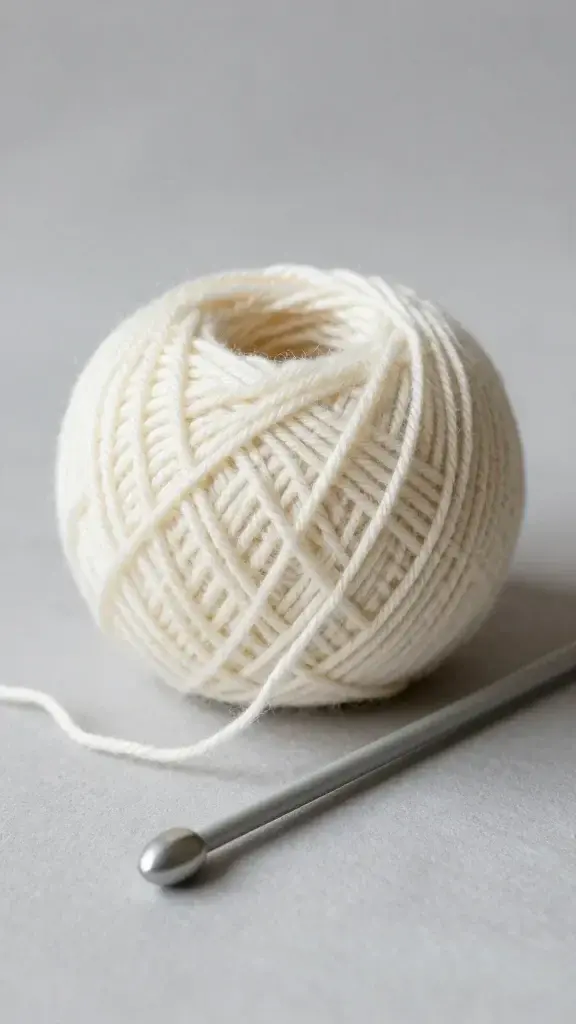
The purl stitch is basically the knit stitch’s reverse. When you combine knits and purls, you unlock approximately one million different stitch patterns. But let’s start simple.
This time, insert your right needle into the first stitch from right to left, going in through the front. The right needle is now in front of the left needle – opposite of the knit stitch. Keep your working yarn in front of your work (closest to you).
Wrap the yarn around the right needle counterclockwise, then pull that new loop through the stitch. Slide the old stitch off the left needle. That’s a purl stitch!
FYI, purling feels weird at first. Like, really weird. Your hands will feel clumsy, and you’ll wonder if you’re doing it wrong. You’re probably doing it right – it just takes practice. The purl stitch is notorious for being the awkward middle school phase of knitting.
Putting It All Together: Stockinette Stitch
Ready to feel like a real knitter? Let’s make stockinette stitch, which is that classic “V” pattern you see on most sweaters.
Here’s the magic formula: knit one entire row, then purl one entire row. Keep alternating. Knit a row, purl a row, knit a row, purl a row. That’s literally it.
One side will show those pretty V’s (that’s the “right side” or front of your fabric). The other side will look bumpy (that’s the “wrong side” or back). This difference is totally normal and exactly what should happen.
If you knit every row instead, you get garter stitch – those horizontal ridges that look super cozy. Both are great! You can make entire projects with just these basic patterns.
Tension: The Thing Nobody Tells You About
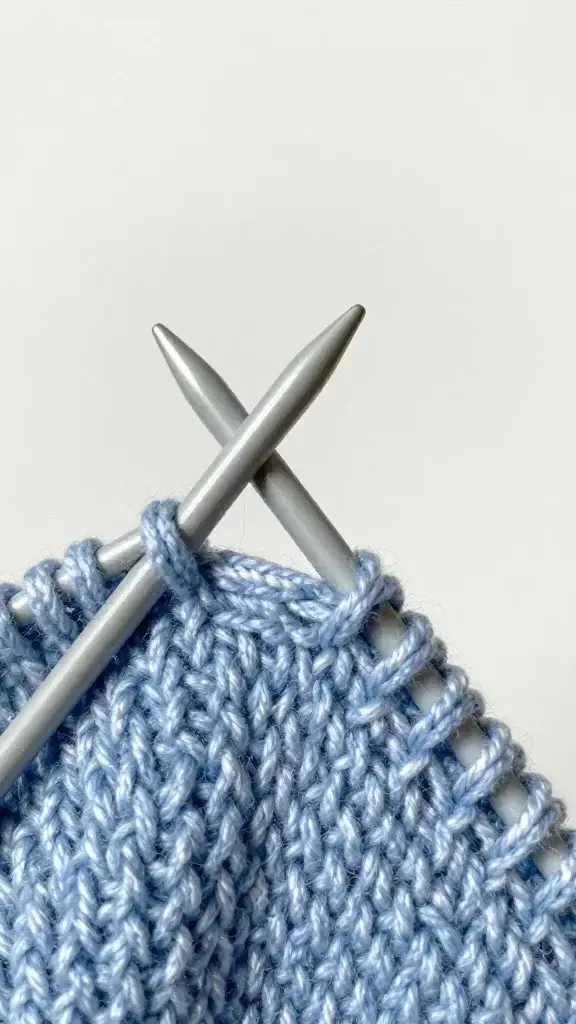
Your first attempts will probably look drunk. Some stitches will be huge, some tiny, and the whole thing might lean sideways. Totally normal.
Tension refers to how tightly or loosely you hold your yarn while knitting. It controls the size and evenness of your stitches. Everyone develops their own natural tension over time, but it takes a few rows (or honestly, a few projects) to find yours.
The key is consistency. Try to keep the same level of tightness throughout. Don’t white-knuckle your needles one minute and go completely slack the next. Find a comfortable grip and stick with it.
Some people wrap the yarn around their pinky or thread it through their fingers to maintain consistent tension. Experiment with what feels natural to you. There’s no single “correct” way to hold your yarn – whatever works, works.
Practice Project: Your First Dishcloth
Let’s make something useful instead of just knitting random squares forever. A dishcloth is perfect because:
- It’s small enough to finish quickly (instant gratification!)
- Nobody cares if it’s perfect – it’s going to clean your dishes
- You can use cotton yarn and actually use it
- It’s a real finished object you can show people
Cast on 30 stitches using cotton yarn. Knit every row until your piece is roughly square (about 8-9 inches). Cast off (we’ll cover that in a sec), weave in your ends, and boom – functional item achieved.
IMO, making something you can actually use beats knitting practice swatches any day. Plus, you can give these as gifts and people think you’re super crafty.
Casting Off: How to Actually Finish Something
So you’ve knit your dishcloth, scarf, or whatever. Now what? You can’t just pull the needles out – everything will unravel faster than your New Year’s resolutions.
Casting off (or binding off) secures your stitches so your work doesn’t fall apart. Here’s how:
Knit two stitches normally. Use your left needle to lift the first stitch you knit up and over the second stitch, then drop it off the needle completely. You now have one stitch on your right needle.
Knit one more stitch (so you have two on the right needle again). Repeat the process: lift the first stitch over the second and off the needle. Keep going until you have just one stitch left.
Cut your yarn, leaving a 6-inch tail. Pull it through that last stitch and tighten. Done! Your work is secure and won’t unravel.
Frequently Asked Questions
How long does it take to learn to knit?
You can learn the basic mechanics in an afternoon, honestly. Getting your stitches to look even and developing muscle memory takes a few weeks of regular practice. But you’ll be making actual usable things within your first week if you practice for even 30 minutes a day. Don’t expect perfection – expect progress.
My stitches keep falling off the needle. What am I doing wrong?
You’re probably holding your needles at too steep an angle or being too loose with your tension. Keep your needles roughly parallel to each other while you work, and make sure you pull each new stitch snug (but not tight) after you form it. Also, pointy needle tips are more prone to dropping stitches than rounded ones, so consider your needle choice.
I keep accidentally adding or losing stitches. Help!
Count your stitches at the end of every few rows until you get the hang of it. The most common culprits: knitting into the space between stitches (adds stitches), not pulling your first stitch tight enough so it looks like two stitches (adds stitches), or accidentally dropping stitches off the needle (loses stitches). Slow down and watch what you’re doing until it becomes automatic.
Is continental or English style better?
These are just two different ways to hold your yarn – English style holds it in the right hand, continental holds it in the left. Neither is “better.” Try both and see which feels more natural to you. Continental is often faster once you learn it, but English is easier for most people to pick up initially. You do you.
My edges look messy and loose. Is that normal?
Super normal for beginners! The first and last stitches of each row tend to be looser than the rest. Some people always knit or purl the first stitch extra tight to compensate. Others use a slipped stitch edge technique. For now, just know it’s normal and you’ll improve with practice. Nobody’s judging your dishcloth edges.
Can I teach myself to knit, or do I need classes?
You’re literally reading an article that’s teaching you to knit, so yes, you can totally teach yourself! YouTube videos are also incredibly helpful for seeing the movements in action. That said, some people really benefit from in-person instruction, especially if they’re getting frustrated. Many yarn stores offer free or cheap beginner sessions. Do whatever works for your learning style.
Conclusion: You’re a Knitter Now
Look at you! You know how to cast on, knit, purl, and cast off. That’s genuinely all you need to make scarves, dishcloths, blankets, and even simple sweaters. Everything else in knitting is just combinations and variations of these basic skills.
Your first projects will look handmade (and not in that trendy artisan way). That’s fine. Keep going. Every knitter who’s ever lived has made wonky first projects with weird tension and dropped stitches. The difference between a beginner and an experienced knitter is just hours of practice.
So grab your needles, cast on some stitches, and start making something. The best way to learn knitting is to actually knit. Make mistakes, drop stitches, knit lumpy dishcloths, and enjoy the process. Welcome to the craft!