How to Incorporate Dyed Rope Into Your Macrame Projects

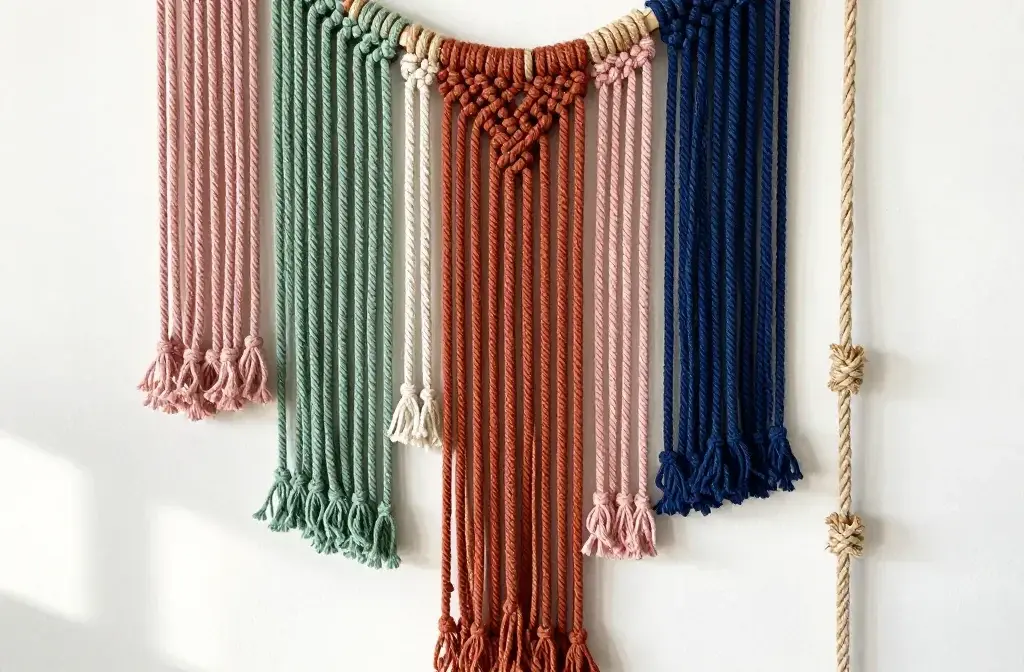
Tired of beige macrame that looks like everyone else’s? Dyed rope is about to change everything.
Adding color to your macrame projects transforms them from basic craft fair vibes to gallery-worthy statement pieces that actually match your decor.
Ready to level up your knotting game? These five techniques will have you creating custom colored pieces like a total pro.
1. Start With Strategic Color Blocking
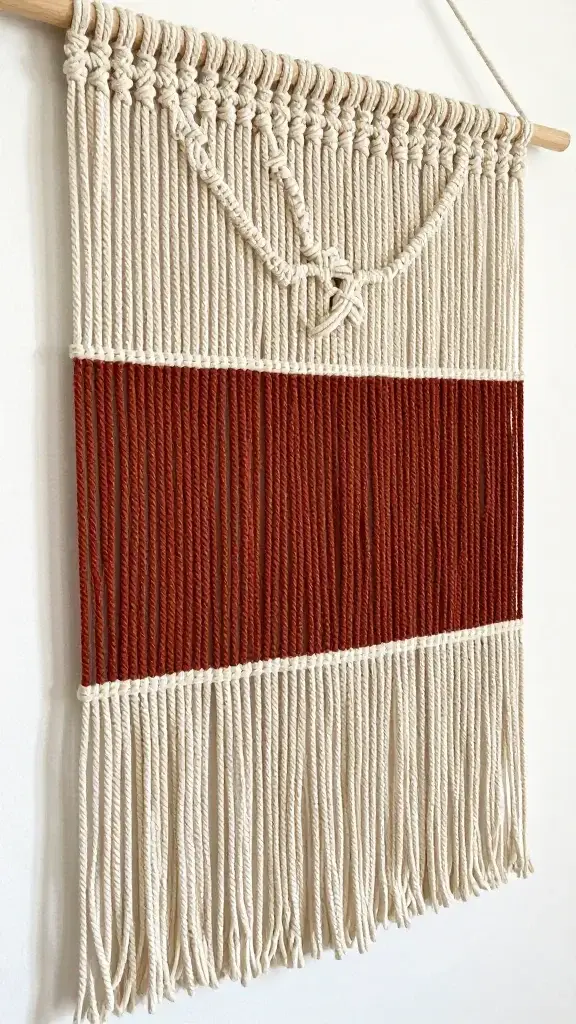
Color blocking is your secret weapon for creating bold, modern macrame designs without getting too complicated. Think of it like painting with rope – you’re dividing your piece into distinct colored sections that create visual impact.
The easiest way to start is by planning your project in horizontal bands. Use natural rope for the top third, switch to a deep rust or terracotta for the middle, and finish with cream at the bottom. This technique works especially well for wall hangings where you can really showcase those clean color transitions.
Color Pairing Ideas:
- Dusty rose with natural and sage green
- Navy blue with white and burnt orange
- Charcoal gray with blush pink and ivory
- Mustard yellow with chocolate brown and cream
The key is choosing colors that actually complement each other instead of fighting for attention. Your finished piece should look intentional, not like a rainbow exploded on it.
2. Master the Ombre Fade Technique
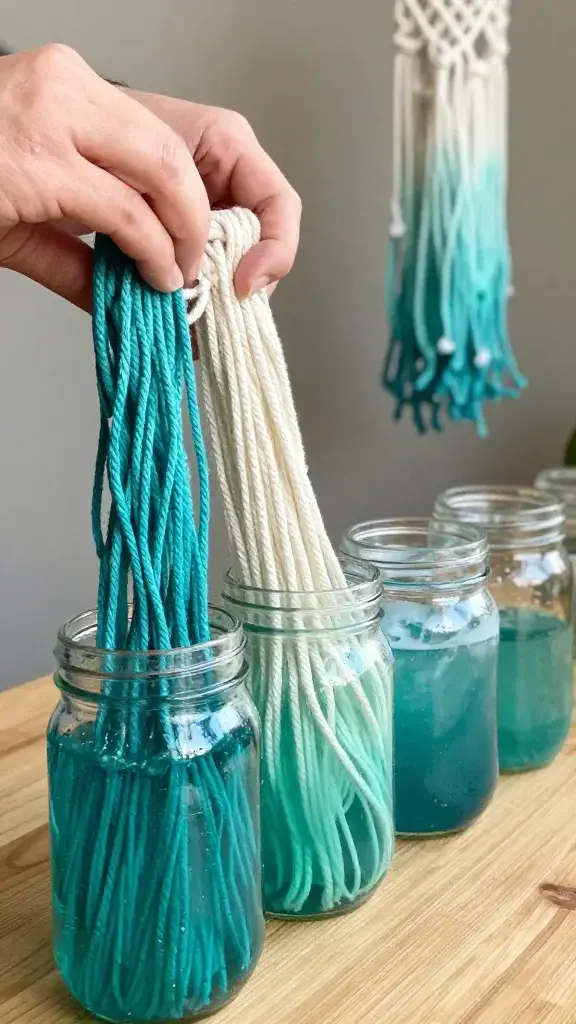
Want that dreamy gradient effect that looks impossibly professional? Ombre dyeing gives you smooth color transitions that make people wonder how much you paid for your piece.
You can buy pre-dyed ombre rope, but honestly? Dyeing it yourself gives you way more control over the exact shades you want. Dip-dyeing is your friend here – literally dip sections of your rope into progressively diluted dye baths to create that fade effect.
This technique absolutely shines in plant hangers and long wall hangings where the color can gradually shift from dark at the top to light at the bottom. The movement draws your eye down the entire piece, creating visual interest that plain rope just can’t match.
Pro Tips:
- Always test your dye on a small rope sample first
- Keep your fade sections even – measure before dyeing
- Let rope dry completely before knotting or colors will bleed
Trust me, patience during the dyeing process saves you from wonky, uneven results later.
3. Add Pops of Accent Colors
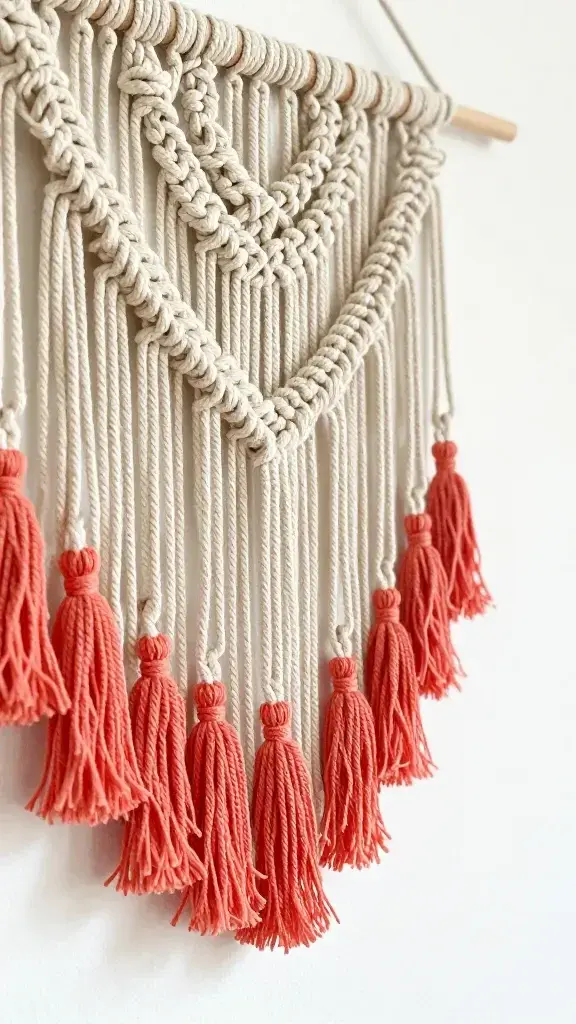
Not ready to commit to a full rainbow project? Accent colors let you test the waters without going overboard. Think of them like accessories for your macrame.
Use dyed rope for just the decorative elements – the tassels, fringe, or small details that catch the eye. Keep your main structure in natural rope, then add those colorful hits where they’ll make the biggest impact. This approach works perfectly for beginners who want color without the commitment.
A natural rope wall hanging with coral-colored tassels? Gorgeous. A plant hanger with emerald green accents woven through neutral knots? Chef’s kiss. You’re creating focal points that make your piece memorable without overwhelming the design.
The beauty of this technique is that you can easily swap out accent colors seasonally. FYI, this is the most budget-friendly approach since you’re only buying small amounts of dyed rope.
4. Try Subtle Tone-on-Tone Variations
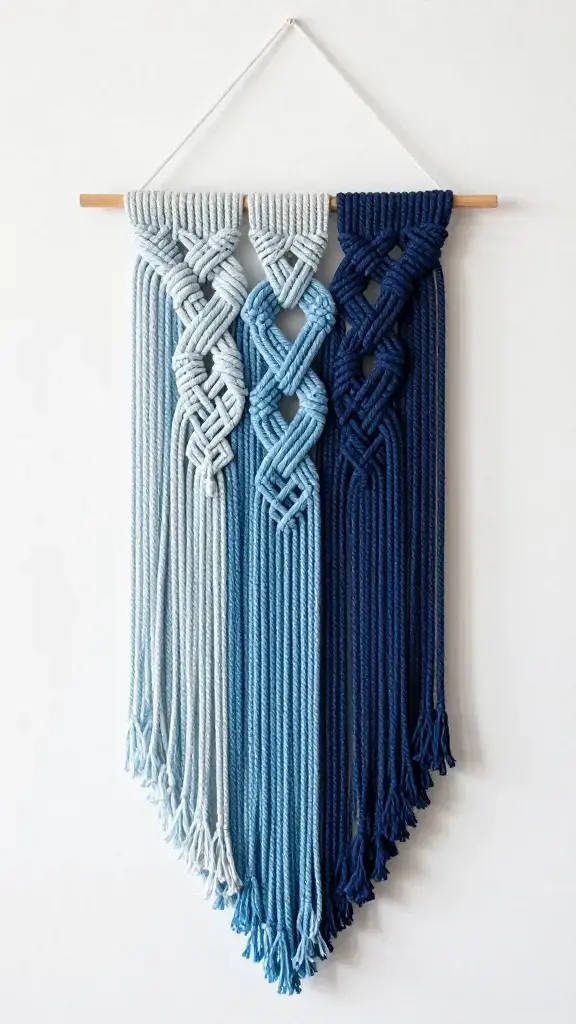
Sometimes the most sophisticated look is the one that whispers instead of shouts. Tone-on-tone macrame uses different shades of the same color family for an elevated, cohesive aesthetic.
Imagine a piece that layers light gray, medium gray, and charcoal – the subtle shifts create depth and dimension that monochrome projects lack. This technique looks especially chic in modern, minimalist spaces where you want texture without busy patterns.
Best Color Families for This:
- Blues: powder, sky, and navy
- Greens: mint, sage, and forest
- Neutrals: cream, tan, and chocolate
- Pinks: blush, dusty rose, and mauve
The result looks intentional and curated, like you hired an interior designer. Seriously, this is the move if you want your macrame to look expensive and thoughtful.
5. Experiment With Pattern and Placement
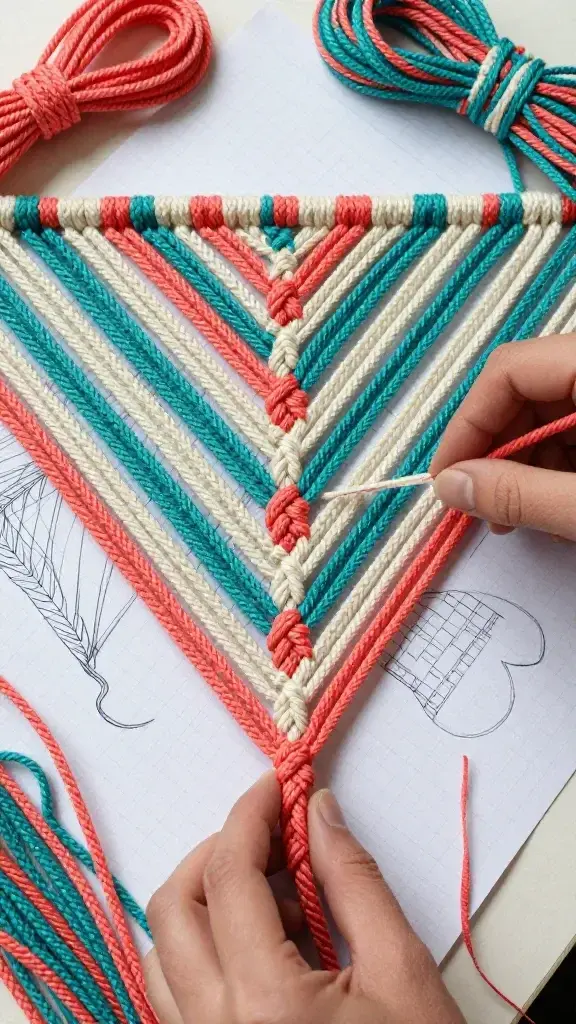
This is where you get to flex your creative muscles. Strategic color placement means using dyed rope to create actual patterns within your knots – stripes, diamonds, chevrons, or whatever geometric shape your heart desires.
Plan your design on paper first, mapping out exactly where each color will go. You’re basically creating a blueprint for your knotwork. This prevents the frustration of realizing halfway through that your pattern doesn’t work the way you imagined.
Diagonal stripes created with alternating natural and dyed rope create movement. Checkerboard patterns using two contrasting colors make bold statements. You can even spell out words or create simple images if you’re feeling ambitious and have the patience of a saint.
This technique requires the most planning but delivers the most unique results. No one else will have a piece exactly like yours, and isn’t that the whole point?
Adding dyed rope to your macrame projects opens up endless creative possibilities that transform your work from hobby crafts to actual art. Start with one technique that speaks to you, master it, then mix and match to develop your signature style. Your colorful creations are waiting!