Macrame for Beginners: Your Complete First-Project Guide

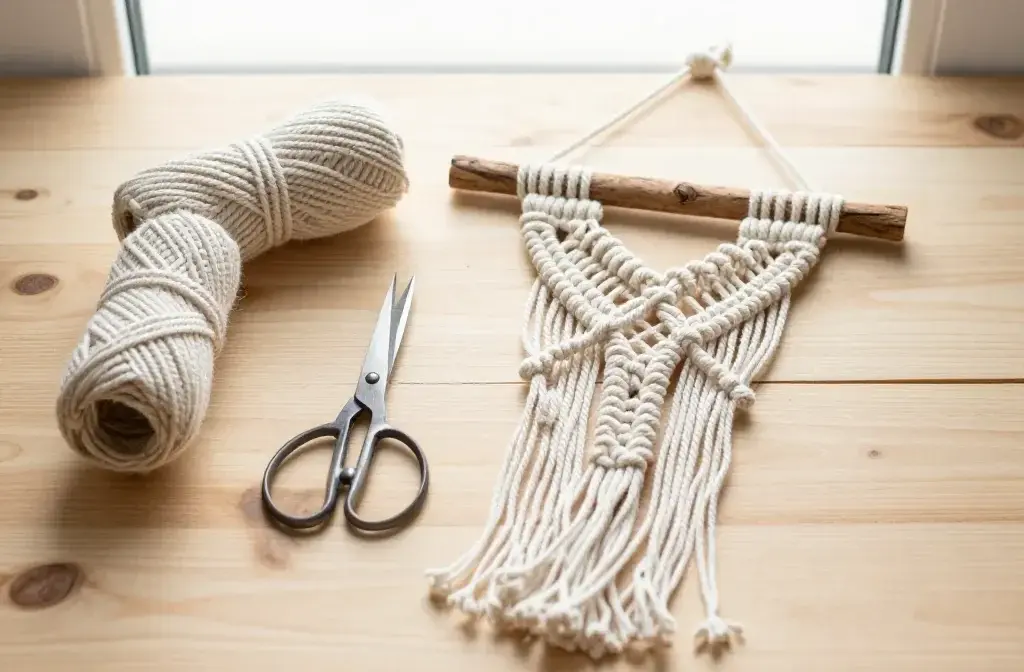
Ever scrolled past those gorgeous macrame wall hangings and thought “I could never make that”? Think again.
Macrame is way easier than it looks, and your first project can be done in a single afternoon. No fancy skills required, just some rope and a little patience.
Ready to create something beautiful with your own two hands? Let’s turn you into a knot-tying expert.
1. Gather Your Simple Starter Supplies
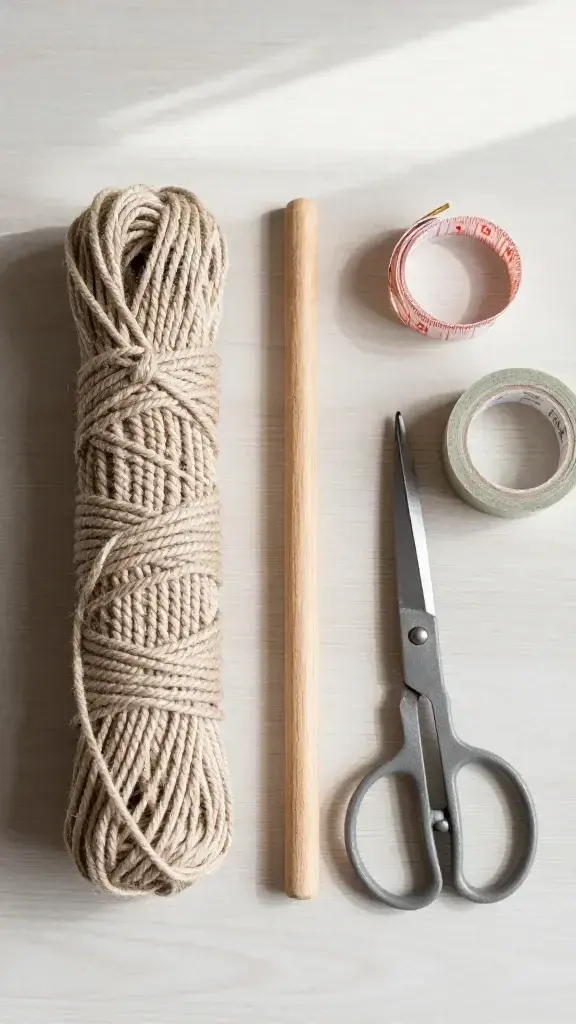
Good news – you don’t need a craft store haul to start. Macrame is refreshingly minimal when it comes to supplies.
Essential Materials:
- Cotton rope or cord (3-5mm thickness works perfectly)
- Wooden dowel or branch (8-12 inches long)
- Scissors
- Measuring tape
- Masking tape (optional, but helpful)
Skip the fancy stuff for now. A simple three-strand cotton cord from any hardware store is your best friend. It’s forgiving, shows your knots clearly, and won’t break your budget.
Pro tip: Buy way more cord than you think you need. Seriously, macrame eats up length faster than you’d expect.
2. Master The Four Foundation Knots
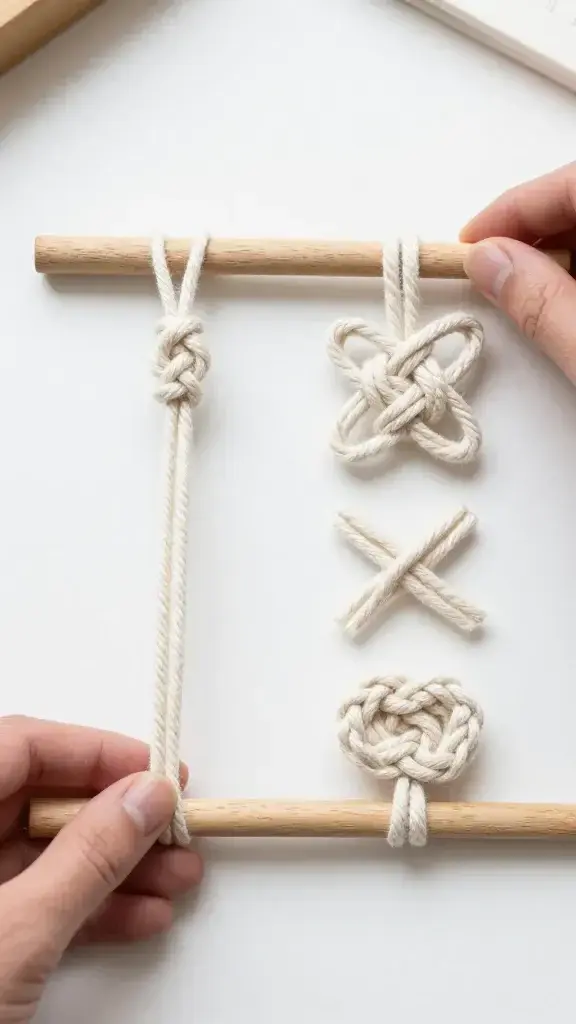
Here’s the secret nobody tells you – all macrame projects use basically four knots. Learn these, and you can tackle almost anything.
The Essential Four:
- Lark’s head knot – attaches your cord to the dowel
- Square knot – the workhorse of macrame
- Half hitch knot – creates those diagonal lines
- Spiral knot – adds beautiful texture
Start with the square knot. It’s the bread and butter of beginner projects, and once you nail it, you’ll feel unstoppable.
YouTube is your best teacher here, FYI. Watch someone tie each knot a few times, then practice until your hands remember the movement. You’ll mess up – that’s totally normal.
3. Start With A Basic Wall Hanging
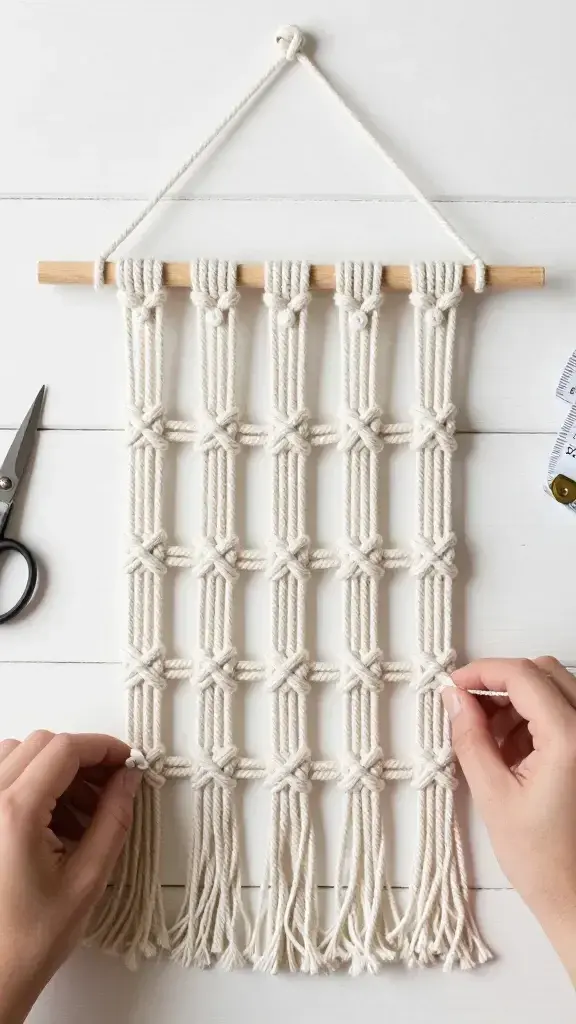
Forget complicated plant hangers for your first rodeo. A simple wall hanging lets you practice without the pressure of structural integrity.
Cut eight pieces of cord, each about four times the length of your desired finished project. Attach them to your dowel using lark’s head knots, and you’ve got 16 working strands.
Simple Pattern To Follow:
- Row 1: Tie square knots across using groups of four strands
- Row 2: Leave outer two strands free, tie square knots with remaining strands
- Row 3: Repeat Row 1 pattern
- Finish: Trim ends at angles for a modern look
This basic pattern creates that trendy diamond effect everyone loves. Hang it above your bed, and suddenly you’re an artisan.
4. Embrace Your Wonky First Attempts
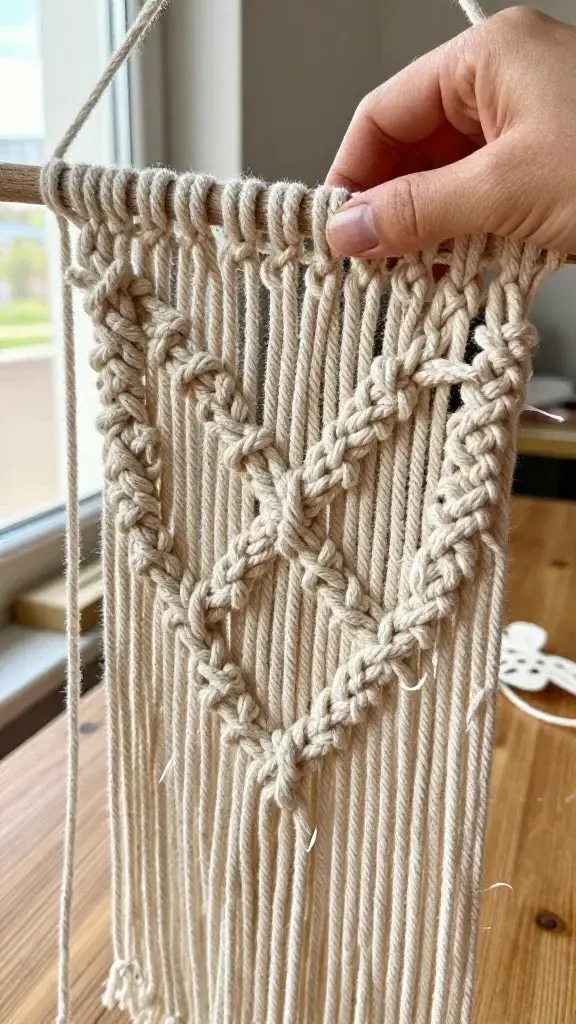
Let’s be real – your first project probably won’t be Instagram-worthy. And that’s completely okay.
Your knots might be uneven. Your tension might vary wildly. You’ll definitely untie things and start over at least three times. Trust me, every macrame artist has been there.
The beauty of macrame is that slight imperfections add handmade character. Those “mistakes” prove a human made this, not a machine.
Keep your expectations reasonable for project one. Aim for “charming and homemade” rather than “museum quality.” You’ll improve with every knot you tie.
5. Level Up With Smart Finishing Touches
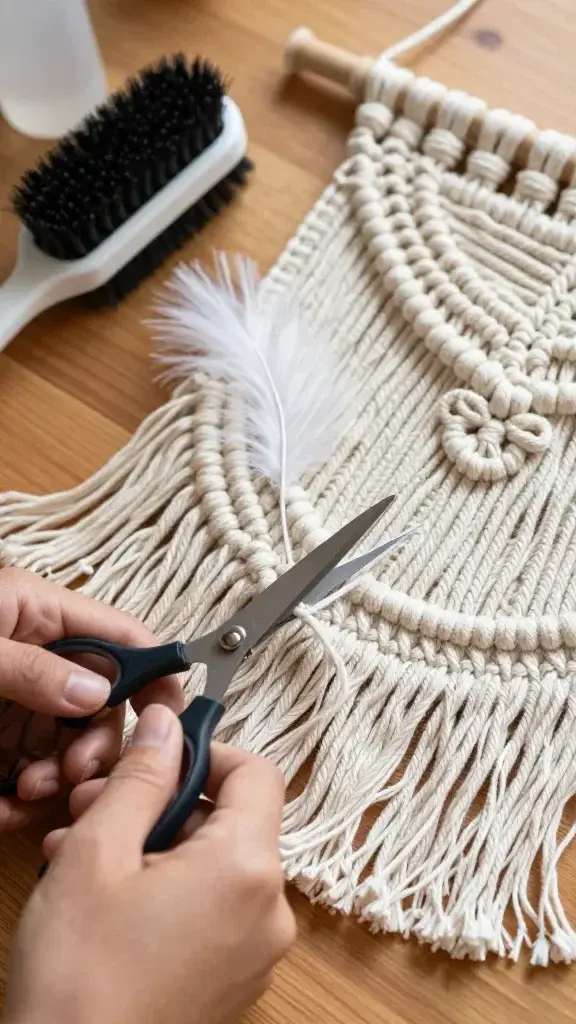
Want to make your beginner project look professional? It’s all in how you finish it.
Finishing Techniques:
- Trim strategically – use sharp fabric scissors for clean cuts
- Comb out the ends – unravel the strands for a feathery fringe
- Even everything up – hang your piece and trim to match lengths
- Steam gently – removes kinks and makes cord behave
A quick comb-through with a pet brush (yes, really) transforms scraggly ends into gorgeous fringe. This one trick makes everything look intentional.
Add a dab of clear nail polish to prevent unraveling if you’re gifting your creation. Your piece will look store-bought in the best way possible.
Ready to get knotting? Grab some cord and dive in – your walls are about to get way more interesting. The best part about macrame is that every project teaches you something new, so that first “practice piece” is really just the beginning of your next creative obsession.