Macrame Mistakes Beginners Make: 8+ Common Problems and Easy Fixes

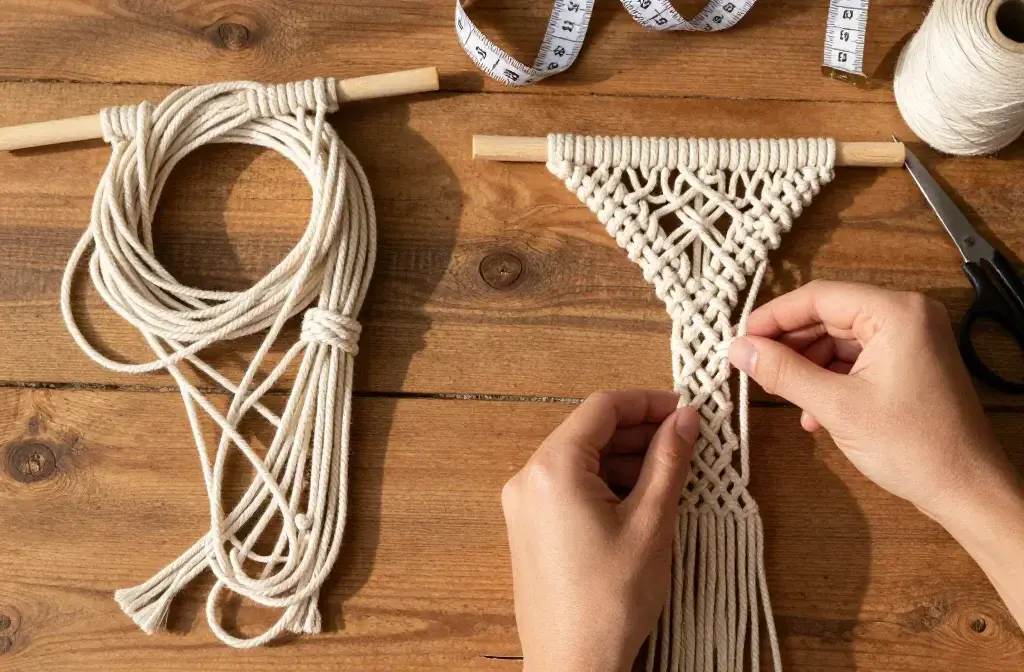
Ever spent hours on a macrame piece only to have it look wonky, twisted, or just plain wrong?
These common mistakes are probably sabotaging your beautiful wall hangings and plant hangers before you even finish them.
Let’s fix those frustrating problems so you can actually enjoy this craft instead of rage-quitting halfway through.
1. Cord Tension Chaos: The Tight and Loose Disaster
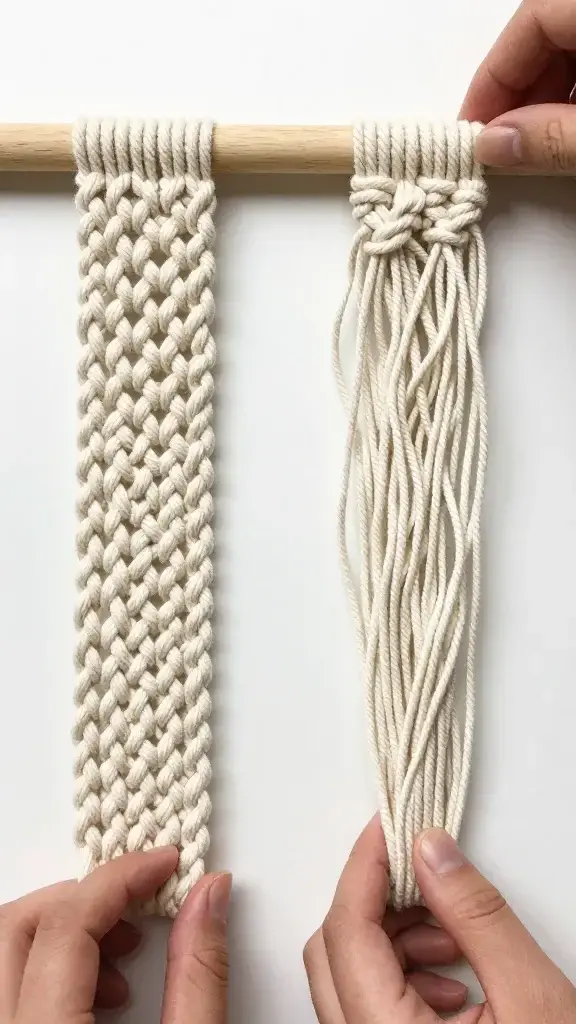
You know that feeling when your knots look perfect in the tutorial but yours resemble a tangled mess? Welcome to the tension problem. Inconsistent cord tension is the sneaky culprit behind lumpy, uneven macrame that makes your project look homemade in the worst way possible.
The fix is surprisingly simple. Keep your working cords at a consistent tightness throughout each knot. Pull each cord with the same amount of force, and seriously, take your time. Your hands will develop muscle memory after a few projects.
Quick Tension Tips:
- Pull each knot tight before moving to the next one
- Use your non-dominant hand as a guide to measure tension
- Practice on scrap cord until your knots look uniform
Once you nail consistent tension, your pieces will transform from amateur-hour to professional-looking overnight. Trust me on this one.
2. Wrong Cord Length = Running Out Mid-Project
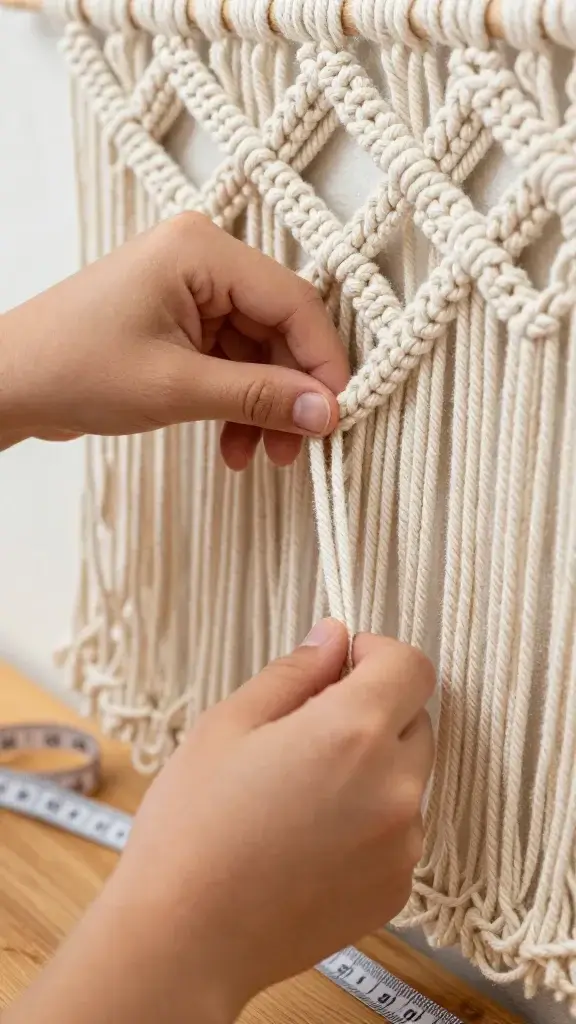
Nothing kills your macrame buzz faster than running out of cord when you’re three-quarters done with an intricate pattern. Beginners almost always underestimate how much cord they need because those knots eat up way more material than you’d think.
Here’s the golden rule: multiply your finished length by four to six times for basic knots, and even more for complex patterns. Yeah, it seems excessive, but you’ll thank yourself later when you’re not frantically trying to splice in new cord.
Different knots consume different amounts of cord. Square knots need about 4x your desired length, while spiral knots can gobble up 6x or more. When in doubt? Cut longer. You can always trim excess, but you can’t magically create more cord.
3. Skipping the Cord Prep Step
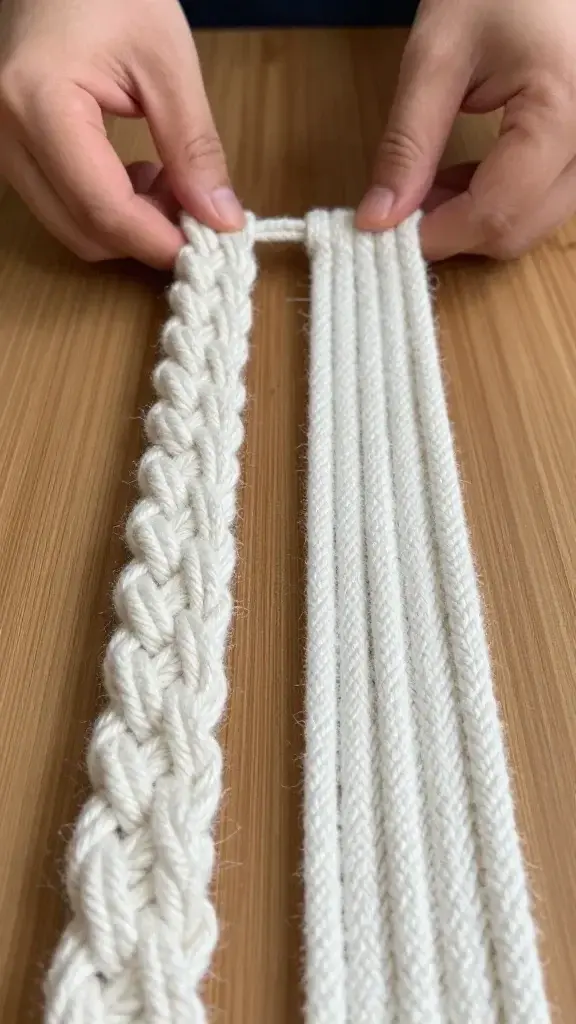
You’re excited to start knotting, so you skip straightening and preparing your cord. Big mistake. Pre-twisted, kinked cord creates wonky knots that never quite sit right, no matter how perfect your technique is.
Untwist your cord before you start working with it. Run it through your hands, give it a gentle stretch, and make sure it’s not fighting you with built-in twists. Some people even lightly dampen cotton cord to make it more manageable.
Cord Prep Checklist:
- Unroll and straighten each cord section
- Check for manufacturing twists and unwind them
- Cut clean ends with sharp scissors (no fraying)
- Consider sealing synthetic cord ends with a lighter
This two-minute prep saves you hours of frustration and makes your finished piece look exponentially better.
4. Ignoring Your Mounting Method
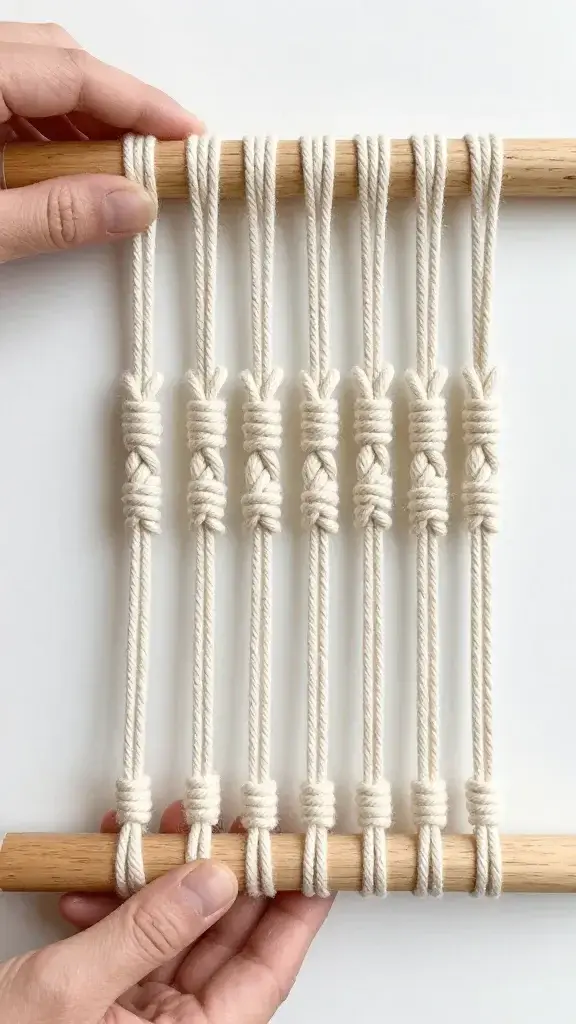
How you attach your cords to the dowel or ring matters way more than you think. A loose, sloppy mount means your entire piece shifts and twists as you work, throwing off your spacing and symmetry.
Use a lark’s head knot for most projects, and make sure each one sits snugly against the next. No gaps, no overlaps. Line them up like little soldiers, and your starting row will look clean and professional.
FYI, the direction you fold your lark’s head knot affects how the cord hangs. Keep them all facing the same direction for a uniform look at the top of your project.
5. Not Securing Your Work Surface
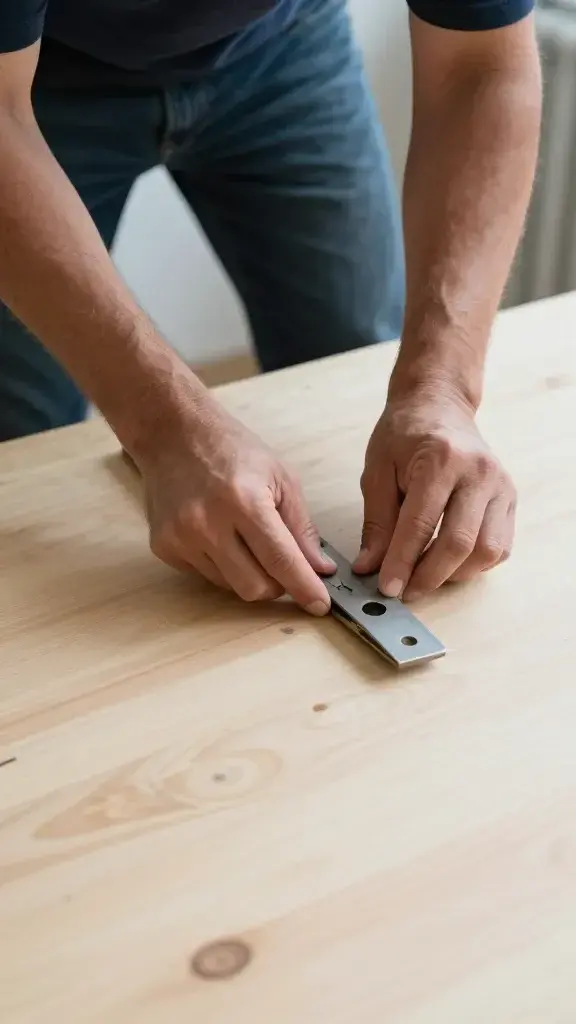
Trying to macrame while your project swings around like a pendulum? Yeah, that’s a recipe for crooked knots and serious frustration. Beginners often skip securing their work, then wonder why nothing lines up properly.
Clamp your dowel to a sturdy surface, pin your work to a macrame board, or use a heavy clipboard. Your workspace should be stable enough that you can pull tight knots without everything shifting around.
Securing Solutions:
- C-clamps for dowels attached to tables
- Cork boards with T-pins for flat pieces
- Weighted macrame boards (game-changer, IMO)
- Command hooks on walls for vertical projects
A stable work surface means even tension, straight lines, and way less swearing at your innocent cords. Plus, you can actually walk away mid-project without everything getting tangled.
These five fixes will seriously level up your macrame game faster than any fancy tutorial. Now grab those cords and show them who’s boss – you’ve got the knowledge to create something absolutely gorgeous!