
20+ Fall Candle Scents to Make at Home: Cozy Autumn DIY Recipes That Beat Anything Store-Bought


There’s a specific smell that means fall has arrived, somewhere between apple cider steam and a cinnamon stick warming on the stove, and it turns out you don’t need a candle aisle to get it in your own home.
Learning fall candle scents to make at home starts with something simpler than most people expect: a few dropper bottles, a double boiler, and a little patience while wax cools between layers.
This roundup walks through the whole process, from setting up a proper testing station and reading fragrance oils before you commit to a blend, to pouring multi jar batches with wood wicks, layering dessert style candles, and building 20 different scent combinations that go way past the usual pumpkin spice jar.
Some lean citrus and bright, some go deep and smoky, and a few borrow flavors straight from a coffee shop menu.
Grab your soy wax flakes and clear a spot on the counter.
By the end of this one, your house is going to smell like the best parts of October, and your friends are going to want the recipe
1. This Flatlay Is Basically the Whole Fall Fragrance Wheel in One Shot
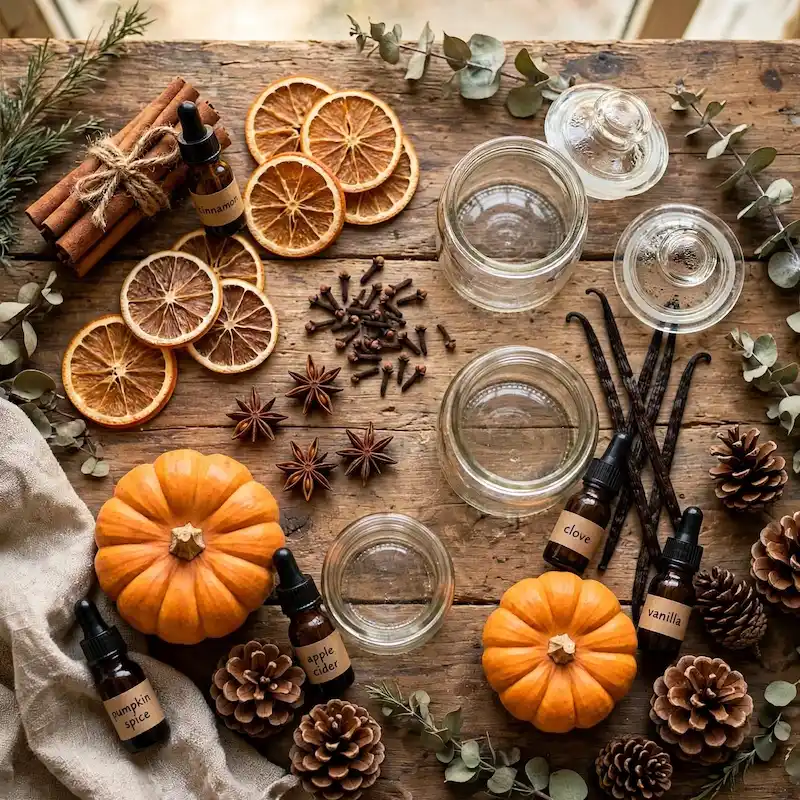
Now this is what a fall candle recipe actually starts with.
Empty glass jars sit ready in the center, surrounded by six labeled dropper bottles reading cinnamon, clove, vanilla, pumpkin spice, and apple cider, plus real dried orange slices, whole star anise, cloves, and vanilla beans scattered around as the visual key to what’s inside those bottles.
Mini pumpkins and pinecones round out the styling, but the bottles and jars are the part that actually matters for making anything.
What makes this layout useful rather than just pretty is the pairing.
Each dropper bottle has its matching whole spice or fruit sitting nearby, cinnamon sticks by the cinnamon oil, star anise near the clove bottle, dried orange slices in the same corner as the warmer spice tones.
That’s a genuinely helpful way to plan a blend before ever melting wax, since you can see and smell your ingredients side by side first.
2. This Is What Actually Blending Four Fall Scents Together Looks Like
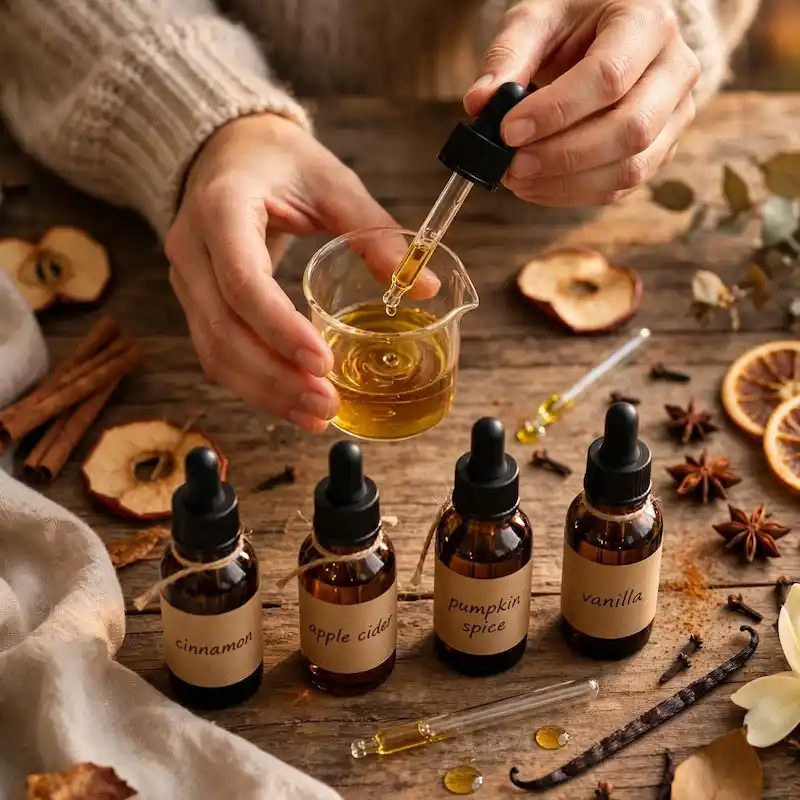
Hands, a dropper, and a small glass beaker catching drops of amber oil, this is the step most fall candle posts skip straight past.
Four labeled bottles line up on the table ready to go, cinnamon, apple cider, pumpkin spice, and vanilla, but the real skill is in the beaker, where they get combined in small test amounts before anyone commits to a full batch.
Dried apple rings, orange slices, and star anise scattered around aren’t just styling here, they’re a visual cheat sheet for what each bottle is meant to smell like.
Building a blend this way, drop by drop into a shared beaker, is the only real way to know if cinnamon and apple cider actually balance each other or if one drowns the other out.
Add a few drops of the boldest oil, like pumpkin spice, into the beaker first.
Add vanilla a drop at a time, swirling the beaker to check the balance as you go.
Let the small batch sit a few minutes before deciding to mix it into a full pour.
3. A Real Double Boiler Setup Protects Delicate Fall Spices From Scorching
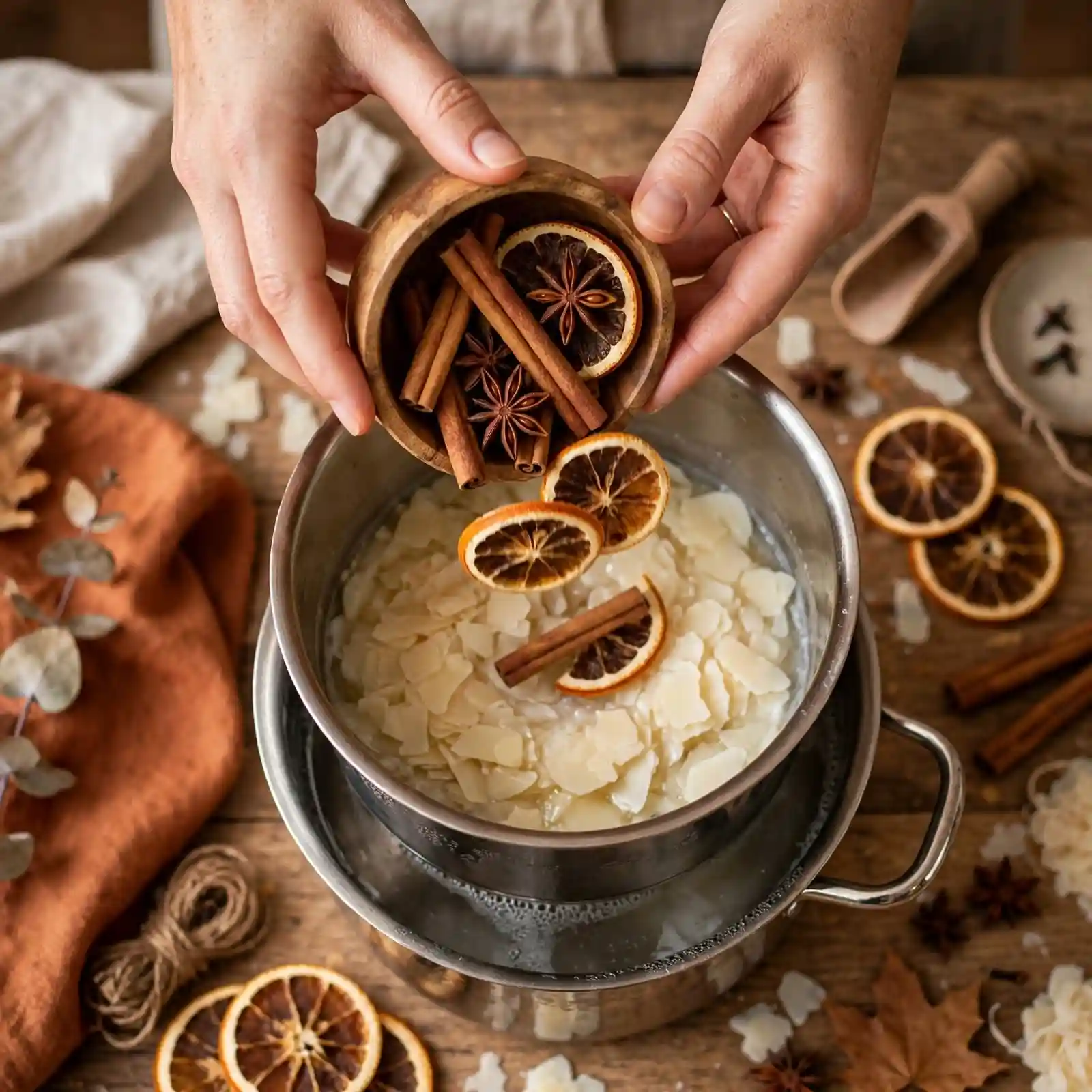
That pot sitting inside a larger pot of simmering water is the actual reason this wax stays smooth instead of overheating.
Direct heat on soy wax can scorch the fragrance and dull the color fast, so a double boiler keeps the temperature gentle and even while whole cinnamon, star anise, cloves, and dried orange peel get sprinkled straight in from a small bowl.
The wooden spoon stirring through is doing double duty too, working the spices into the melted wax and helping it cool evenly once it’s off the heat.
Labeled jars of cinnamon sticks, cloves, and star anise sit within arm’s reach on the counter, along with a bag of soy wax flakes marked 100% natural, which matters more than most people think.
Cheaper wax blends can hold scent unevenly compared to a pure soy base.
4. Wick Clips Keep Pours Straight While You Work Through Multiple Jars
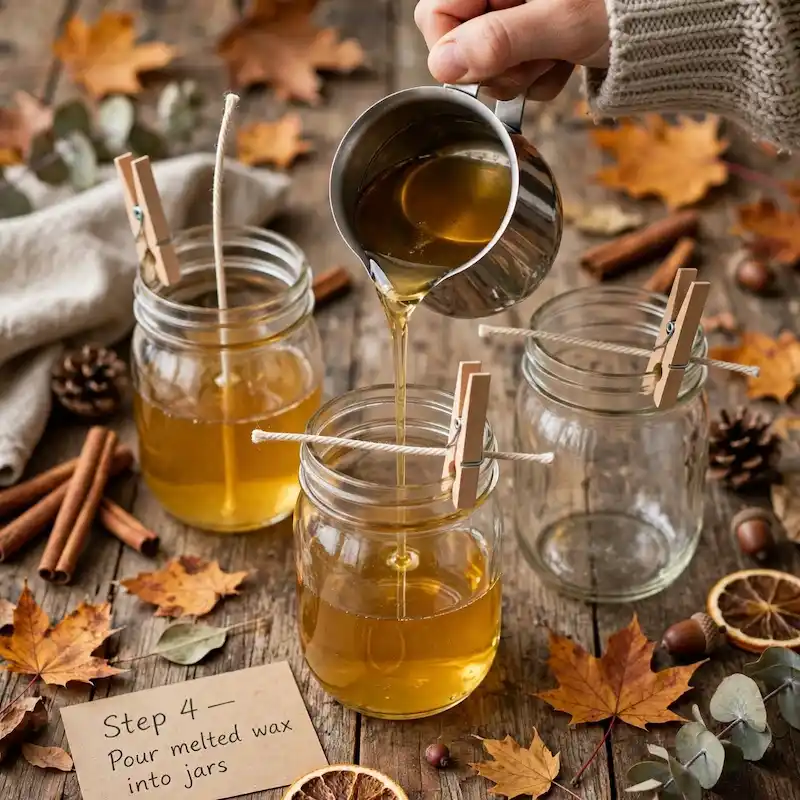
That little wooden clothespin balanced across the rim of each jar is doing more work than it looks.
As the wax pours in, it holds the wick centered and taut so it doesn’t drift to one side and burn unevenly later.
Working with several jars lined up at once, like this, is also just faster than pouring one at a time and waiting, since you can keep the pot moving jar to jar while the wax is still at the right pouring temperature.
The card propped against the jars reading “Step 4, pour melted wax into jars” is a good reminder that pouring order matters.
Fill the jars closest to the pot first, since wax cools and thickens fast once it’s out of the heat.
5. Let Three Finished Candles Prove the Payoff Before You Start Your Own
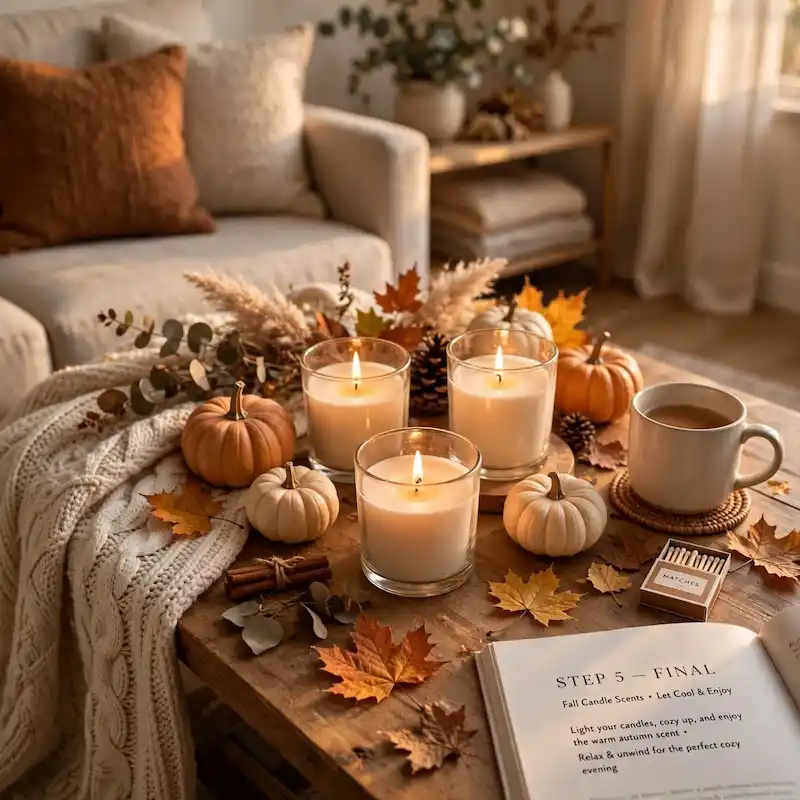
This is the version of the picture you’re working toward the whole time, three lit candles clustered at different heights on a low table, surrounded by mini pumpkins, dried leaves, and a warm mug close by.
Once wax has cured for a few days, this is what a finished fall batch actually looks like in a room, not just in the jar.
Grouping candles at slightly different heights, rather than lining them up flat, gives the flames more visual movement and keeps one candle from blocking the light of another.
A small box of matches tucked into the styling is a practical touch worth copying too, since fumbling for a lighter kind of kills the mood a setup like this is going for.
Candles poured, cured, and freshly lit at slightly staggered heights.
Wax was still liquid, wick still clipped, jars just filled.
6. Set Up a Mini Pouring Station Before You Even Pick a Fall Scent
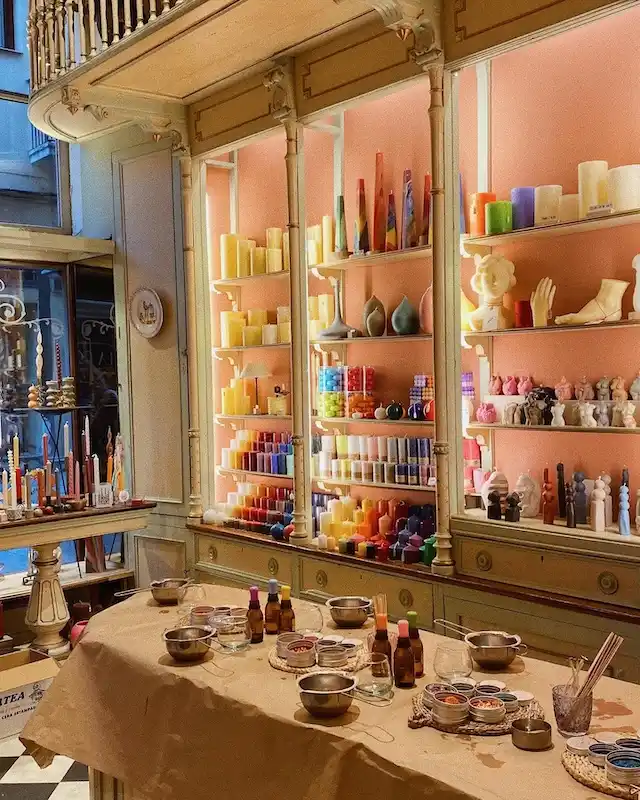
Rows of pillar candles in every color line the shelves behind this setup, but the real DIY moment is happening on the plain table out front.
Small glass pouring pots, dropper bottles of fragrance oil, and shallow tins of pigment are laid out in a simple grid, the same basic kit any home candle maker needs before touching a fall scent recipe.
Nothing fancy is required here, just enough small containers to test a few scent combinations side by side without committing a full batch to one blend.
Working this way lets you test something like cinnamon and pumpkin in one pot and maple and vanilla in another, then compare them once they’ve cooled instead of guessing from the bottle.
7. Give Every Wick a Clothespin and Every Pour a Thermometer
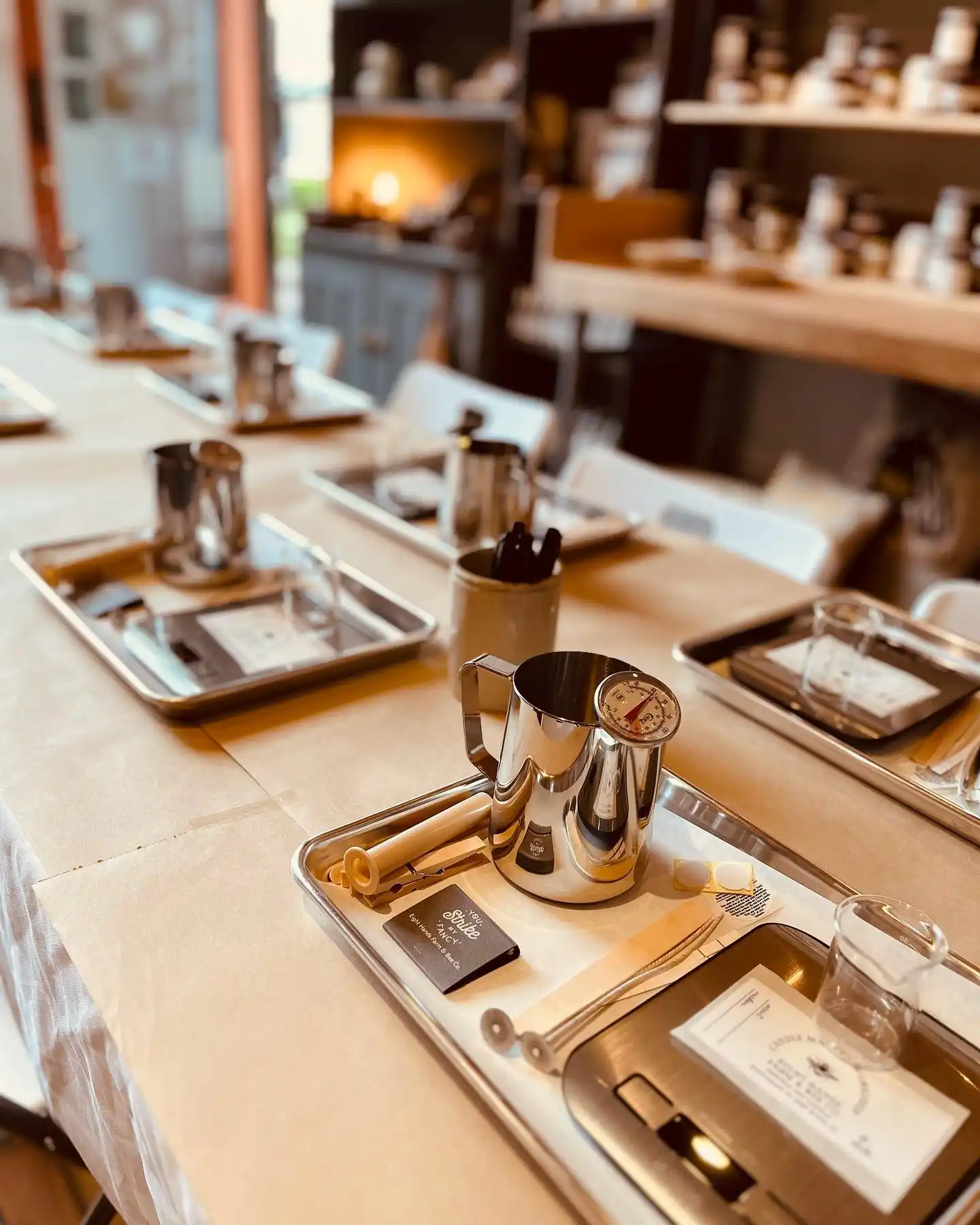
Look closely at that tray and you’ll spot the two details most home candle makers skip: a clip on thermometer hooked right to the side of the pouring pitcher, and a wooden clothespin sitting nearby to hold the wick straight once the wax goes in.
Guessing at temperature is one of the biggest reasons candles crack, sink, or develop a rough top, and a wandering wick is the reason candles burn crooked.
Both problems get solved with tools that cost almost nothing.
Each tray here is also set up as its own individual station, with a small glass for measuring, a stir stick, and pre-cut wick stickers laid out ready to go.
That kind of setup makes sense if you’re making several fall scents in one afternoon and want to keep each one contained instead of dragging one shared bowl of tools around the table.
8. Read the Oil’s Color Before You Ever Add It to Wax
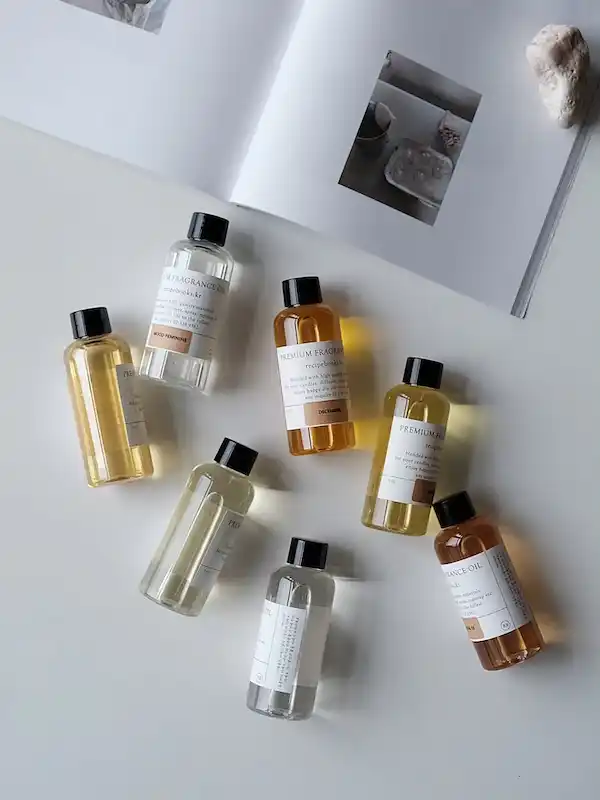
Seven bottles laid across a plain flatlay show just how much fragrance oils vary before they ever touch a candle.
Some pour out nearly clear, others come in pale gold, and a few sit deep amber, almost like tea.
That color difference matters more than most beginners realize, since a strongly tinted oil like the amber ones here will shift the final color of a white or ivory wax, even in small amounts.
Clear oils are the safer pick if you want a specific dye color to stay true.
Each bottle is also labeled with a batch or type code, which is worth copying onto your own notes if you’re testing several scents.
It is easy to lose track of which bottle made which pour once you’ve got four or five going at once.
Pick a clear or pale oil when the wax color needs to stay true.
Label each bottle’s batch code on your test notes.
Don’t assume every oil is colorless straight from the bottle.
Don’t mix bottles without checking type or batch first.
9. Small Dropper Bottles Are Built for Testing, Not Committing
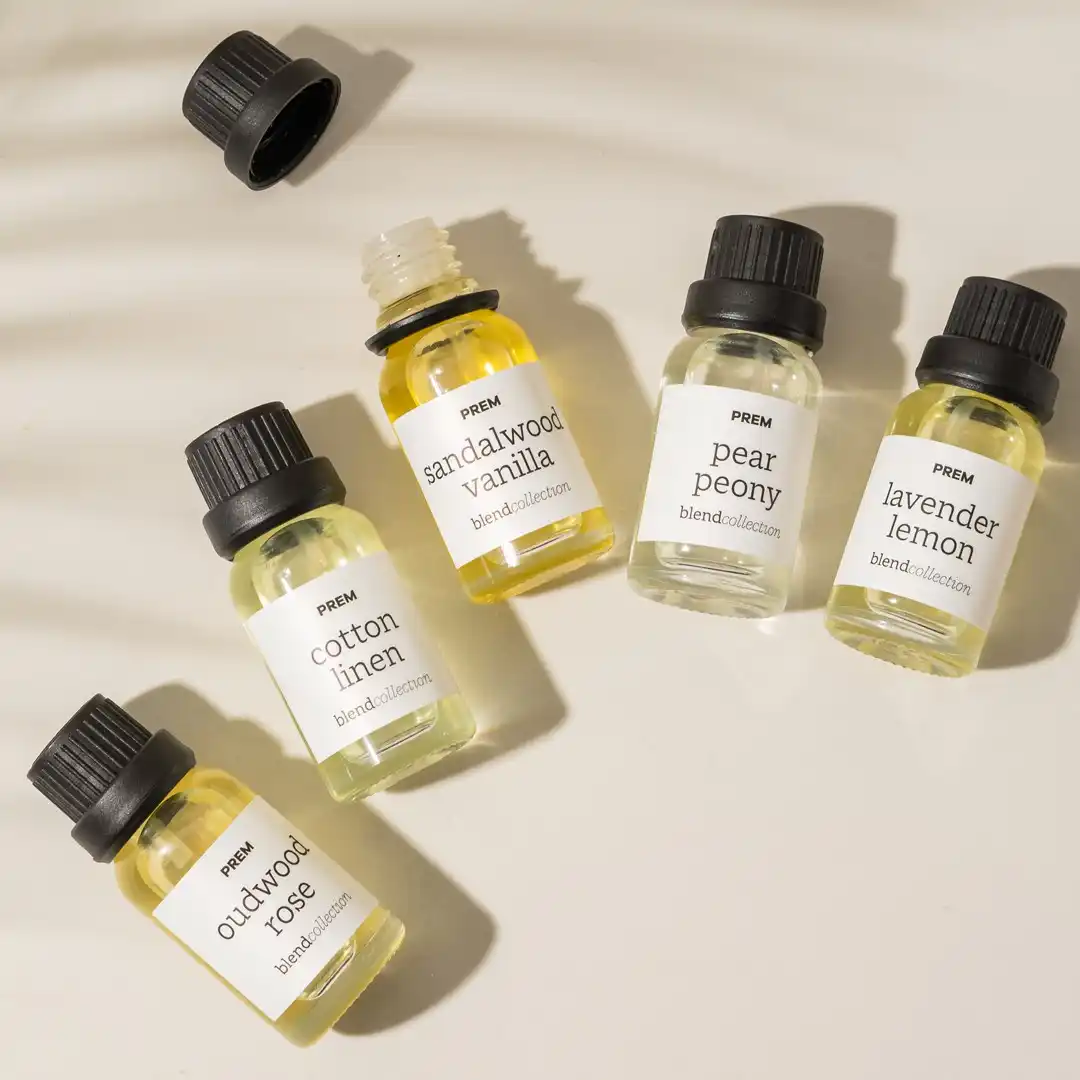
Five scent samples, each capped with a dropper style black lid rather than a standard fragrance oil pour spout.
That detail matters. Dropper tops measure by the drop, which makes them the right size for testing a scent in a single small batch candle rather than buying a full bottle before knowing you like it.
Out of this particular five, only one, sandalwood vanilla, reads as a true fall pick.
Cotton linen, pear peony, and lavender lemon lean more spring or everyday, and oudwood rose sits somewhere in between, warm but not quite autumn.
That’s worth knowing before you order a sampler pack for a fall project. Not every scent in a labeled collection is going to fit the season, even when the packaging looks cohesive.
Before buying a full bottle, test a scent with just a few drops in melted wax to check if it actually reads as fall once it’s warm and diffusing.
10. Layer Three Batches at Once for a Whole Fall Candle Bar
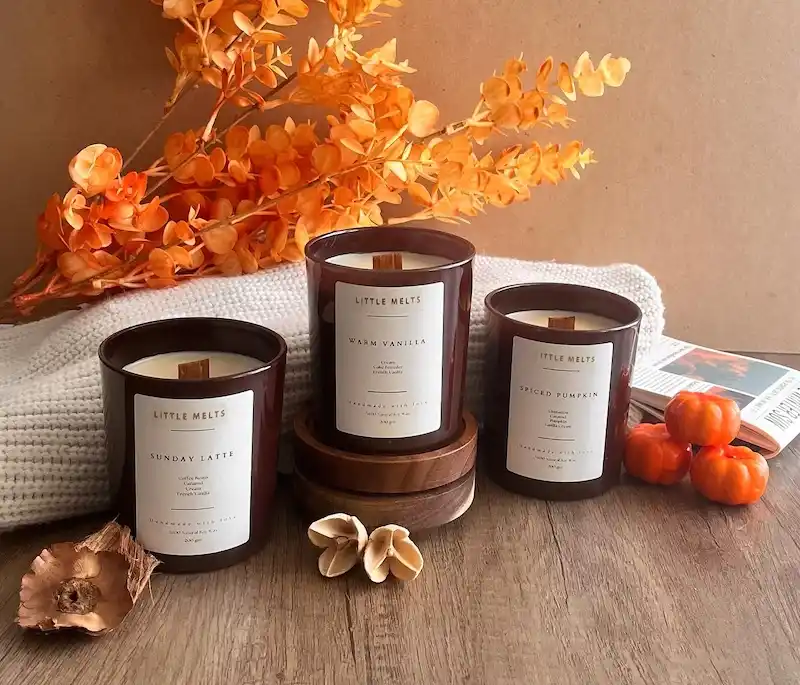
Three jars, three completely different moods, and none of them fight for attention on a shelf.
That’s the trick with a candle bar: pick scent families that are close cousins but not twins, so each one still reads as its own thing when it’s burning.
Here the lineup runs from a coffeehouse pour to a bakery vanilla to a spiced pumpkin patch, all housed in the same dark amber glass so the display looks intentional instead of thrown together.
The wood wick is doing real work here too.
It gives off that soft crackle sound while it burns, which makes the whole setup feel more like a fireplace moment than a regular candle.
Amber or brown glass jars also block more light than clear glass, which helps soy wax hold its scent throw longer over time.
Group them by tone, not by holiday. A coffee scent, a bakery scent, and a spiced scent will rotate through a room without ever smelling repetitive.
11. Warm Maple Bourbon, Cedarwood and Soft Vanilla in a Giftable Batch
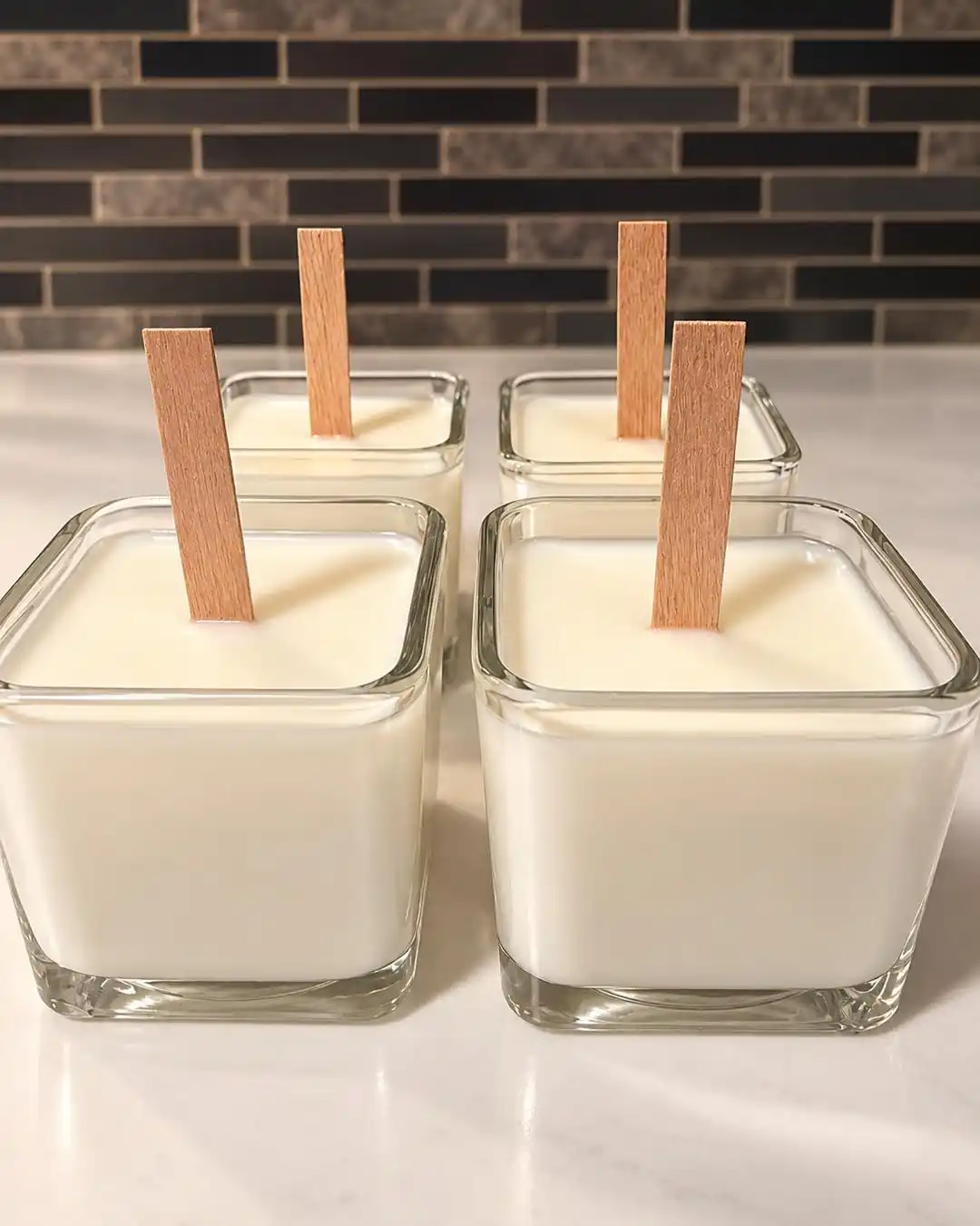
Four identical jars, four wood wicks standing straight up, one scent poured across the whole set.
This is the batch method serious candle makers use: mix a single big batch of wax and fragrance, then divide it evenly so every jar burns exactly the same.
Square glass reads more modern than rounded jars, and it stacks and stores cleaner too if you’re making a batch to gift.
The scent itself leans into the sweeter, boozier side of fall.
Maple bourbon brings warmth without tipping into pumpkin territory, cedarwood grounds it so it doesn’t smell like a dessert, and a soft vanilla ties the two together on the back end.
If you’re batching for gifts, pour a test jar first and let it cure a few days before deciding the scent strength is right.
12. Sandalwood Rose Poured Into a Two Wick Jar for Big Room Coverage
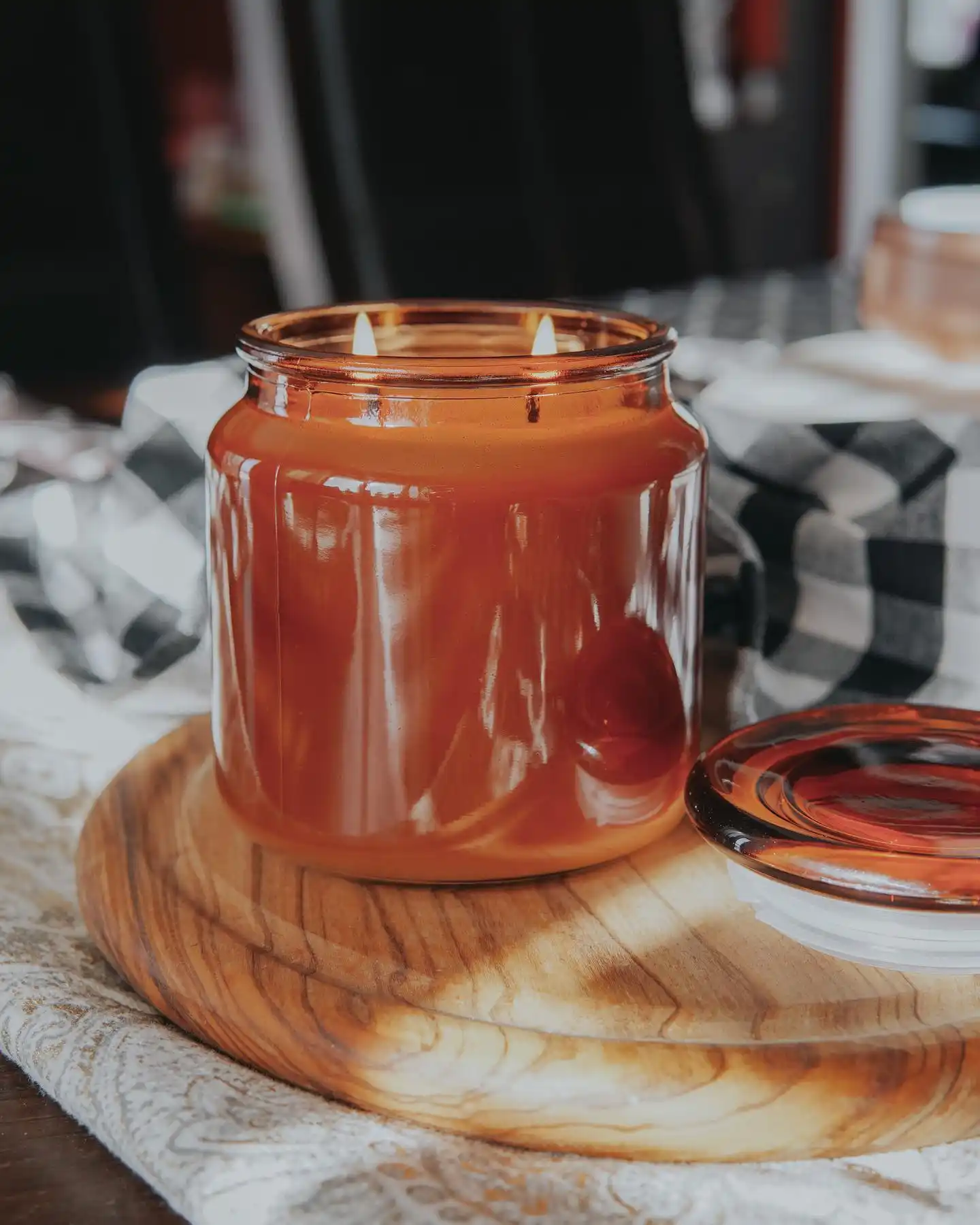
That amber colored wax sitting inside clear glass is not a trick of the light.
Fragrance oils, especially deeper ones like sandalwood, often carry their own tint, and that tint shows straight through a clear jar the way it never would in colored glass.
Two wicks side by side is a real functional choice here too, not just a look.
A jar this wide needs two flames to melt evenly across the surface, otherwise you end up with a deep well in the middle and hard wax stuck to the sides.
Sandalwood rose sits outside the usual pumpkin and apple lineup, which makes it a good pick if your fall table already has a few sweet scents going and needs one grounded, woodsy option to balance them out.
Wide jars need two wicks or the wax pools unevenly and leaves wasted product on the sides.
13. Sticky Maple Pecan Waffles Layered Like a Real Dessert
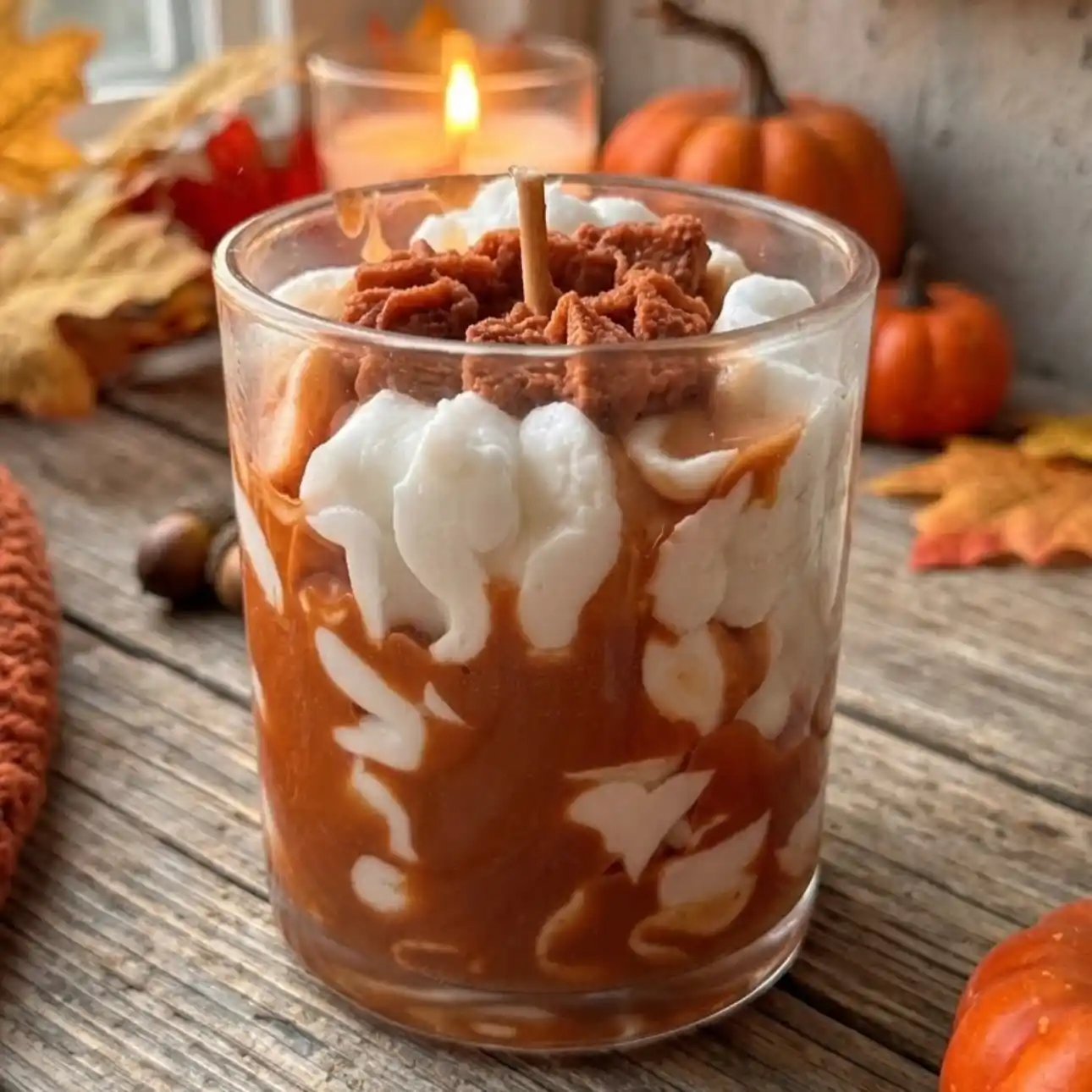
This one is not a smooth pour, and that is exactly the point.
Three distinct wax layers stack inside the glass: a rich caramel brown base, piped white peaks in the middle that mimic whipped cream, and a crumbled reddish brown topping pressed on last for texture.
Getting that swirled, marbled look between the caramel and white layers takes a bit of patience, since it means pouring one layer slightly before the last one fully sets so they blend at the edges instead of forming a hard line.
How to build the look:
- Pour the base layer. Fill the jar about a third full with a caramel or brown tinted wax and let it firm up until it is tacky, not liquid.
- Pipe the white layer. Use a piping bag with cooled but still soft white wax to create rough peaks over the base, letting some caramel show through at the edges.
- Add the crumble topping. Once the top layer has fully set, press small crumbled wax pieces or dried topping on top around the wick for that baked, textured finish.
Fill the jar about a third full with caramel tinted wax and let it firm up until tacky, not liquid.
Use a piping bag with cooled but soft white wax to create rough peaks, letting caramel show at the edges.
Once the top layer has fully set, press crumbled wax pieces on top around the wick for a baked, textured finish.
Layered candles like this take longer to make than a single pour, but they photograph so much better sitting on a table.
15. Cinnamon, Pecan and Citrus Layered With Chrysanthemum for a Truer Fallen Leaves Scent
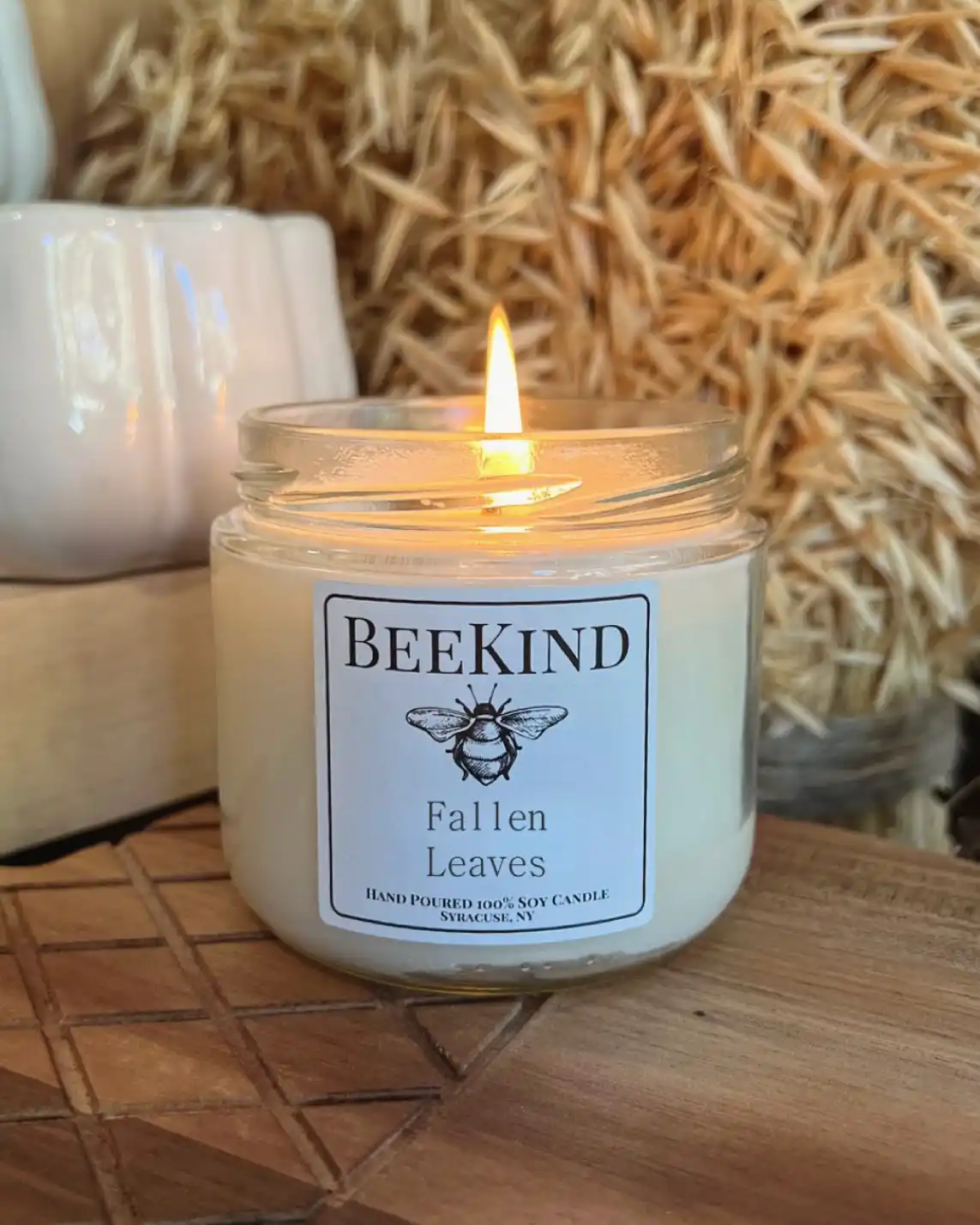
A label this detailed is basically a recipe card in disguide, and it is worth actually reading before you try to recreate it.
Cinnamon and pecan carry the warmth up front, citrus and chrysanthemum cut through so it doesn’t smell heavy, and the apple, berry, and green leaf notes sit underneath as the part you notice a few minutes in rather than right away.
That is a wider ingredient list than most fall candles bother with, and it’s the reason a scent labeled “fallen leaves” can smell like an actual autumn walk instead of just spiced sugar.
The clean, minimal label matters here too.
A single flame photograph, straightforward type, and a small bee illustration do more for a shelf presence than a busy design would.
The first thing you smell, warm and slightly toasted.
Keeps the warmth from feeling too heavy or one note.
Shows up last, closer to what a real fall walk smells like.
16. The Classic Pumpkin Spice (Because Obviously)
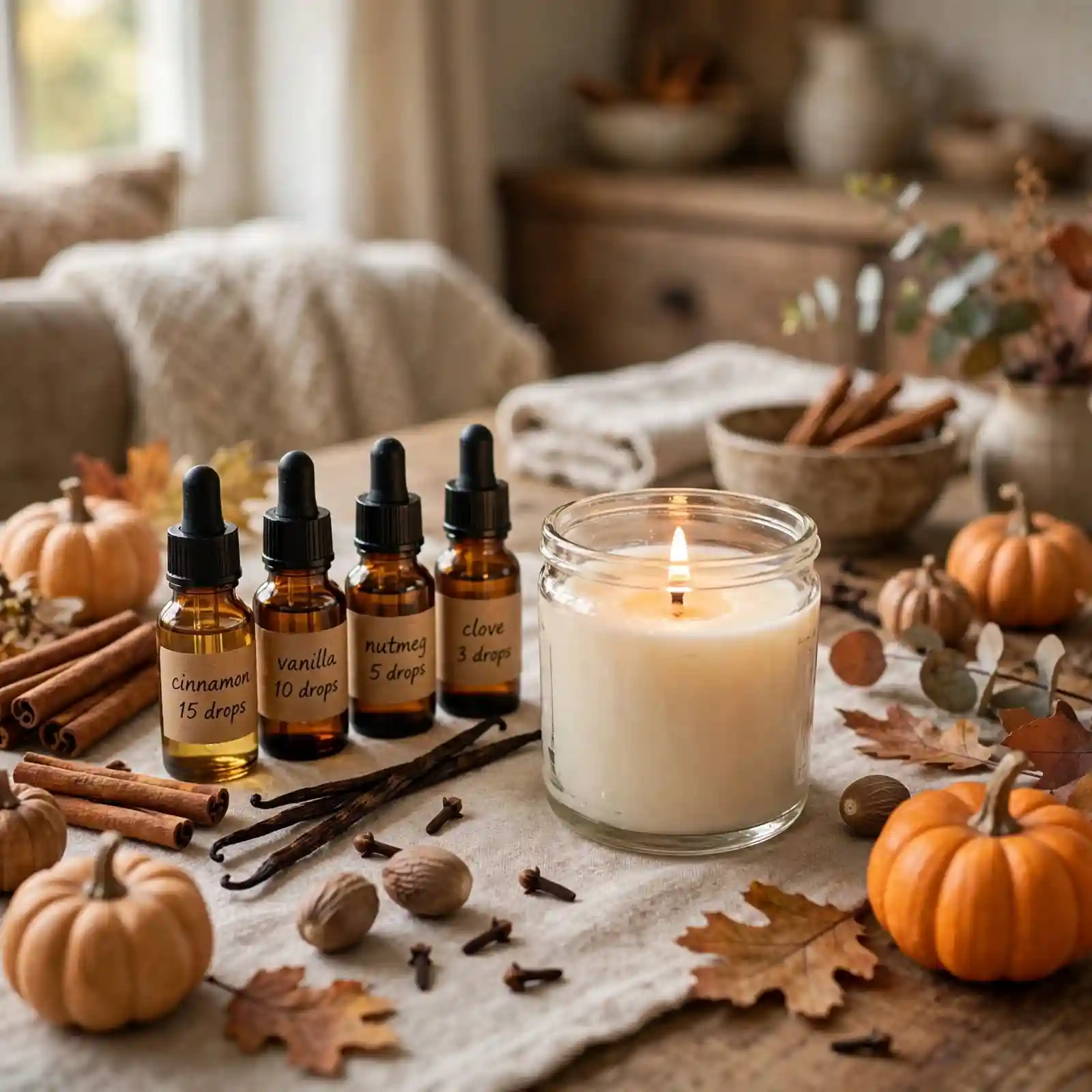
Yes, it’s basic. Yes, everyone loves it anyway.
There’s a reason pumpkin spice conquered the fall season, and making your own candle version lets you control exactly how sweet or spicy you want it.
Start with a soy wax base and add vanilla, cinnamon, nutmeg, and clove essential oils.
The trick? Go heavier on the cinnamon and vanilla than you think you should. Trust me on this one.
Essential Oil Ratios:
- 15 drops cinnamon
- 10 drops vanilla
- 5 drops nutmeg
- 3 drops clove
This scent works perfectly in your living room or kitchen, especially when you’re hosting fall gatherings. It’s basically autumn in candle form.
17. Apple Orchard Dream Team
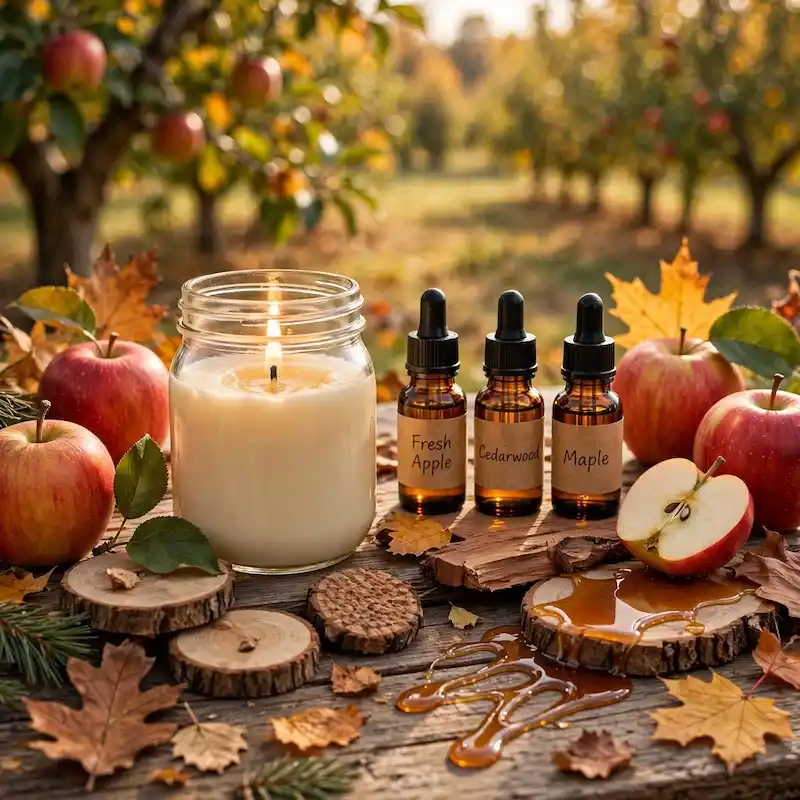
Remember that feeling of walking through an apple orchard on a sunny fall afternoon? This candle captures that exact vibe with crisp apple and subtle woody notes.
Combine fresh apple fragrance oil with cedarwood and a hint of maple.
The cedarwood adds that outdoorsy element while the maple brings just enough sweetness without making it smell like a dessert.
Pour this into mason jars for that rustic autumn aesthetic.
It’s perfect for your entryway or bedroom when you want something fruity but not overpowering.
18. Cozy Cabin Fireside Blend
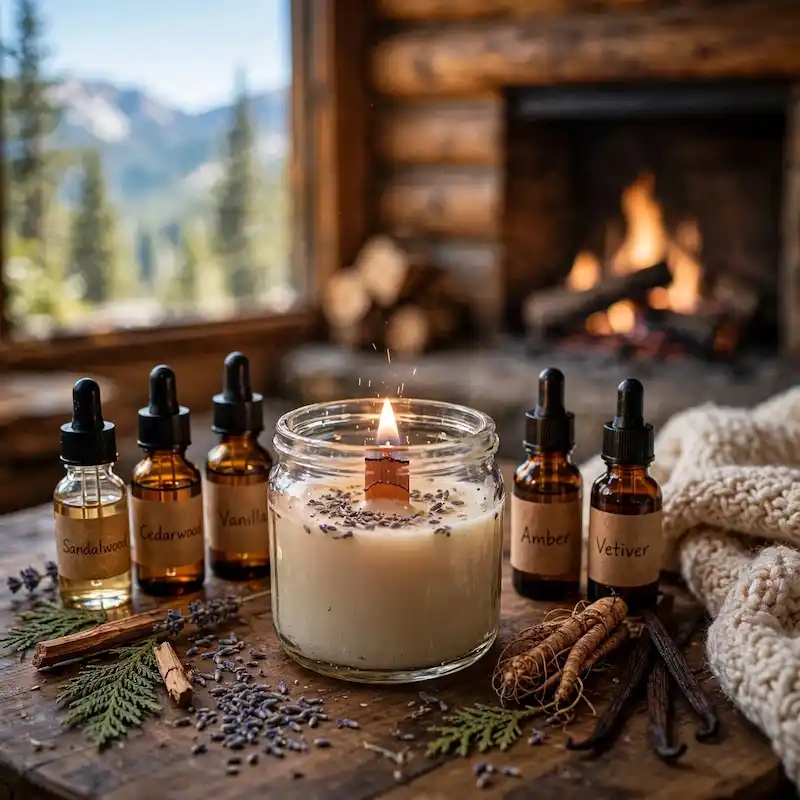
Want your apartment to smell like a mountain cabin without the actual fireplace? This smoky, woodsy blend does exactly that.
Mix sandalwood and cedarwood essential oils as your base, then add hints of vanilla and amber. The secret ingredient? A tiny drop of vetiver for that authentic smoky quality.
Pro Tips:
- Use wooden wicks for crackling sounds
- Add dried lavender buds on top for visual appeal
- Let the wax cure for 48 hours before burning
Light this baby during movie nights or rainy weekends. It’s seriously the most hygge thing ever.
Use a wooden wick for that crackling fireplace sound.
Press dried lavender buds on top before it fully sets.
Let the wax cure a full 48 hours before the first burn.
19. Cranberry Orange Spice Explosion
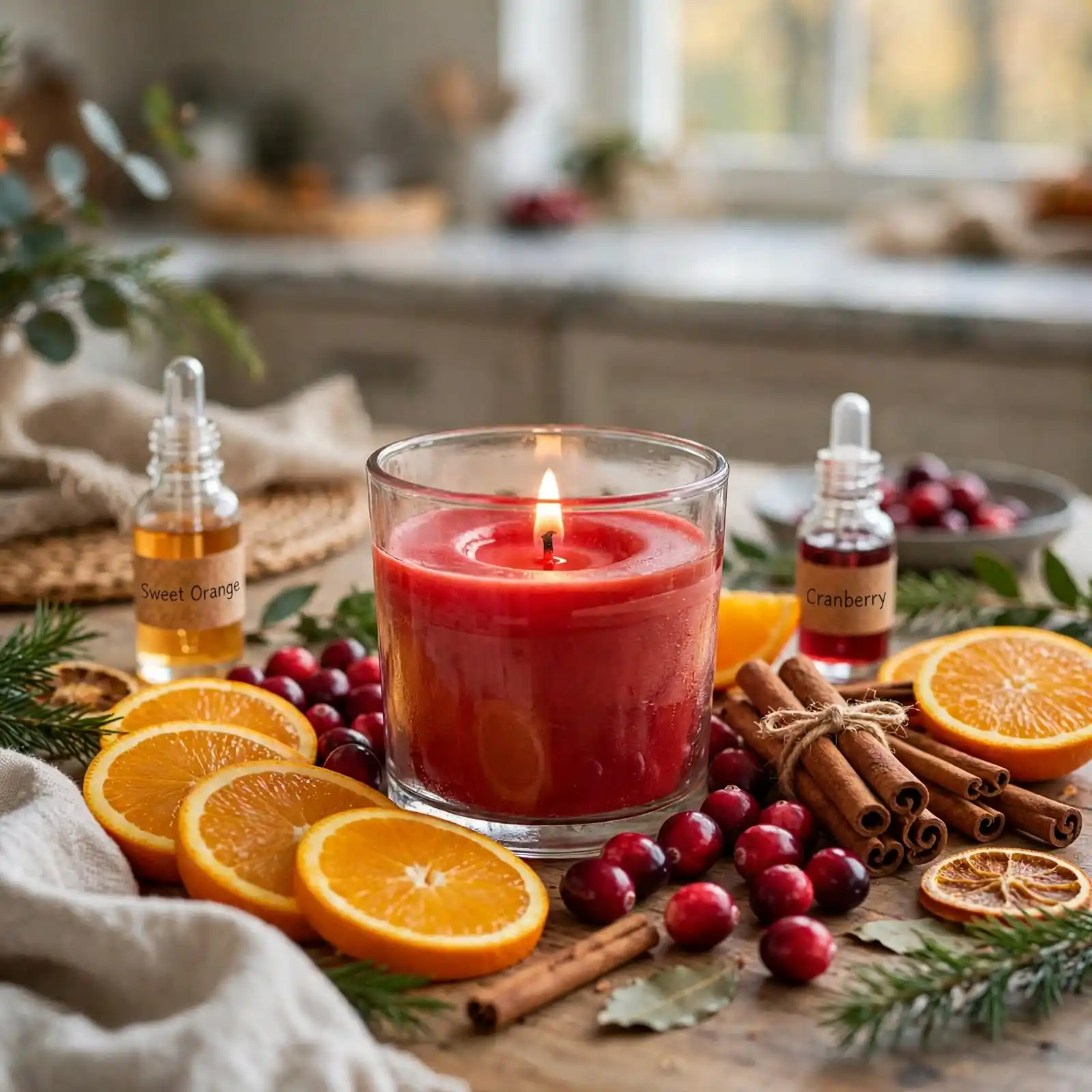
This one hits different. The bright citrus cuts through heavy fall scents while still feeling totally seasonal.
Blend sweet orange essential oil with cranberry fragrance oil and a touch of cinnamon.
The orange keeps it fresh while the cranberry adds that tart autumn punch.
FYI, this combo also makes your kitchen smell like you’ve been baking all day.
Use this scent in your bathroom or dining room. It’s festive enough for Thanksgiving but works all season long.
Plus, the red wax looks gorgeous in clear containers.
20. Chai Tea Latte Perfection
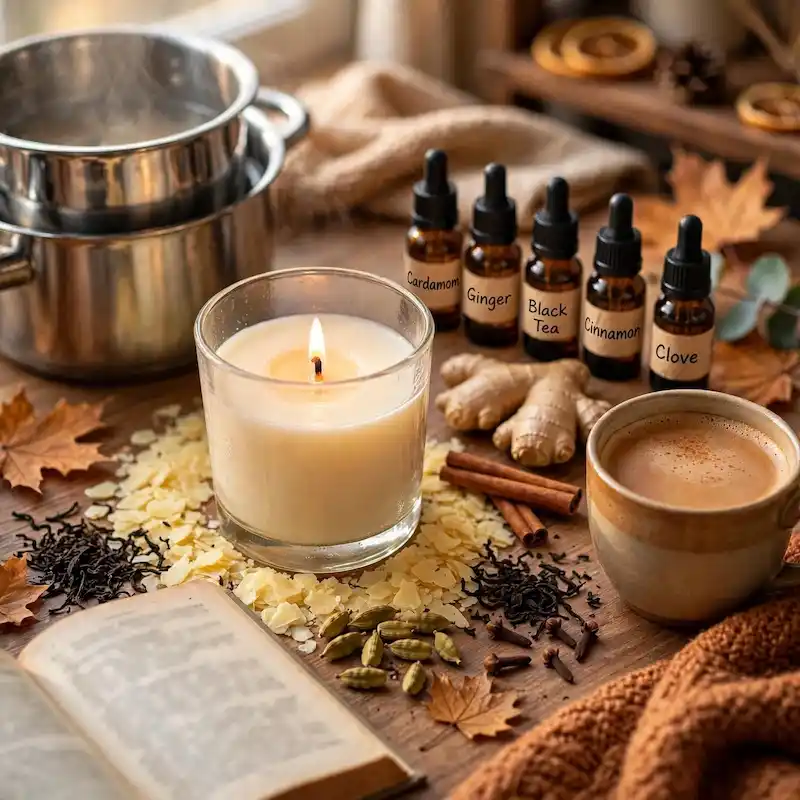
If pumpkin spice had a cooler, more sophisticated cousin, this would be it.
Chai candles bring all the warm spices without the expected vanilla overload.
Combine cardamom, ginger, and black tea fragrance oils with touches of cinnamon and clove.
The cardamom is what makes this special – it adds complexity that store-bought versions rarely nail.
Materials You’ll Need:
- Soy wax flakes (1 pound)
- Cotton wicks
- Heat-safe containers
- Essential oils or fragrance oils
- Double boiler setup
This scent transforms your home office or reading nook into the ultimate cozy zone.
Light it while you’re curled up with a book and an actual chai latte for maximum autumn vibes.
Making your own fall candles is easier than you think, and the smell of accomplishment (plus amazing autumn scents) totally beats anything from the store.
Grab your supplies and get melting – your nose will thank you all season long.
Conclusion
That’s twenty scent combinations, and not one of them needs a trip to the store.
From the deep, spiced classics like pumpkin spice and chai to the lighter picks like cranberry orange and sandalwood rose, there’s a blend here for pretty much every room in the house and every mood the season brings.
The real trick, if there is one, is testing before committing.
A few drops in a beaker tells you more than a bottle label ever will, and it saves a full batch of wax from going into a scent combo that doesn’t actually work once it’s warm. Once you’ve got a favorite blend dialed in, the whole process gets faster every time.
Grab your wax flakes, pick two or three scents from this list to start, and let your house smell like the best parts of autumn.
Save this for the next time you want fresh fall candle ideas.