Must-Have Embroidery Supplies for Beginners: Starter Kit Checklist

Ever scrolled through Instagram, seen those gorgeous embroidered hoops, and thought “I could totally do that”? Spoiler alert: you absolutely can.
The trick isn’t talent or some magical stitching gene. It’s having the right supplies in your corner from day one.
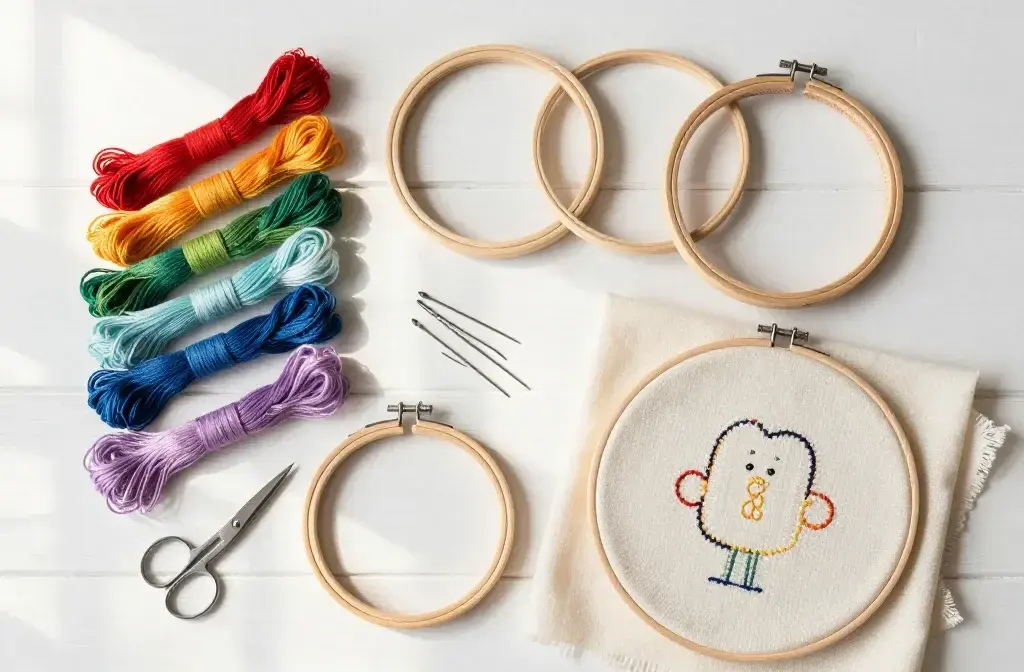
Let’s break down exactly what you need to grab before you make your first stitch. No fluff, no fancy extras – just the essentials that’ll set you up for success.
1. Embroidery Hoops – Your Fabric’s Best Friend
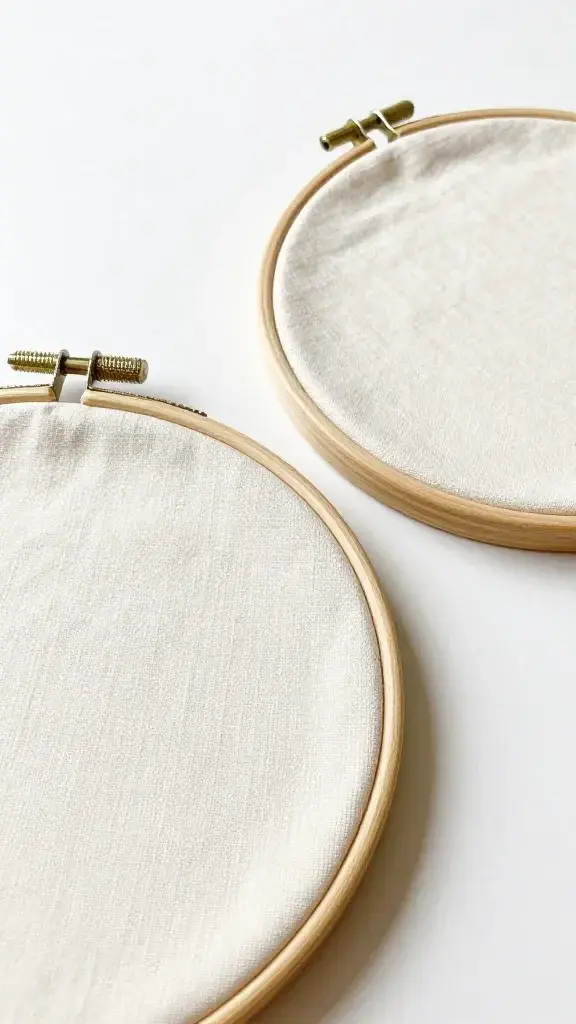
Think of hoops as the unsung heroes of embroidery. They keep your fabric taut and smooth while you work, which means cleaner stitches and way less frustration.
Start with a 4-inch or 6-inch wooden hoop. Seriously, these sizes are perfect for beginners because they’re not too big to handle but give you enough space to practice different stitches. Plus, wooden hoops double as instant wall art when you finish your piece.
What To Look For:
- Adjustable screw closure that actually tightens properly
- Smooth wood that won’t snag your fabric
- Inner and outer rings that fit snugly together
Pro tip: grab a couple different sizes once you get comfortable. You’ll want options for different project scales down the road.
2. Embroidery Floss – The Rainbow In Your Toolkit
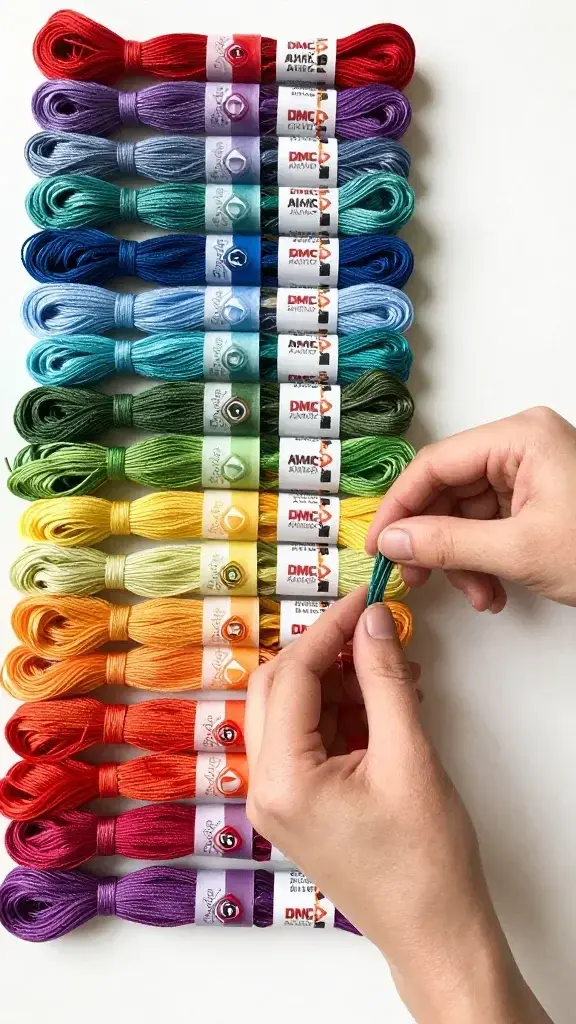
Here’s where things get colorful. Embroidery floss is that silky, six-strand thread you’ve probably seen in craft stores, and it’s the backbone of most embroidery projects.
You don’t need every color under the sun right away. Start with a basic pack of 36-50 colors, or pick individual skeins in shades you love. Each skein gives you about 8 meters of thread, which goes further than you’d think.
Floss Basics:
- DMC and Anchor are reliable, budget-friendly brands
- Six strands mean you can separate them for different effects
- Cotton floss is easiest for beginners to work with
FYI, you’ll typically use 2-3 strands at a time for most projects. The more strands, the chunkier and bolder your stitches look.
3. Embroidery Needles – Size Actually Matters Here
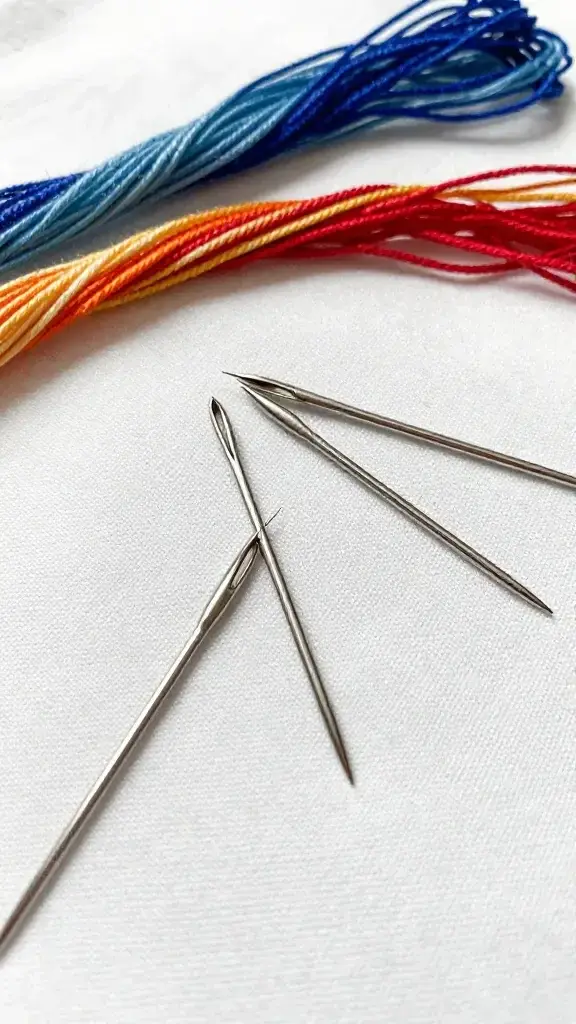
Regular sewing needles won’t cut it for embroidery. You need embroidery needles with longer eyes that can handle multiple strands of floss without making you want to throw things.
Grab a pack of size 7 or 8 needles to start. These middle-range sizes work beautifully with most fabrics and thread combinations. The higher the number, the finer the needle, but don’t overthink it at first.
Keep your needles sharp and replace them when they start feeling dull or snagging fabric. A bent or rusty needle will make your stitching experience miserable, trust me on this one.
4. Fabric – Your Blank Canvas Awaits
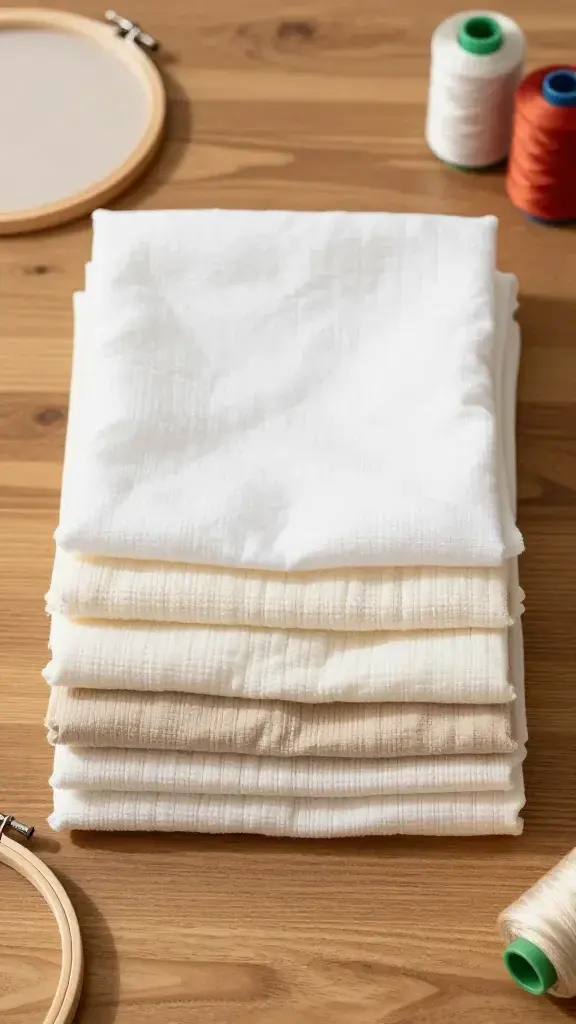
You can technically embroider on almost anything, but cotton fabric is your best bet as a beginner. It’s forgiving, easy to work with, and doesn’t cost a fortune if you mess up.
Look for quilting cotton or cotton muslin in solid colors. White or natural tones let your stitches really pop, but don’t be afraid to experiment with different backgrounds once you get rolling.
Fabric Tips:
- Avoid super stretchy or loosely woven fabrics at first
- Medium-weight cotton gives you the best control
- Pre-wash your fabric to prevent shrinking later
Save the fancy linens and specialty fabrics for when you’ve got a few projects under your belt. Start simple, then level up.
5. Scissors – Small But Mighty Tools
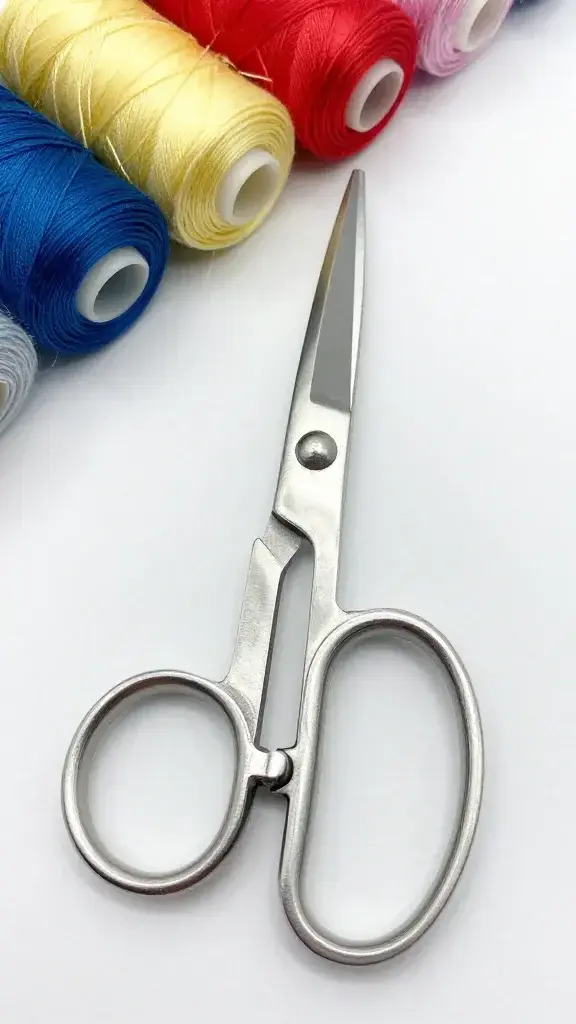
Those giant fabric shears in your drawer? Leave them there. For embroidery, you need small, sharp embroidery scissors with pointed tips that can snip threads precisely without cutting your stitches.
A good pair of 3-4 inch scissors will become your constant companion. Look for stainless steel blades that stay sharp and handles that feel comfortable in your hand during long stitching sessions.
Keep these scissors dedicated to thread and fabric only. Using them on paper or other materials will dull the blades faster than you can say “backstitch,” and nobody wants that.
There you have it – your complete starter kit for jumping into the wonderful world of embroidery. Grab these five essentials, pick a simple pattern, and start stitching. You’ll be amazed at what you can create with just these basics and a little practice!