
Artificial vs Natural Christmas Wreaths: Which Looks Better and Lasts Longer?

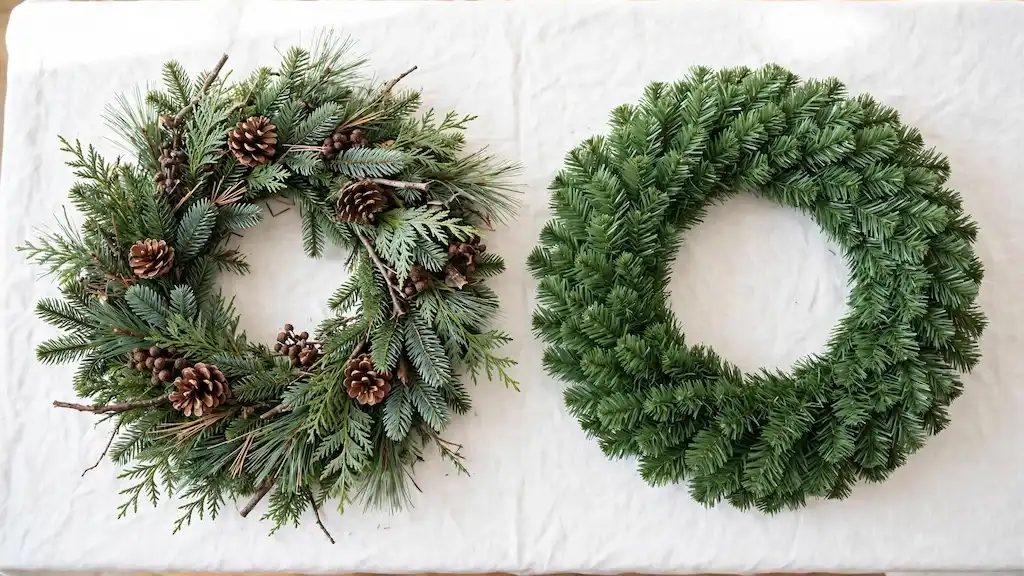
A cheap fresh wreath and a pricier artificial one can end up costing you the exact same amount over three years.
That’s the part most shopping guides skip when they compare artificial vs natural Christmas wreaths.
You’re probably standing in a store aisle right now, or scrolling through options online, torn between two things. On one side, the smell and look of real greenery.
On the other, something you can just pull out of a box every year without thinking about it.
Most articles on this topic just list generic pros and cons. They don’t give you real numbers.
By the end of this guide, you’ll know exactly how long each type of wreath actually lasts, what each one costs you over time, which looks better up close versus from the street, which is friendlier for allergies, which one is actually better for the environment, and how to keep whichever one you pick looking good all season.
If you’ve ever wondered how long do Christmas wreaths last, you’re about to get a straight answer.
Artificial vs Natural Christmas Wreaths: The Real Lifespan Difference
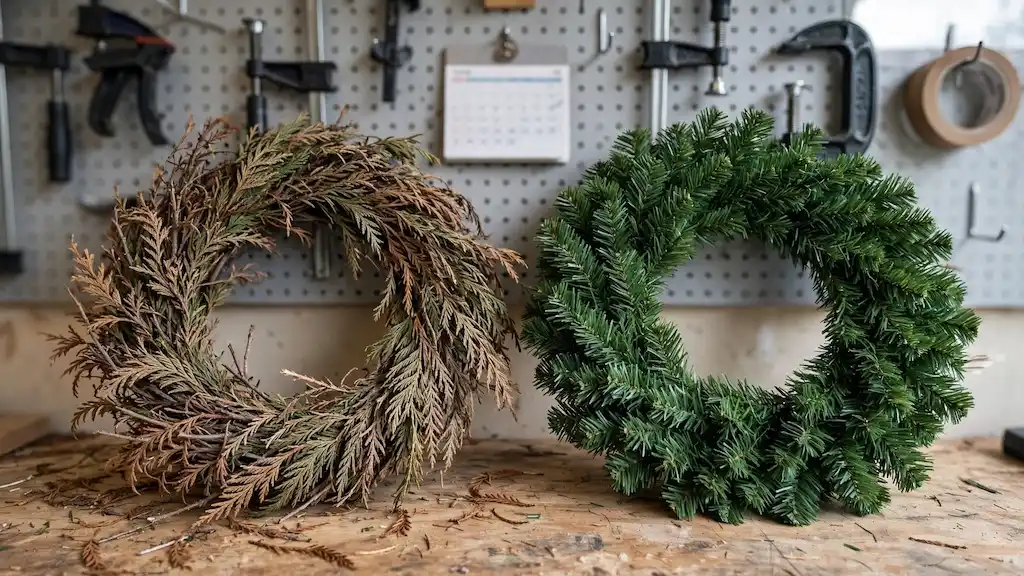
Fresh wreaths last about 3 weeks indoors, or 4 to 6 weeks outdoors. Quality artificial wreaths last 3 to 7 years or more.
That’s a big gap, and it’s the first thing to understand before you spend a dollar.
Lynch Creek Farm, a wreath grower that sells fresh evergreen wreaths every year, states that a farmhouse-style fresh wreath made from fir, pine, or cedar holds up for roughly 3 weeks indoors.
Outdoors, with regular misting and a bit of shade, you can stretch that to 4 to 6 weeks.
Artificial wreaths tell a different story. A 2026 buying guide from wreath manufacturer ChristmasOEM breaks it down by material.
Wreaths made from polyethylene, often called PE, last 3 to 7 years or longer when cared for properly.
Cheaper PVC wreaths hold up for roughly 2 to 4 years before the “real touch” texture starts to fade or feel stiff and plasticky.
Here’s something that surprises a lot of people: indoor heat kills fresh wreaths faster than cold weather does.
Dry, heated air pulls moisture out of the needles fast. So does sitting too close to a heating vent or a working fireplace.
Cold outdoor air, even below freezing, is actually gentler on a fresh wreath than a warm living room.
That leads to a simple rule of thumb. If your wreath is going on a storm door that gets direct sun or heat, skip the fresh wreath.
BestReviews puts it bluntly: never hang a real wreath between a storm door and your entry door in full sun. It will bake.
That lifespan gap is exactly why the price tag alone doesn’t tell the full story.
Cost Comparison: What You Actually Pay Over Time
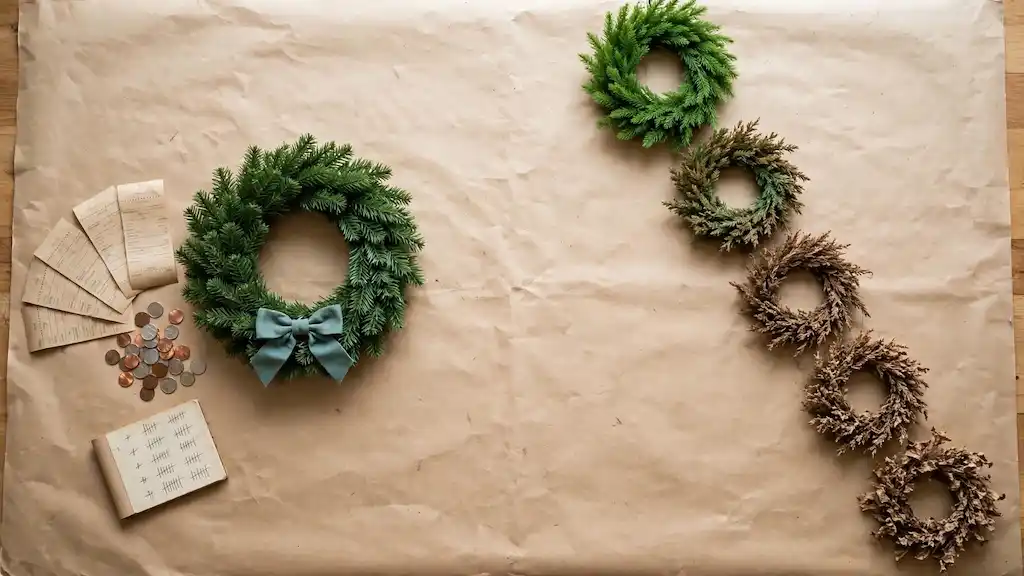
A $50 fresh wreath bought every year for 5 years costs $250. A $50 artificial wreath bought once and reused for 5 years costs $50.
Let’s start with the basics. According to BestReviews, most off-the-shelf wreaths, real or artificial, fall between $25 and $80.
Oversized or heavily decorated versions run $100 to $250 or more. And yes, ultra high-end designer wreaths can cost more than $5,000.
That’s an extreme outlier, but it shows just how wide this market really is.
For real-world 2026 pricing, look at artificial “real touch” wreaths sold at Walmart. Northlight’s 24 to 26 inch unlit wreaths cluster around $38.99 to $52.99.
That’s a normal, mid-range price for a decent artificial wreath.
Now here’s the math that most competing articles skip. Say you spend $50 on a fresh wreath. You do that every December for 5 years.
That’s $250 total. Spend $50 once on an artificial wreath and reuse it for those same 5 years, and you’ve spent $50. Total. That’s a $200 difference for the exact same visual impact each year.
But there’s a catch, and it matters. A cheap PVC wreath won’t survive 5 seasons looking good.
The plastic fades, the texture gets stiff, and by year 3 it looks tired. So the real comparison isn’t just sticker price.
It’s cost-per-good-looking-year. A $50 wreath that only looks great for 2 years isn’t actually saving you as much as it seems.
Price and lifespan explain the budget side.
But for a lot of people, this decision comes down to something less measurable: how it actually looks.
Which One Actually Looks Better?
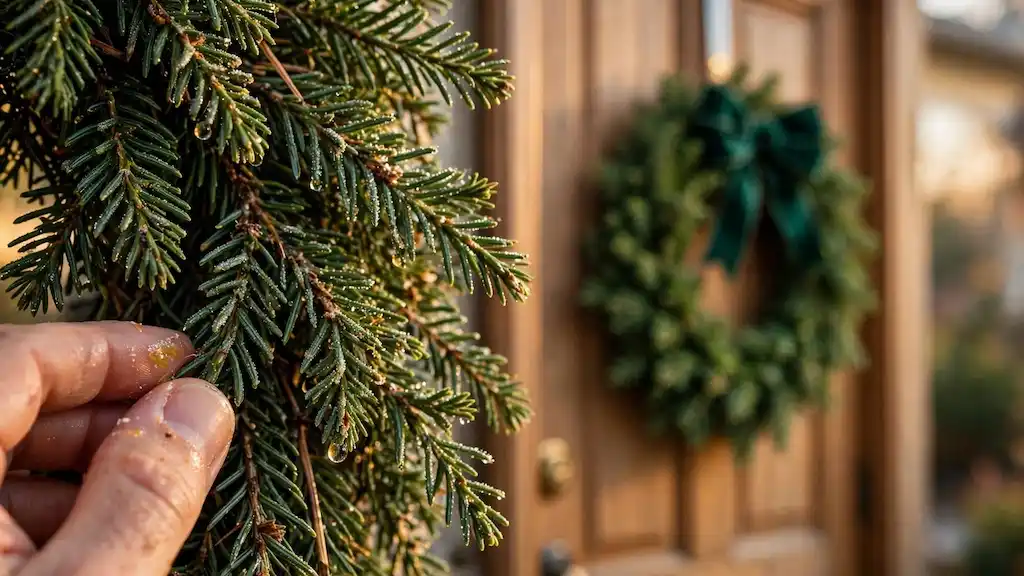
Fresh wreaths win up close. Artificial wreaths have closed most of the gap from a distance.
There’s no getting around it. Real evergreen has a texture and a way of catching light that artificial materials can’t fully copy, especially when you’re standing right in front of it.
And then there’s the smell, which no plastic wreath will ever replicate.
But step back to a normal viewing distance, say 10 feet or more, which is about how far away most people are when they see your front door wreath.
From there, modern “PE real-touch” artificial foliage has closed most of that visual gap.
This isn’t the stiff, shiny plastic wreath you remember from decades ago. It’s a real 2026 manufacturing improvement.
If you’re shopping this year specifically, here’s what’s actually in style. The big trend for 2026 is what one manufacturer buying guide calls “restrained abundance.”
That means one oversized wreath with a single large statement bow, instead of a wreath covered in dozens of small ornaments.
Velvet bows in jewel tones like emerald, sapphire, or deep teal are leading the look, often paired with warm gold or copper accents.
This works whether your wreath is real or artificial.
If jewel tones aren’t your style, there’s a softer 2026 direction too: sage green, cream, and dusty blush shades for a more nature-inspired, muted look.
There’s also a third option worth knowing about.
Dried and preserved botanical wreaths, think dried orange slices, cinnamon sticks, and preserved eucalyptus, are trending hard this year.
They need no water and last far longer than fresh greenery, but they’re not technically “fresh” either. They’re a genuine middle ground.
Whichever style you land on, how it looks in week 3 depends entirely on how you take care of it.
Maintenance: What It Actually Takes to Keep Each One Looking Good
Fresh wreaths and artificial wreaths need completely different care. Here’s exactly what to do for each.
Fresh Wreath Care
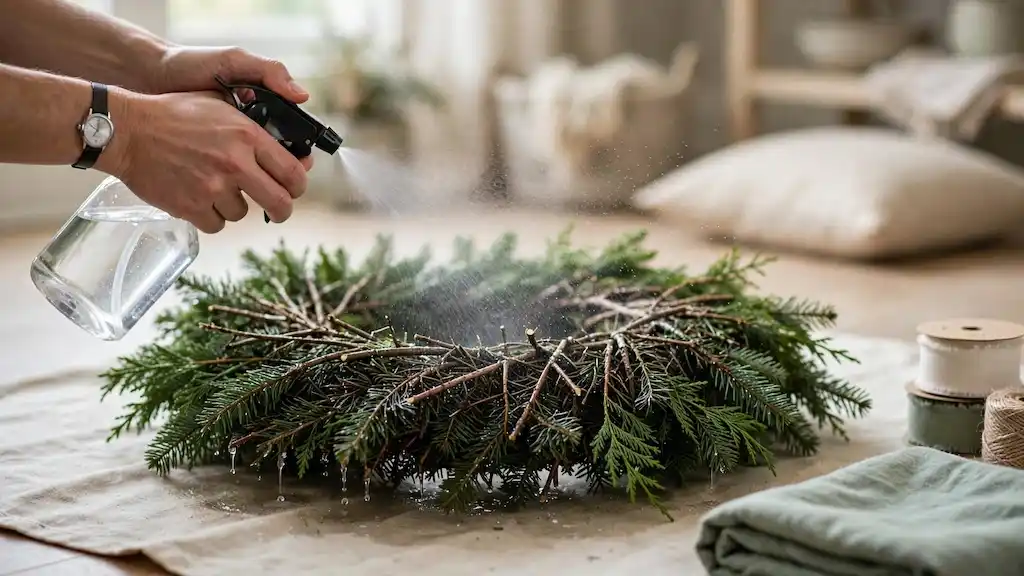
- Soak it first. Before you hang your wreath, submerge the entire thing in a bathtub or large container of room-temperature water for a few hours, or overnight. This is the single highest-impact step, and most first-time buyers skip it entirely.
- Mist it daily. Some florists recommend twice a day. Spray the back of the wreath directly onto the stems, not just the front where you can see it.
- Keep it away from heat. That means heating vents, working fireplaces, and direct sun through a storm door or window. Dry, warm air is worse for a fresh wreath than cold air, even below freezing.
- Cover it at night if your space is very dry. A plastic bag draped over it overnight helps trap moisture. You can also add a floral preservative or anti-desiccant spray to your misting water, a tip Balsam Hill’s care guide recommends.
Artificial Wreath Care
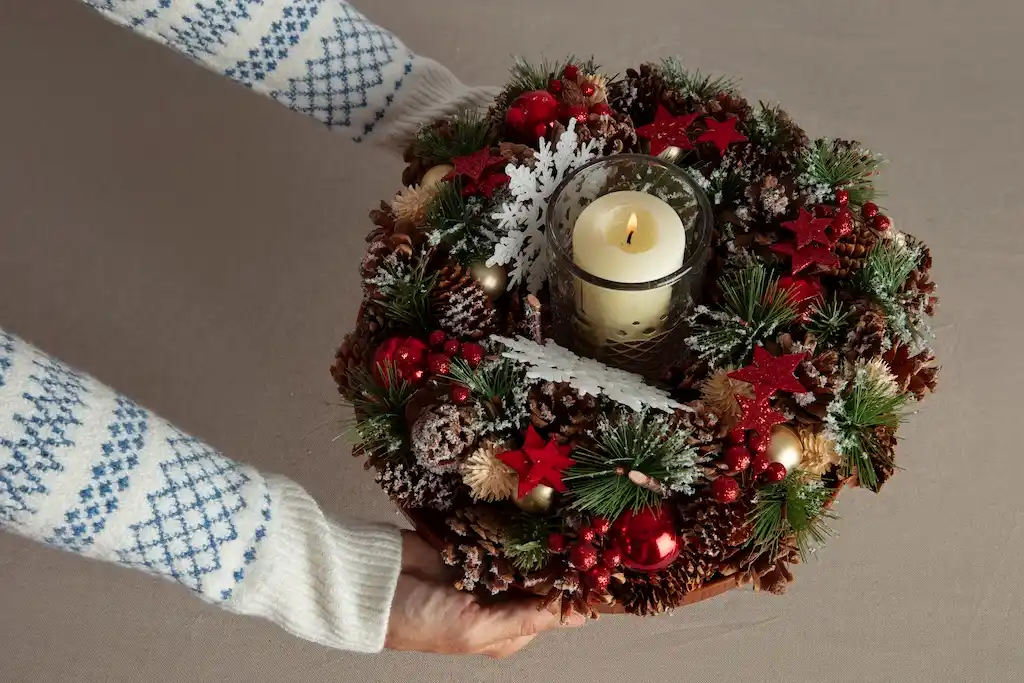
- Fluff it when you unbox it. Bend each branch tip outward, working from the inside out and from the bottom up. This takes 10 to 20 minutes, but it’s the single step that separates a wreath that looks cheap from one that doesn’t. This technique comes straight from a 2026 manufacturer guide.
- Store it properly between seasons. Keep it in a dedicated storage bag or its original box, somewhere cool, dry, and out of direct light. This one habit is the biggest factor in whether your PE wreath actually lasts the full 3 to 7 years, instead of falling apart after just 1 or 2.
- Check the UV rating if it’s pre-lit. Before hanging any pre-lit wreath outside, confirm it’s rated for outdoor use. Not all of them are.
How you store or dispose of your wreath also affects its environmental footprint, which brings up the next question a lot of people ask.
Environmental Impact: Which Wreath Is Actually Greener?
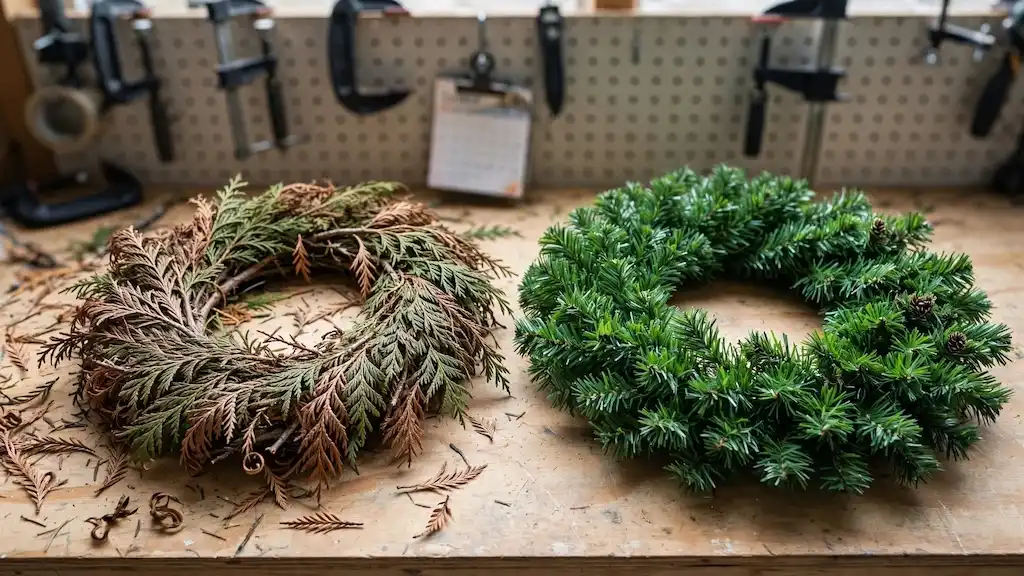
As a rule, an artificial wreath needs about 5 to 10 years of reuse to environmentally break even with buying fresh every year.
First, some honesty. Most of the hard data on this topic comes from studies on full-size Christmas trees, not wreaths specifically.
Wreath-specific research is scarce.
But the same materials are involved, PVC or PE plastic versus real evergreen, and the same basic math applies on a smaller scale, so the comparison still holds even if the numbers aren’t wreath-exact.
The UK’s Carbon Trust estimates that a 2-meter artificial tree has a carbon footprint of roughly 40kg of CO2.
A real tree, by comparison, produces somewhere between 3.5kg and 16kg of CO2, depending on how it’s disposed of afterward, composted versus sent to a landfill.
A wreath is a small fraction of a tree’s material, so scale these numbers down, but the ratio between the two stays about the same.
Several independent life-cycle studies land on a similar rule of thumb: an artificial item needs to be reused for roughly 5 to 10 years to break even environmentally with buying fresh greenery every single year.
Below that range, fresh wins. Above it, artificial wins.
The exact number varies by study, one 2018 analysis put the break-even point at 5-plus years, another source cites 4 to 10 uses, and one model from Ecochain found artificial still hadn’t caught up even after 20 years.
So treat this as a range, not a fixed number. One more nuance worth knowing.
A peer-reviewed study cited by NPR’s StateImpact found the difference between real and artificial trees can be close to negligible once you account for full life-cycle factors, and that artificial trees may even have a slightly larger impact in some scenarios.
This isn’t a clean “natural always wins” story, so don’t let anyone shame you either way.
The practical takeaway: compost your fresh wreath after the season (just remove any wire or decorations first), and get as many years as possible out of an artificial one before replacing it.
Artificial wreaths generally can’t be recycled, so reuse is what makes them worthwhile.
Allergies and Sensitivities: A Practical Consideration
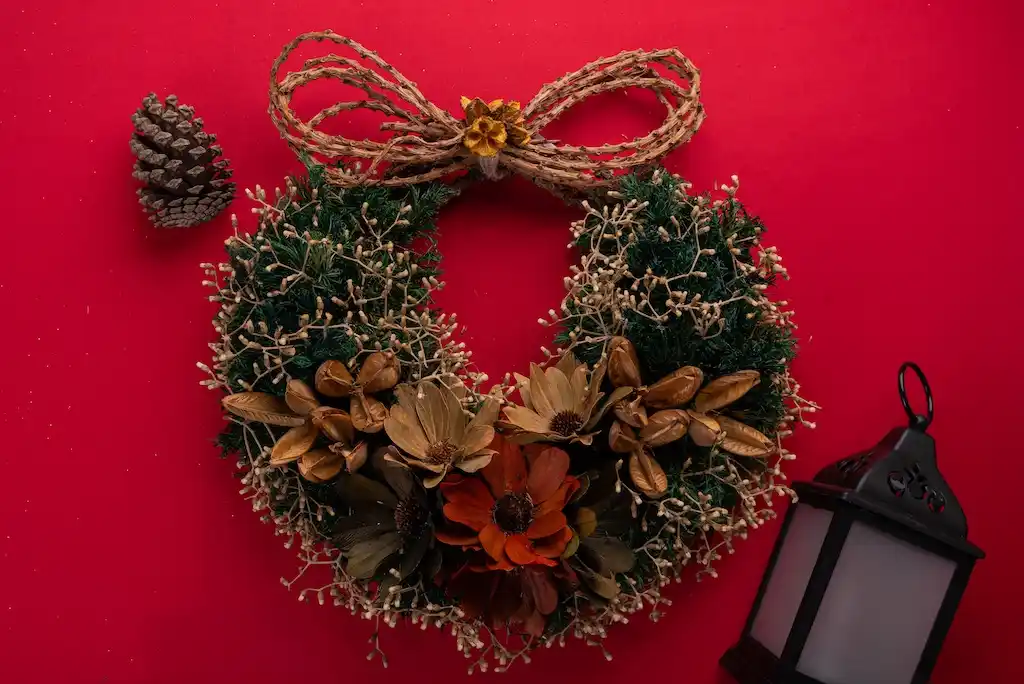
If allergies are a factor in your house, this section is for you. Fresh greenery carries pollen, mold spores (especially if it arrives even slightly damp), and sap, all of which can trigger reactions in sensitive households.
It’s a common reason florists and retailers point certain customers toward artificial options instead.
If that’s you, artificial wreaths are the straightforward, sniffle-free choice.
And if you still want the look and feel of real plant material without airborne allergens, dried and preserved botanical wreaths are a solid middle ground.
No live pollen, no sap, just dried material that won’t trigger the same reactions.
Which Should You Choose? A Quick Decision Guide
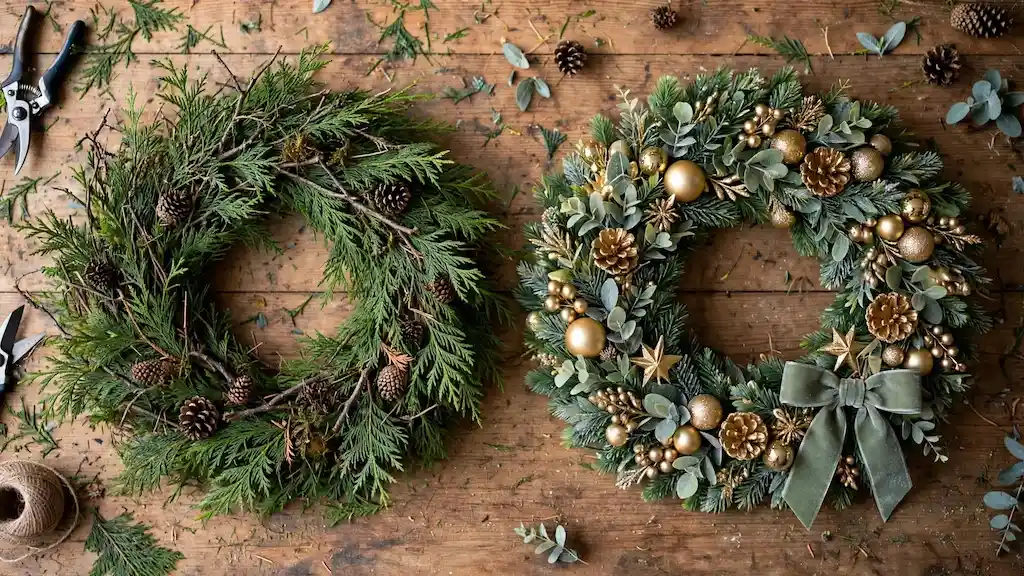
Here’s the short version.
Choose fresh if:
- You want the real scent and texture of evergreen
- You’re only decorating for one event or a short season
- You don’t mind misting it daily
- Your entryway is cool or shaded, not blasted by sun or heat
Choose artificial if:
- You want to reuse the same wreath for years
- Your door gets direct sun or heat
- Allergies are a concern in your household
- You want a pre-lit option
- You want this year’s oversized-bow look without paying florist prices every December
And if you can’t decide, the dried or preserved wreath trend is genuinely the best-of-both option for 2026: no watering, a long lifespan, and it’s still real botanical material.
Final Thoughts
There’s no universal winner here.
It comes down to how long you actually need the wreath to last, how much sun and heat your entryway gets, whether you’re thinking about this as a one-season purchase or a multi-year investment, and whether allergies are part of the equation.
Use the checklist above to make your call, then put the care steps to work so you get the most out of whatever you choose.
Whichever side of the artificial vs natural Christmas wreaths debate you land on, the care steps above will get you the most out of it.